
You’ve washed the sheets, vacuumed the mattress seams, maybe even thrown out the bed frame, and the bites keep coming back. That’s the frustrating truth about bed bugs: there’s no single spray or powder that counts as a real cure for bed bugs. What works is a layered approach that hits eggs, nymphs, and adults at the same time, because missing even one stage means the infestation rebuilds itself within weeks.
If you’re searching for how to get rid of bed bugs in your bed for good, the honest answer involves combining heat, targeted chemical treatment, and thorough cleaning, not just one DIY trick. Steam alone won’t reach bugs hiding in wall cracks and furniture joints, and store-bought sprays often just scatter them into neighboring rooms.
In this guide, we’ll walk through exactly how to get rid of bed bugs in the bed and surrounding areas, covering proven DIY steps, when they actually work, and when a Bangalore infestation has gone past the point where home remedies help. We’ll also explain what professional treatment looks like, so you know what to expect before calling in help.
Why DIY bed bug treatment often falls short
Most Bangalore households try the obvious fixes first: a can of pyrethroid spray from the local hardware store, a few days of laundering everything in hot water, maybe a borrowed steamer from a neighbor. These home remedies knock down visible adults, so you feel like you’ve won for about a week. Then the bites return, because bed bugs don’t live only on the mattress. They spread into skirting boards, switchboards, curtain rods, and even the seams of your sofa, and a single missed pocket of eggs restarts the whole cycle.
Sprays rarely reach where bed bugs actually live
Household insecticides work only on direct contact, and bed bugs are experts at avoiding exactly that. Adult bed bugs squeeze into gaps as thin as a credit card, behind wallpaper edges, inside bed frame joints, under skirting boards, and inside electrical sockets. A can of spray covers the surfaces you can see, not the 2mm gaps you can’t. That’s why so many Bangalore renters report bites returning within two to three weeks of a DIY spray session.
A cure for bed bugs has to reach every hiding spot, not just the ones you can see.
Resistance makes common insecticides less effective
Bed bug populations across Indian cities have built up resistance to the pyrethroid chemicals found in most retail sprays. Spraying an already-resistant population doesn’t kill them; it just scatters them into neighboring rooms or even your neighbor’s flat, turning a one-room problem into a building-wide one. Professional treatments rotate between chemical classes and often pair them with heat specifically to get around this resistance.
Eggs survive treatments that kill adults
Eggs are the real reason DIY attempts fail long-term. They’re glued to surfaces in a protective coating that most sprays can’t penetrate, and they hatch in six to ten days regardless of what you sprayed last week.
| DIY method | Kills adults | Kills nymphs | Kills eggs | Typical result |
|---|---|---|---|---|
| Retail insecticide spray | Sometimes | Rarely | No | Scatters bugs, partial kill |
| Washing linens in hot water | Yes (on fabric) | Yes (on fabric) | Yes (on fabric) | Doesn’t touch hidden bugs |
| Handheld steamer | Yes (direct contact) | Yes (direct contact) | Yes (direct contact) | Misses cracks and voids |
| Throwing out furniture | Yes (on item) | Yes (on item) | Yes (on item) | Bugs often already spread |
Without hitting all three life stages in every hiding spot at once, you’re just buying a few weeks of relief. The next section covers how to confirm the scale of the problem before you commit to any treatment plan.
Step 1. Confirm and locate the bed bug infestation
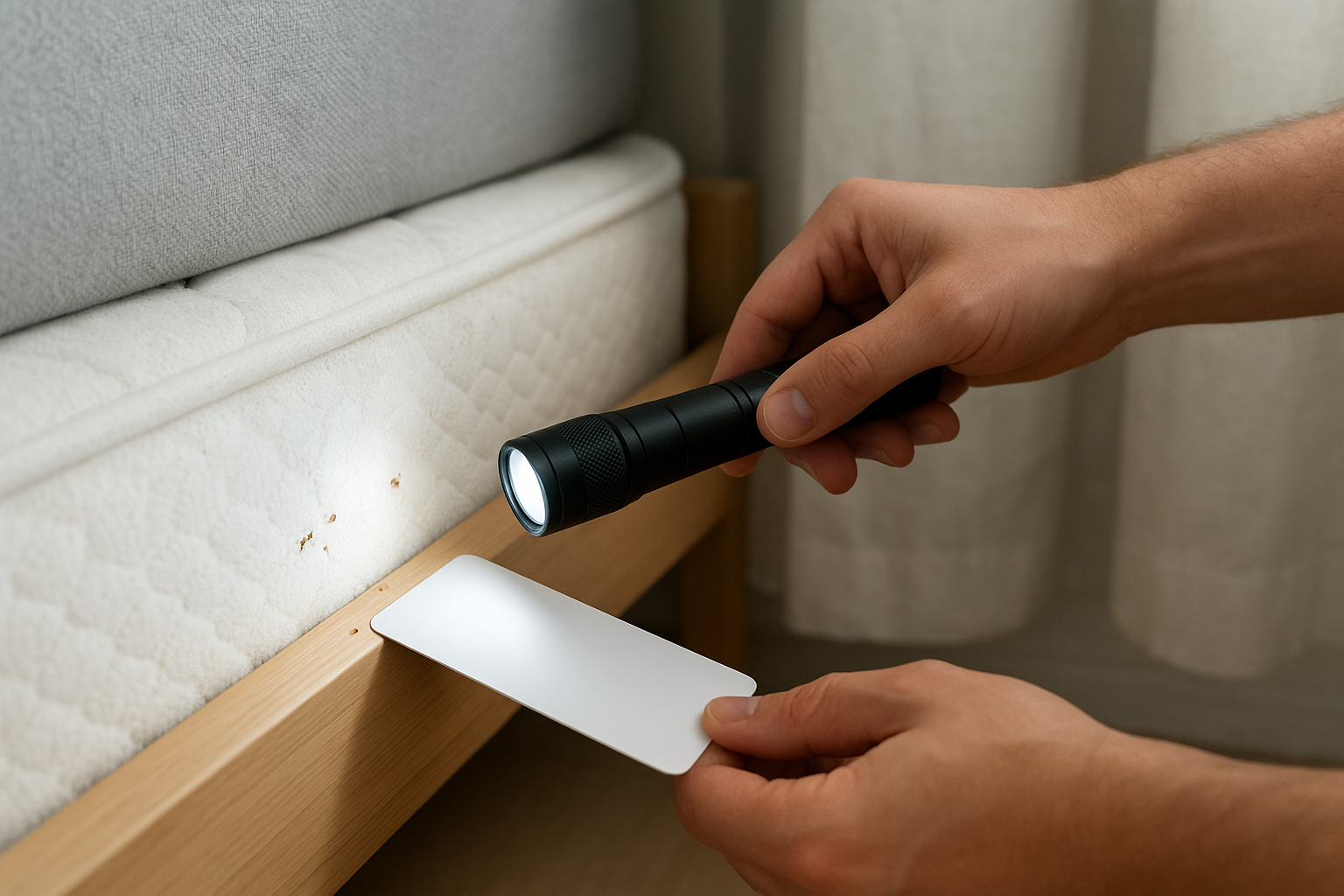
Before you treat anything, you need proof of what you’re dealing with and where it’s hiding. Misidentifying carpet beetles or booklice as bed bugs wastes money on the wrong treatment, and treating only the mattress when bugs have already spread to the wardrobe means you’ll be back at square one in a month. Grab a flashlight, a stiff card, and about twenty minutes before you decide on next steps.
Look for the physical evidence first
Check for these five signs, since bed bugs rarely announce themselves any other way:
- Rust-colored spots on sheets or mattress seams (dried fecal matter)
- Tiny pale eggs, about 1mm long, tucked into fabric folds
- Shed skins from nymphs molting as they grow
- A musty, sweetish smell in heavily infested rooms
- Live bugs, flat and reddish-brown, roughly the size of an apple seed
You can’t cure what you haven’t located, so mapping every hiding spot matters more than the first spray you buy.
Check every gap, not just the mattress
Running the card along mattress seams, bed frame joints, headboard screws, skirting boards, switch plates, and curtain rod brackets tells you how far the infestation has traveled. Bangalore apartments with wooden furniture and fabric sofas give bugs extra hiding ground beyond the bedroom, so check the living room too if bites are spreading.
Know when to bring in a professional inspection
Spotting a handful of bugs on one mattress is manageable at home. Finding activity in three or more rooms, inside electrical fittings, or behind wallpaper usually means the infestation is beyond what steam and sprays can fix, and a same-day professional inspection will save you weeks of guesswork before you move to treatment.
Step 2. Prepare your room and belongings for treatment
Getting the room ready matters as much as the treatment itself, because clutter gives bed bugs more places to hide and treatment less chance of reaching them. Skipping prep is one of the biggest reasons people search again for how to get rid bed bugs after their first attempt fails. Set aside a few hours before treatment day to work through your space methodically rather than rushing it the morning of.
Declutter and isolate infested items
Start by clearing everything off the floor and out from under the bed, since loose items give bugs extra cover during treatment. Bag anything you’re not treating immediately in sealed plastic, because a torn bag is an open invitation for bugs to spread to another room.
- Strip all bedding, curtains, and cushion covers
- Wash and dry fabrics on the hottest setting the material allows (above 60°C kills eggs and adults)
- Bag unwashable items and freeze them for four days if you don’t want to launder them
- Pull furniture away from walls to expose skirting boards and joints
- Vacuum mattress seams, carpet edges, and baseboards thoroughly, then seal and discard the bag outside
Preparation decides how far your treatment reaches, not the strength of the chemical you use.
Seal escape routes before treatment day
Hunt down cracks in walls, gaps around switchboards, and loose wallpaper edges, then seal what you can with caulk. This step matters if you’re trying to figure out how to get rid of bugs from bed areas that connect to the rest of the room, since bed bugs will simply relocate through any gap left open. Once the room is stripped down and sealed, you’re ready to move on to the actual extermination step.
Step 3. Kill bed bugs with heat, cold, or insecticides
Once the room is prepped, the actual kill step needs to hit every life stage at once, since a treatment that only handles adults leaves eggs to hatch again within the week. This is the part most people get wrong when they ask how can you get rid of bed bugs for good: they pick one method and stop there instead of layering two or three together.
Apply heat treatment for whole-room coverage
Heat is the most reliable option because it reaches cracks, joints, and fabric that sprays can’t penetrate. Sustained temperatures above 49°C for at least 90 minutes kill bugs and eggs throughout a room, which is why professional heat treatments use industrial heaters rather than a household hair dryer or steam iron.
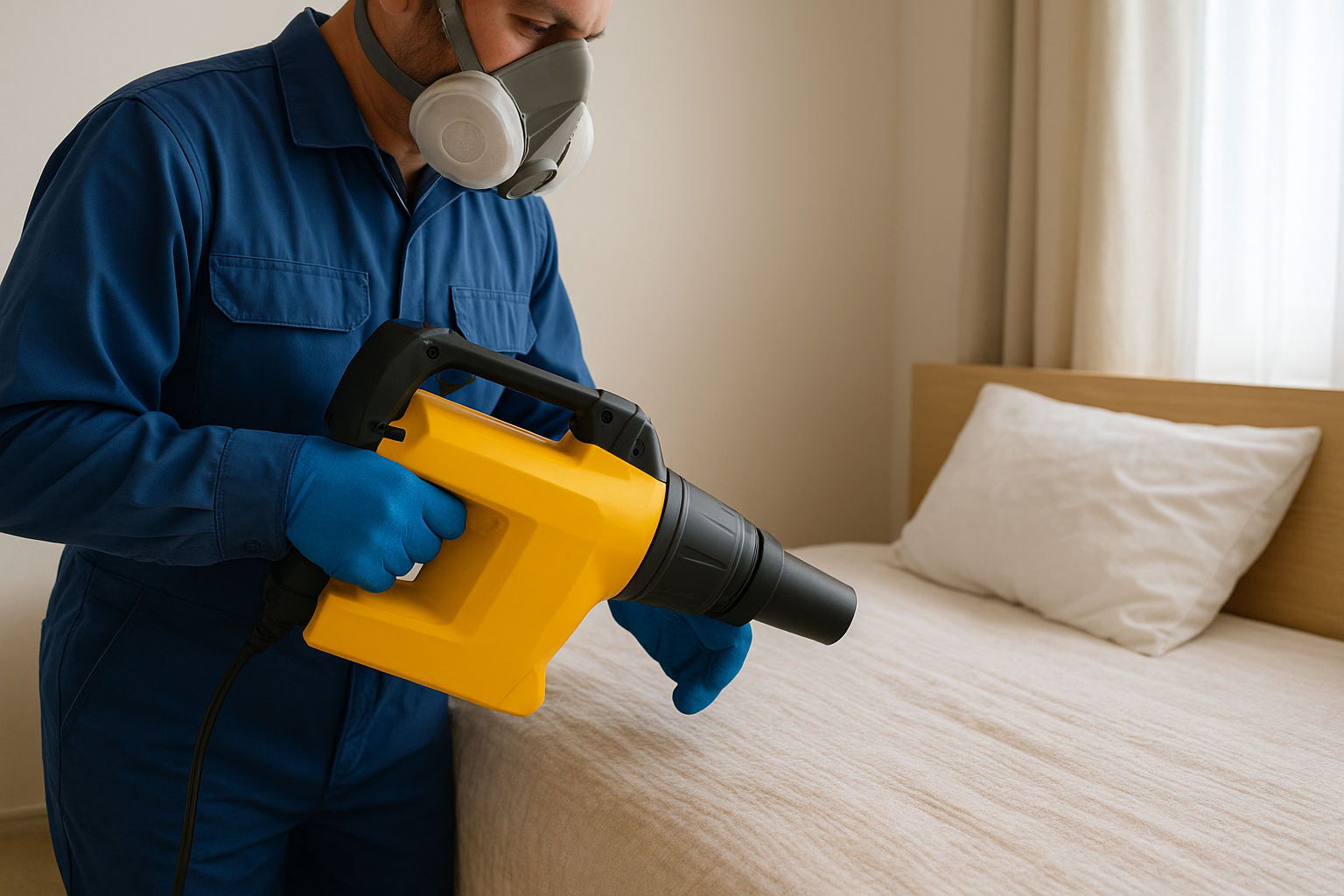
Heat kills every life stage in one pass, which is why it beats spot treatments for a real cure.
Use cold as a targeted backup
Freezing works for individual items you can’t wash or heat-treat, like electronics or leather bags. Seal items in plastic and freeze at -18°C or below for four full days, since anything warmer or shorter lets bugs survive.
Choose insecticides carefully if you go chemical
If you use chemical treatment, rotate classes to counter resistance and always follow the label. The US EPA’s bed bug guidance recommends combining approaches rather than relying on a single product.
| Method | Temperature/Duration | Kills eggs | Best use |
|---|---|---|---|
| Heat treatment | 49°C+, 90 min | Yes | Whole room |
| Freezing | -18°C, 4 days | Yes | Small items |
| Insecticide | Per label | Sometimes | Cracks, voids |
Combining these gives you a real shot at breaking the cycle for good.
Step 4. Monitor, prevent bed bugs, and call a pro
Killing the visible bugs is only half the job. Ongoing monitoring catches stragglers before they rebuild a colony, and a few habit changes keep new bugs from moving in from a neighbor’s flat or your last trip. This step is where most Bangalore households either lock in a permanent fix or end up searching again for how to get rid of bed bugs three months later.
Set up interceptors and recheck weekly
Place bed bug interceptor cups under each bed leg and check them weekly for two months after treatment. Catching even one bug in an interceptor tells you the job isn’t finished yet, so don’t pack away your flashlight after the first clean week.
Monitoring for eight weeks after treatment is what separates a real cure from a temporary lull.
Build habits that keep bugs from coming back
A few consistent habits do more than any single spray:
- Inspect secondhand furniture and mattresses before bringing them indoors
- Keep luggage off the bed after travel and check it under bright light
- Wash and heat-dry travel clothes immediately after any trip
- Reduce clutter so bugs have fewer places to hide
- Recheck seams and skirting boards monthly for the first six months
Know when home methods have run their course
If you’re still finding live bugs two weeks after treatment, or bites keep appearing in new rooms, home methods have hit their limit. At that point, a professional team with heat equipment and rotating chemical classes is faster and cheaper than another round of retail sprays. Waiting only gives eggs more time to hatch and spread further through the building.
Getting a good night’s sleep again
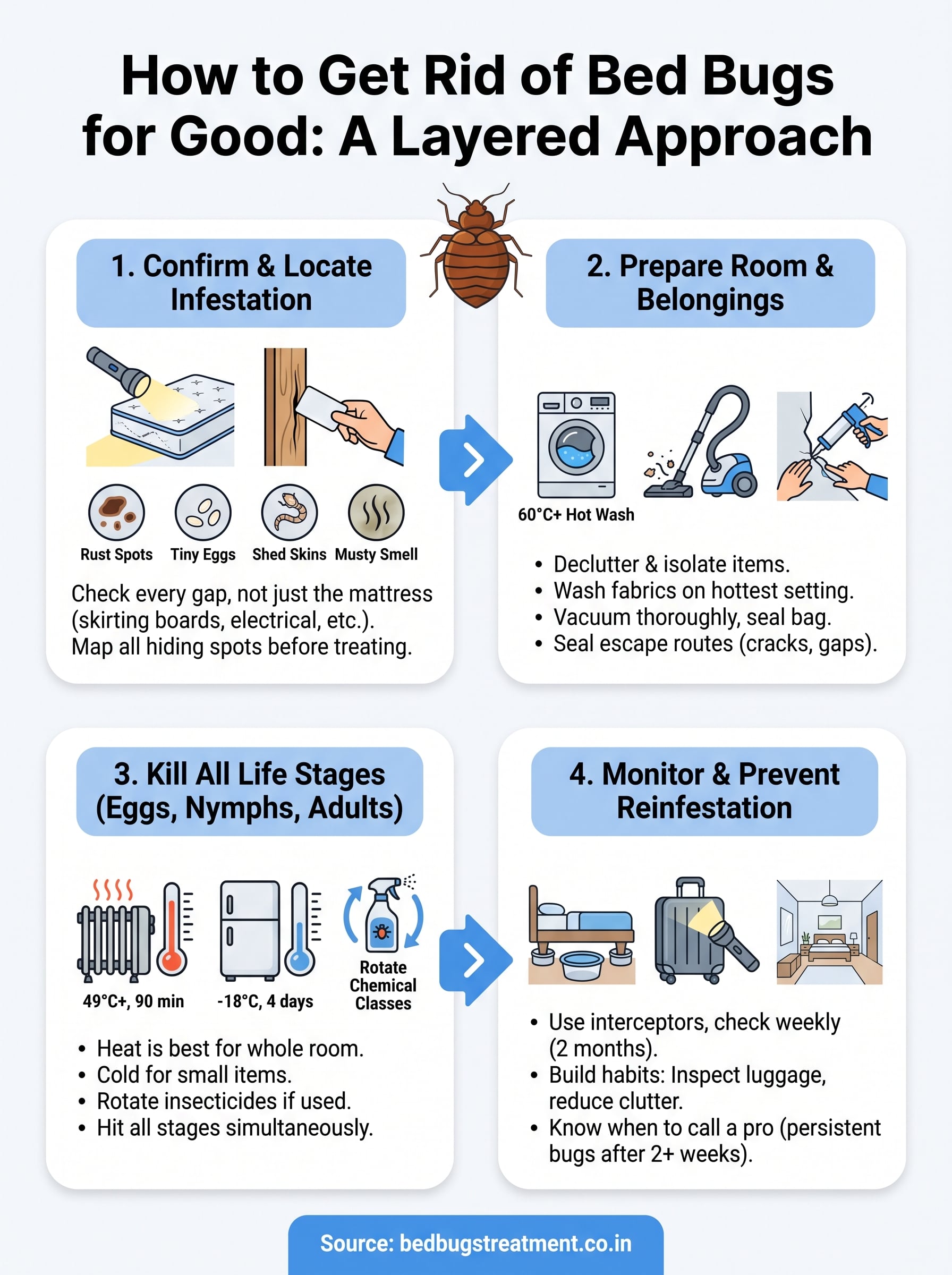
Getting rid of bed bugs for good comes down to combining every step above, not picking your favorite one. Confirm the infestation, prep the room properly, hit every life stage with heat, cold, or rotated insecticides, then keep monitoring for two full months. Skip any of those layers and you’re back to scratching bites within weeks, wondering why the cure for bed bugs you tried didn’t hold.
If you’ve worked through this checklist and bugs are still showing up in new rooms, or you’d rather skip the trial and error entirely, that’s exactly when a specialist team earns its cost. Trained technicians bring industrial heat equipment and rotating chemical classes that no retail spray can match, backed by a warranty so you’re not gambling on round two.
Bangalore residents dealing with a stubborn infestation can book a same-day, family-safe inspection through professional bed bug treatment in Bangalore and finally get back to sleeping without checking the sheets every morning.