
You wake up with itchy red marks on your arm and immediately wonder if bed bugs have moved into your mattress. That suspicion is exactly why you need to learn how to check for bed bugs in bed before the infestation spreads to your sofa, curtains, or your neighbor’s flat. In cities like Bangalore, Mumbai, and Pune, where apartments sit close together and furniture moves between homes often, bed bugs travel fast and hide well.
If you’ve been searching for how to check beds for bed bugs, this guide gives you the exact step-by-step inspection process used by trained technicians, so you don’t have to guess based on a single bite mark. You’ll learn where bed bugs actually hide on a mattress, what their eggs and fecal spots look like, and how to tell the difference between a bed bug problem and a dust mite or flea issue.
We’ll walk through checking the seams, tufts, box spring, headboard, and bed frame, plus what tools make the search easier. If you’ve already tried wiping down your mattress or spraying random chemicals without results, this article will show you what a thorough check really involves, and when it’s time to call in a specialist instead of continuing DIY attempts.
How to Check Beds for Bed Bugs: What You Need to Know First
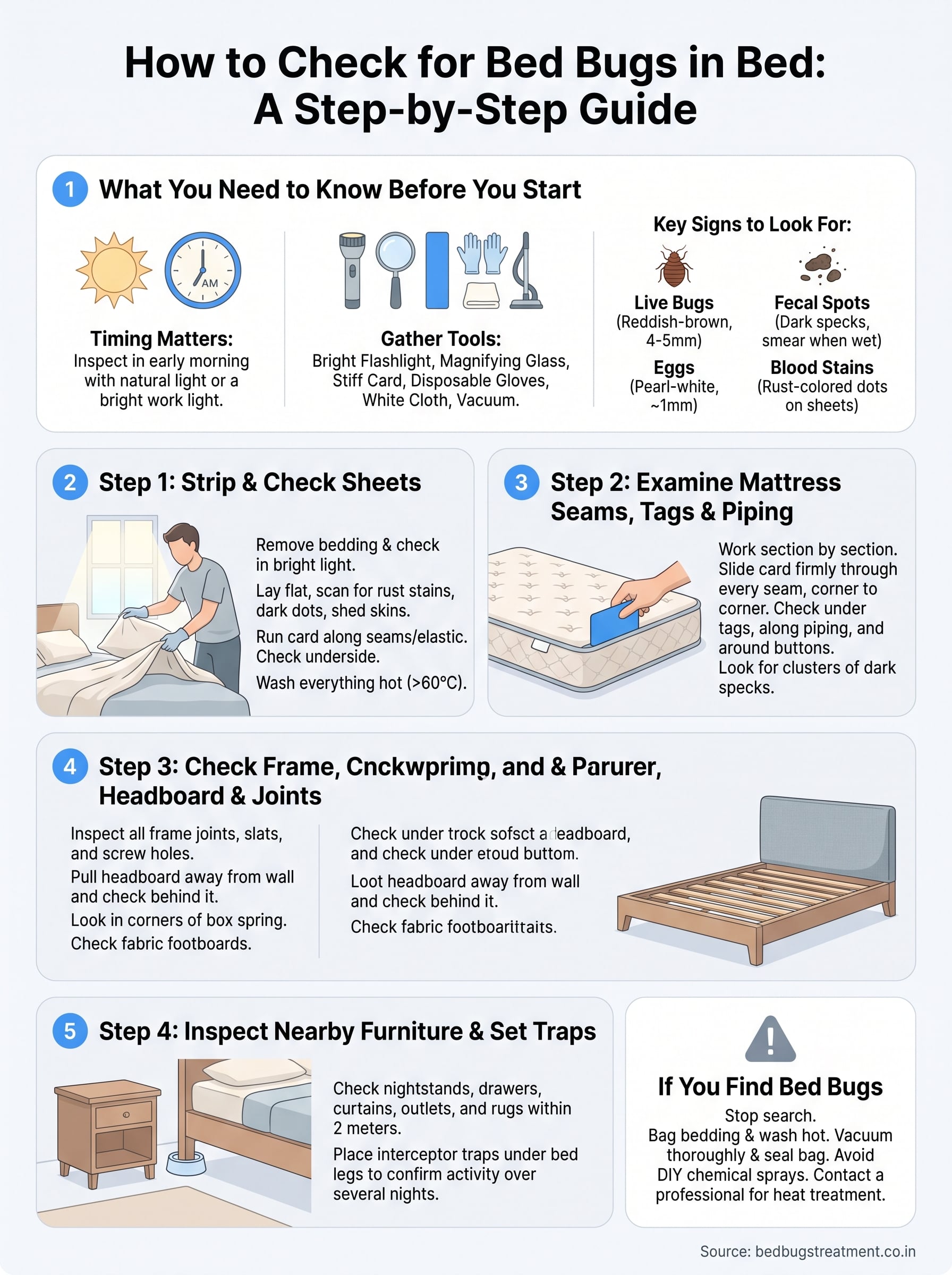
Learning how to check beds for bed bugs relies on a mix of visual signs and physical evidence, not a single tell. A proper mattress inspection combines the checks below with the bed bug signs table so you’re not relying on guesswork alone.
Before you pull back a single sheet, understand that bed bugs are experts at hiding in the smallest cracks, so a quick glance at your mattress top won’t tell you much when checking your bed for bed bugs. Adult bed bugs are flat, reddish-brown, and about the size of an apple seed, roughly 4-5mm long, while nymphs are smaller and paler, almost translucent after a molt. They avoid light and open spaces, which means your inspection has to focus on gaps, folds, and seams rather than flat surfaces. The CDC’s overview of bed bug identification confirms these same size and color markers, so you can cross-check what you find against a trusted reference.
Signs You’re Actually Dealing With Bed Bugs in Your Bed
Many people confuse bed bug activity with dust mites, fleas, or even allergic reactions. Here’s a quick reference to keep your search accurate:
| Sign | What it looks like | Where to find it |
|---|---|---|
| Live bugs | Reddish-brown, oval, flat body | Seams, folds, cracks |
| Fecal spots | Small dark brown or black dots that smear when wiped with a damp cloth | Mattress seams, box spring, headboard |
| Eggs | Tiny, pearl-white, about 1mm long | Deep in seams and crevices |
| Shed skins | Pale, hollow exoskeletons | Near hiding spots after molting |
| Blood stains | Small rust-colored spots on sheets | Where you sleep or turn during the night |
If you find even one live bug or a cluster of dark fecal spots on your mattress seam, treat it as confirmed and stop guessing.
Pick the Right Time and Light to Check for Bed Bugs in Bed
Timing matters more than most people realize. Bed bugs feed at night and retreat before dawn, so inspecting your bed in the early morning, right after you wake up, gives you the best chance of spotting them before they hide again. Skip inspecting in the evening under dim lighting; you’ll miss the small details that give away an infestation. Natural daylight or a bright work light works far better than your phone’s flashlight, which tends to wash out shadows in seams and folds where bugs hide.
Gather Your Tools for Checking for Bed Bugs in Bed
One mistake homeowners make when they try to check beds for bed bugs is inspecting with bare eyes and nothing else. A proper check takes a few basic tools you likely already have at home:
- A bright flashlight or headlamp for checking dark seams and crevices
- A magnifying glass to confirm eggs and nymphs, which are easy to miss otherwise
- A stiff plastic card or old credit card to run along seams and dislodge hiding bugs
- Disposable gloves to avoid direct contact if you’re squeamish or allergic to bites
- A white or light-colored cloth to wipe suspected fecal spots and confirm the smear test
- A vacuum with a crevice attachment to capture any bugs you spot during the check
Understanding these basics before you start saves you time and stops you from mistaking carpet beetles or dust for an active infestation. Once you know what you’re looking for, where to look, and when, you’re ready to move through the bed itself piece by piece, starting with the bedding and sheets closest to where you sleep.
Step 1. Strip the Bedding and Check Your Sheets for Bed Bugs in Your Bed
This first step to check beds for bed bugs is to strip every sheet, pillowcase, and blanket off the bed, then carry them straight to a bright spot near a window or lamp instead of checking them on the bed itself. Fresh bedding checks work best because bed bugs and their waste show up clearly against light-colored fabric, and you avoid missing marks hidden in shadows or folds. Lay each piece flat and scan for rust-colored smears, tiny black dots, or pale shed skins caught in the fabric weave.
Look for Telltale Bed Bug Marks on Fabric
Grab your magnifying glass here, since dried fecal spots and blood smears can look almost identical to regular stains at first glance when you check beds for bed bugs. Run your stiff plastic card along any folds or elastic edges of the fitted sheet, since bugs often wedge themselves there during the day. Check the underside of the sheet too, not just the top, because bugs crawling up from the mattress leave marks on both sides as they pass through.
A single dark smear that turns reddish-brown when wiped with a damp cloth is dried blood, not dust, and it’s a strong sign bed bugs fed on you overnight.
Don’t skip pillowcases and mattress protectors
Pillowcases and mattress protectors get overlooked constantly, yet they sit closest to your body and pick up early evidence before an infestation spreads further into the mattress itself.
- Turn pillowcases inside out and check the seams for dark specks
- Peel back the mattress protector corner by corner, checking the elastic edges where bugs hide during daylight
- Shake out blankets and duvets over a light-colored surface to catch anything that falls loose
- Wash everything on the hottest setting your fabric allows once you’ve finished checking, since heat above 60°C kills bed bugs at every life stage
Once the bedding is off and checked, wash it immediately rather than setting it aside, since leaving contaminated sheets on a chair or floor just relocates the problem. With the bed now bare, you can move to the mattress surface itself, where the real hiding spots begin.
Step 2. Check for Bed Bugs in Your Bed: Mattress Seams, Tags, and Piping
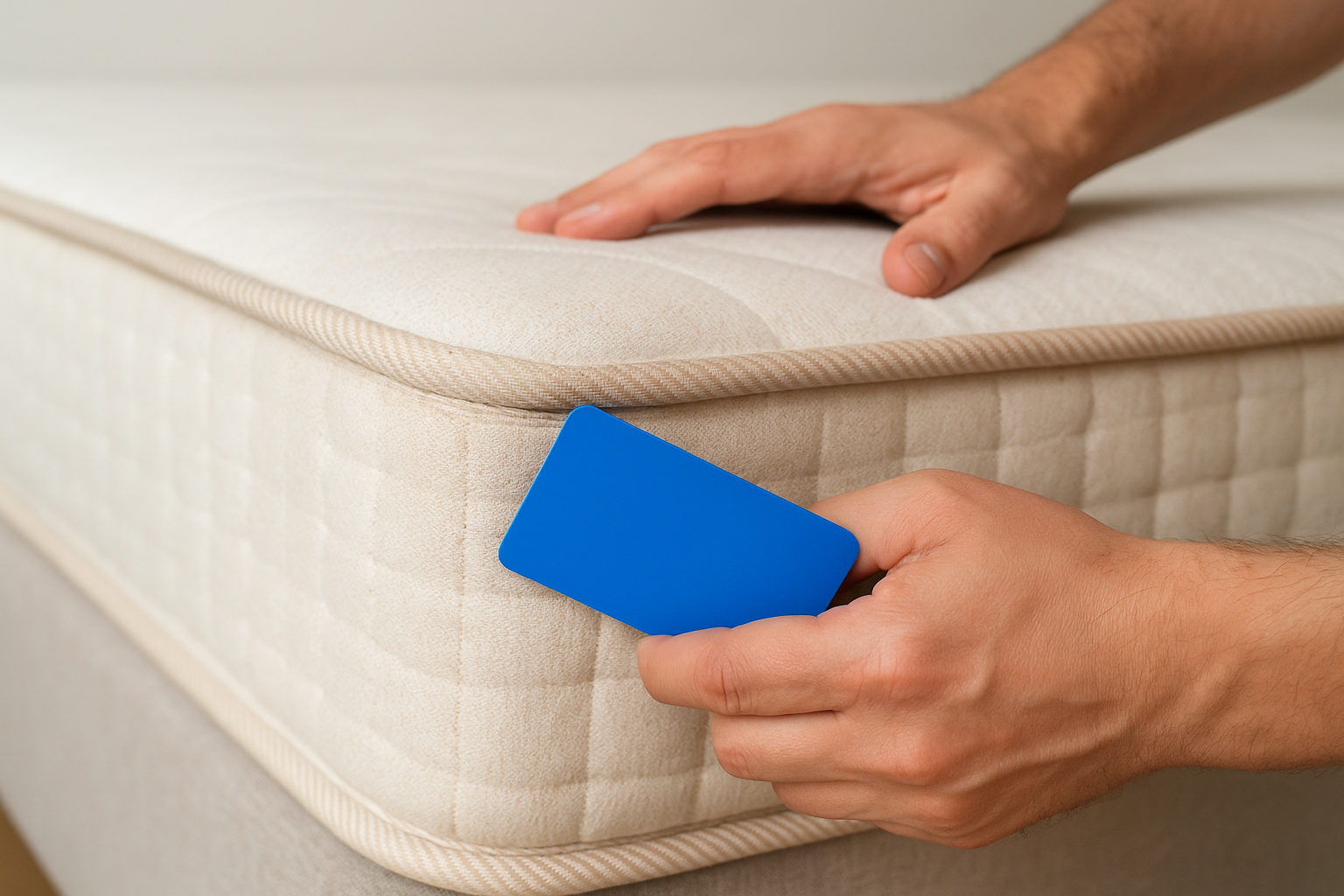
This part of the bed bug check in your bed matters most: once the mattress sits bare, work your way around every edge instead of scanning the flat surface, since bed bugs almost never sit out in the open. Mattress seams are the single most common hiding spot because the stitching creates tiny pockets that stay dark and undisturbed for days at a time. Go slowly, section by section, and give each seam at least a few seconds under bright light before moving on.
Run the Card Along Every Seam to Check for Bed Bugs
Grip your stiff plastic card at an angle and slide it firmly through each seam, corner to corner, on both the top and bottom of the mattress. This dislodges hiding bugs that flatten themselves so tightly against the fabric that your eyes alone will miss them. Watch closely as you go, since disturbed bugs often scurry a few centimeters before stopping again.
A row of dark, gritty specks along a single seam is rarely dust, it’s almost always dried bed bug waste.
Check tags, piping, and buttons
Manufacturer tags, decorative piping, and any tufted buttons on the mattress surface all create the same kind of shelter as seams, which is why they matter so much when you check beds for bed bugs. Bugs and their eggs cluster in these spots because the fabric folds over itself, blocking light completely. Work through this checklist on each mattress you own:
- Lift every tag and check both sides for eggs or fecal dots
- Trace the piping around the entire mattress edge with your card
- Press around tufted buttons, since eggs often sit in the small crater they create
- Sniff for a musty, sweetish odor, a sign of a heavier infestation nearby
- Photograph anything suspicious so you can compare it later or show a technician
Covering the whole mattress this way takes ten to fifteen minutes if you’re thorough, and it’s worth every second, since this is where most infestations start before spreading outward. If you spot even a few eggs tucked into the piping, don’t wait to confirm more, that’s already enough evidence to move forward with treatment. With the mattress cleared, turn your attention to the frame underneath, since bugs that get disturbed here often retreat straight into the joints and slats below.
Step 3. Check for Bed Bugs in Your Bed Frame, Headboard, and Joints
A bed bug inspection at home isn’t complete without the frame itself, so with the mattress lifted aside, turn your attention to the bed frame joints where wood meets wood or metal meets metal. These gaps stay dark, undisturbed, and close enough to your body that bugs treat them as prime real estate. Unscrew what you can, or at least pull the frame pieces apart slightly, and shine your flashlight directly into every joint before deciding the frame is clean.
Headboards hide more than you think
Headboards, especially upholstered or wall-mounted ones, sit right at head height, making them one of the most overlooked hiding spots when you check beds for bed bugs. Wall-mounted headboards often have a gap behind them that nobody checks for months, so pull yours slightly away from the wall and inspect both surfaces with your card and flashlight. Padded or fabric headboards need the same seam-by-seam treatment you gave the mattress, since the stitching creates identical shelter.
If you only check the mattress and skip the headboard, you’re inspecting half the bed and missing where many infestations actually start.
Work through the frame systematically
Go section by section rather than jumping around, since it’s easy to assume one corner represents the whole frame when it doesn’t.
- Slide your card into every screw hole and joint along the frame’s length
- Check under the bed slats, especially where they rest on the frame rail
- Inspect the corners of a box spring if you still use one, since the fabric underside is a classic hiding spot
- Look behind any fabric-covered footboard the same way you checked the headboard
- Tap wooden joints gently over a white sheet, since disturbed bugs sometimes drop rather than run
Don’t rush this step just because the frame looks like plain wood or metal with nothing to hide behind. Bed bugs squeeze into gaps as thin as a credit card, so anywhere two surfaces meet deserves a proper look. Once you’ve cleared the frame, headboard, and joints, you’ve covered the bed itself completely, but bed bugs rarely stay confined to one piece of furniture for long, which is why the next step takes you beyond the bed.
Step 4. Check for Bed Bugs in Your Bed: Nearby Furniture and Traps
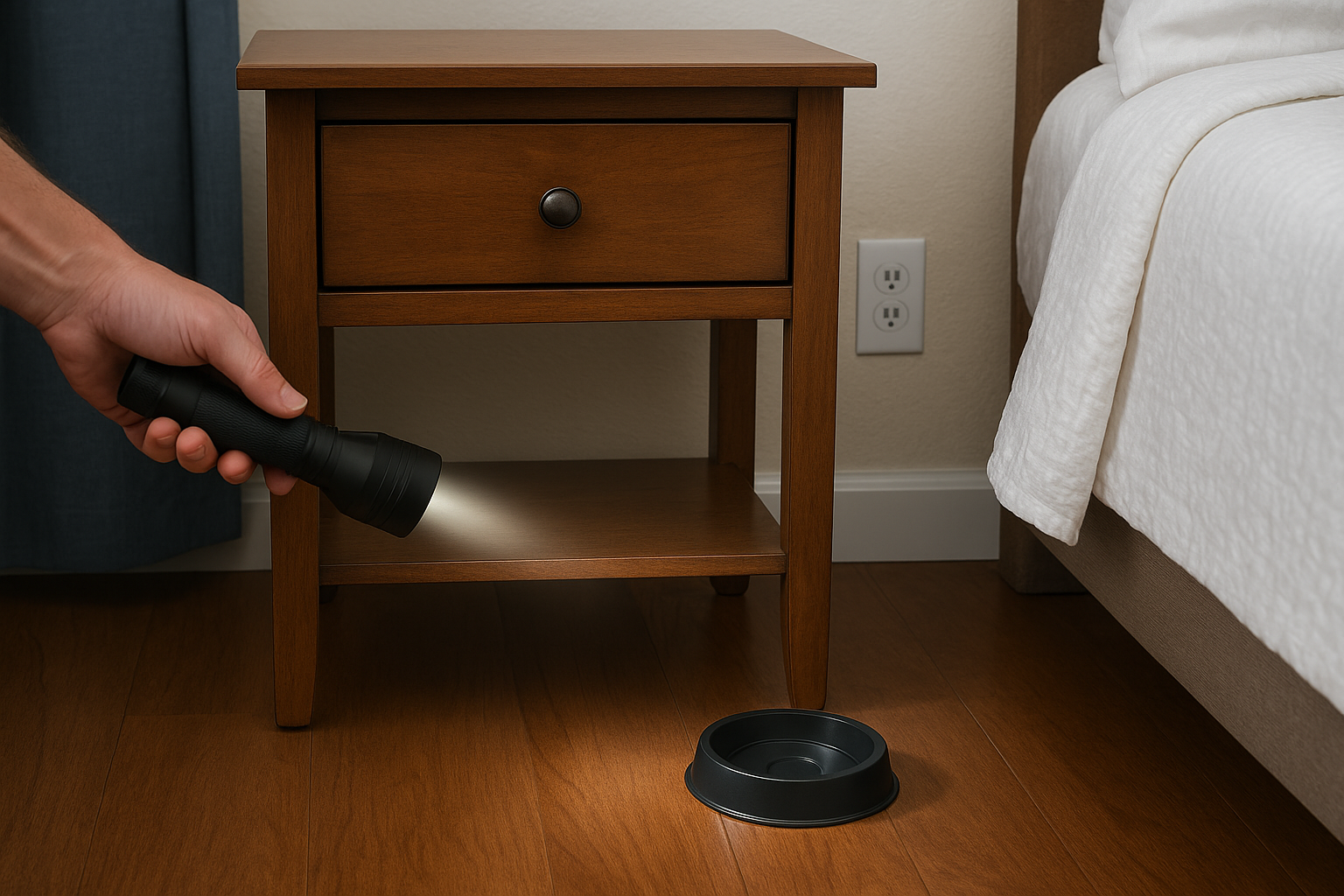
Checking for bed bugs in your bed doesn’t stop at the mattress and frame. Grab your flashlight again and move to everything within arm’s reach of the bed, since bed bugs spread outward the moment their main hiding spot gets crowded or disturbed, and a proper check for bed bugs in bed should always extend this far. Nightstands, bedside lamps, and wall sockets near the headboard all qualify as extended territory, not separate problems. Sliding drawers open fully and checking the underside of each one often reveals eggs stuck in the corner grooves where nobody looks during regular cleaning.
Widen Your Bed Bug Check to Nearby Furniture
Treat any furniture within two meters of the bed as part of the same inspection zone, since bed bugs don’t need much distance to establish a second hiding spot.
- Check curtain folds and blinds near the bed for dark specks along the hems
- Flip over rugs and carpet edges touching the bed frame
- Inspect picture frames or wall decor mounted close to the headboard
- Examine electrical outlet covers, since bugs squeeze behind the plate easily
- Look inside book spines or magazines left on a nightstand
A bed bug problem that’s spread to your nightstand or curtains is no longer a small issue, it needs professional attention, not another round of DIY spraying.
Use Interceptor Traps to Confirm Bed Bugs in Your Bed
Set up bed bug interceptor traps under each bed leg once your visual check is done, since traps catch what your eyes miss over several nights. These plastic devices sit under the legs and trap bugs climbing up or down, giving you hard evidence without guesswork.
| Trap type | Best for | Check frequency |
|---|---|---|
| Interceptor cups (under legs) | Confirming active movement | Every 3-4 nights |
| Sticky traps (near baseboards) | Catching stragglers near furniture | Weekly |
| Climb-up glue discs | Low-level infestations | Every 5-7 nights |
Running traps for a full week gives you a clearer picture than a single night’s check when checking for bed bugs in your bed, since bed bug activity varies depending on hunger and temperature. Finding bugs in a trap after a clean visual inspection simply confirms what a surface check alone can’t always catch.
Common Mistakes That Make Checking for Bed Bugs in Your Bed Unreliable
Most failed attempts to check beds for bed bugs come down to skipping one of the mattress inspection steps above, not bad luck. The mistakes below cover the gaps that let an infestation go unnoticed.
Even a careful bed bug check in your bed can miss an active infestation if you fall into one of these habits. Knowing how to check for bed bugs in bed properly, and running a full bed bug inspection checklist rather than a quick glance, means avoiding these shortcuts as much as knowing where to look.
- Checking only at night under lamp light: bed bugs retreat the moment they sense movement and light, so evening checks under dim bulbs miss far more than a morning check in daylight
- Relying on a phone flashlight alone: the narrow, harsh beam washes out shadows in seams and joints instead of revealing what’s hiding in them
- Scanning only the mattress top: most activity hides in seams, piping, the frame, and the headboard, so a flat-surface glance tells you almost nothing
- Spraying before confirming an infestation: random chemical treatments scatter bed bugs into new rooms and make professional treatment harder later
- Stopping after one clean check: a single inspection can miss a light infestation; interceptor traps left for a week catch what a visual search alone doesn’t
- Ignoring furniture next to the bed: nightstands, curtains, and rugs within arm’s reach are part of the same hiding zone, not a separate concern
How Often Should You Repeat This Check for Bed Bugs?
Knowing how to check beds for bed bugs is only useful if you repeat it on a schedule, not just once.
If you’ve had bites, guests, secondhand furniture, or recent travel, repeat the full inspection weekly for at least a month. Routine households without any warning signs can check monthly, but anyone actively treating an infestation should recheck every few days until interceptor traps stay empty for two consecutive weeks.
What to Do If You Find Bed Bugs in Your Bed
If your check for bed bugs in the bed turns up even one live bug or a cluster of fecal spots, your search is over and your next job begins. Bag the mattress protector and bedding separately, wash them hot, and resist the urge to spray random chemicals you picked up at a local store, since improper treatment often scatters bed bugs into new rooms instead of killing them.
Vacuum every seam, joint, and trap you set up as the last part of your check for bed bugs in bed, then seal the vacuum bag before disposal so nothing crawls back out.
FAQs about checking for bed bugs in bed
How Long Does a Full Check for Bed Bugs in Your Bed Take?
A thorough check of the bedding, mattress, frame, headboard, and nearby furniture usually takes 20 to 30 minutes. Rushing through seams and joints is the most common reason people miss an early infestation during a check for bed bugs in bed, so budget extra time rather than less.
What Is the Easiest Way to Check for Bed Bugs in Bed Without Any Tools?
Strip the sheets in bright daylight and look for rust-colored smears, tiny black fecal spots, or pale shed skins along the mattress seams and piping. It works, but a flashlight, magnifying glass, and stiff card catch far more than eyes alone, especially in dark seams.
Can Bed Bugs Live Somewhere Other Than the Mattress in Your Bed?
Yes. Bed bugs regularly hide in bed frame joints, headboards, box springs, nightstands, curtain folds, rug edges, and even electrical outlet covers near the bed, so an inspection limited to the mattress alone will miss active colonies nearby.
How Do I Know If It’s Bed Bugs in My Bed and Not Dust Mites or Fleas?
Bed bugs leave dark fecal spots that smear reddish-brown when wiped with a damp cloth, pearl-white eggs about 1mm long, and pale shed skins near seams, none of which match the fine dust or flea dirt left by other pests.
Do I need a professional if my traps catch bugs?
A single confirmed bug or egg cluster is enough evidence to stop DIY attempts and call a technician, since random sprays often scatter bed bugs into new rooms instead of eliminating them.
You now know exactly how to check beds for bed bugs, from stripping sheets to setting interceptor traps, but confirming an infestation is only half the work.
A trained technician handles the extermination side safely, without harsh odors or risk to kids and pets, once your check for bed bugs in bed has confirmed the problem. If your inspection turned up bugs, eggs, or unexplained bites, book a free bed bug inspection and let a specialist finish what your flashlight started.