
Found a small brown bug in your bed and now you’re wondering if it’s a bed bug vs tick? You’re not alone. Both are tiny, both bite while you’re asleep or sitting on the couch, and both leave you scratching and worried about what’s crawling around your Koramangala apartment or your Whitefield villa. But treating one like the other wastes time and money, and delays can let a bed bug problem spread from one room to your whole flat.
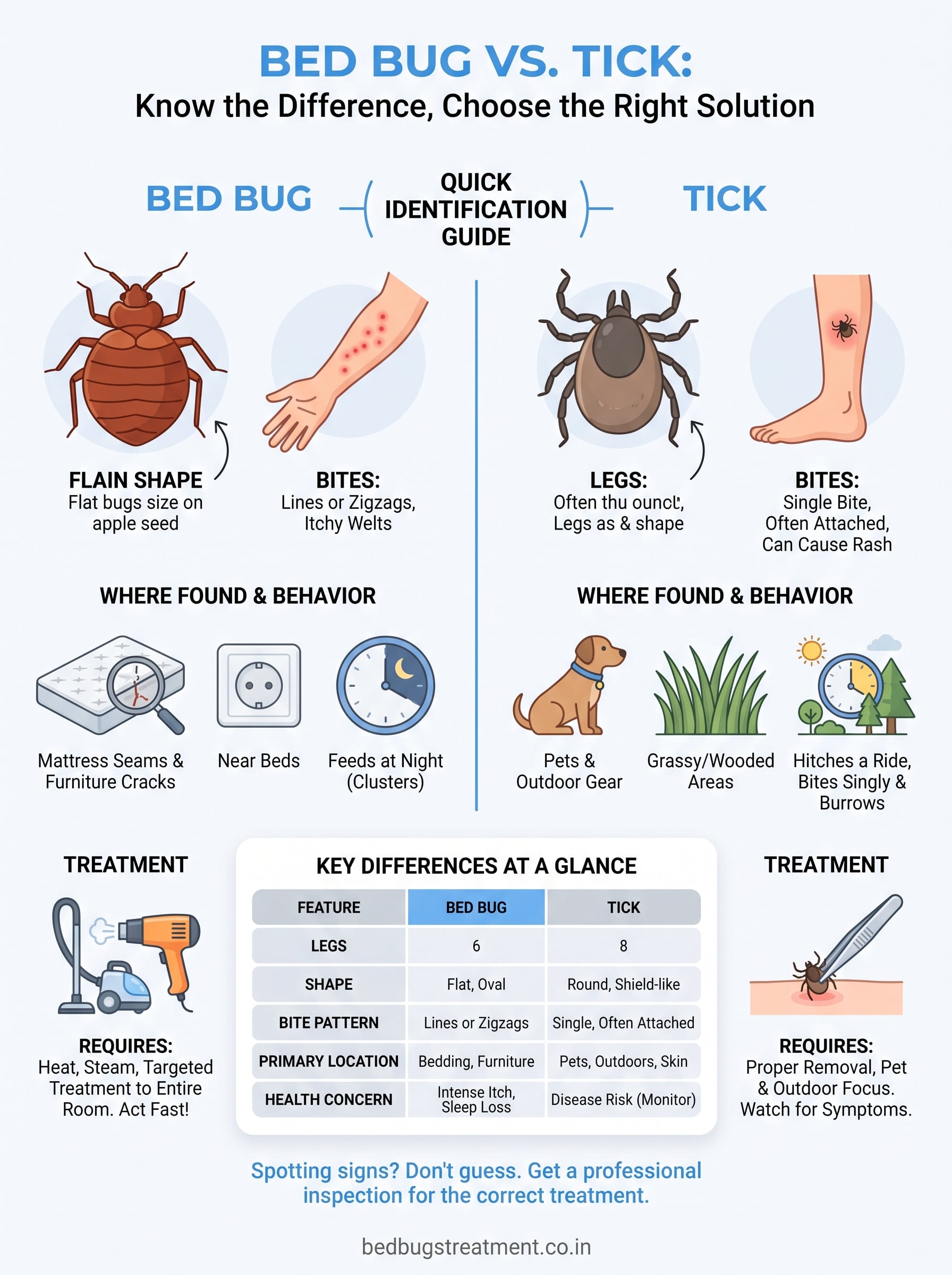
The short answer: bed bugs are flat, oval, and reddish-brown, they live in your mattress seams and furniture cracks, and they feed in clusters leaving bite patterns in lines or zigzags. Ticks are rounder, have eight legs like spiders, usually hitch a ride on pets or after outdoor walks, and bite singly, often burrowing into skin. Checking bite patterns and where you found the insect tells you almost everything you need to know within minutes.
In this guide, we’ll break down the physical differences side by side, explain how each pest behaves and spreads through Indian homes, and show you the exact infestation signs to check for, so you know whether to call a bed bug specialist or handle a stray tick from your pet. By the end, spotting the difference between a bed bug bite and a tick bite will take seconds, not guesswork.”
Why telling bed bugs and ticks apart matters
Different pests need completely different treatments
Getting the identification wrong wastes real money and buys the infestation more time to spread. Tick treatments focus on your pet, your yard, and any outdoor gear you bring inside, while bed bug treatment requires heat, steam, or targeted chemical application to your mattress, bed frame, and every crack in nearby furniture. Spray a general pesticide meant for ticks onto a bed bug problem and you’ll likely watch the bugs scatter into new hiding spots instead of dying off, which is exactly how a single-room issue turns into a whole-apartment infestation across a Bangalore flat.
Misidentify the pest, and you’ll treat the wrong problem while the real one keeps spreading.
Health risks aren’t the same either
Ticks carry the more serious long-term risk. In India, certain tick species can transmit diseases through their bites, so a tick found on a family member or pet deserves quick attention and, if symptoms follow, a doctor’s visit. Bed bugs, on the other hand, aren’t known to transmit disease, but they cause intense itching, sleep loss, and skin infections from scratching, and heavy infestations can affect mental health over weeks of disrupted sleep. Knowing which pest you’re dealing with tells you whether to prioritize a vet or GP visit versus scheduling a pest control appointment.
Cost and urgency differ too
A single tick brought in by a pet or after a trek is usually a one-time removal, no ongoing treatment needed. Bed bugs behave completely differently. They breed fast, hide deep in furniture, and require a multi-step process, inspection, extermination, and follow-up, to fully clear a home. Waiting even a week after spotting the first bed bug can mean the difference between treating one room and treating an entire house. That urgency is why getting the bed bug vs tick identification right at the first sighting saves both time and treatment cost down the line.
How to identify a bed bug or tick in seconds
Look at the body shape first
Grab a flashlight and look closely, because body shape settles this in under ten seconds whenever you’re running a bed bug vs tick check. Bed bugs are flat, oval, and roughly the size of an apple seed, with six legs and no visible head segment when viewed from above. Ticks look completely different: rounder, often shaped like a tiny shield, with eight legs clearly visible and a small head that pokes out front. If you count legs, you’ve already answered the question.
Six legs and a flat oval body means bed bug. Eight legs and a rounder shield shape means tick.
Check where you actually found it
Location tells you almost as much as the body does. Bed bugs turn up in mattress seams, headboard cracks, behind wall sockets near the bed, or inside sofa cushions, always close to where someone sleeps or sits for hours. Ticks show up on skin, in pet fur, or crawling on clothing after a walk near grass, parks, or wooded areas around Bangalore’s outskirts. A bed bug identification check starts at the mattress; a tick check starts on your dog or your ankles, so where you look is half of any bed bug vs tick comparison.
| Feature | Bed Bug | Tick |
|---|---|---|
| Legs | 6 | 8 |
| Shape | Flat, oval | Round, shield-like |
| Color | Reddish-brown | Brown to gray, darker when fed |
| Found where | Mattress, furniture cracks | Skin, pet fur, outdoor gear |
| Movement | Fast crawler | Slow crawler, often attached |
Run through this table once, and you’ll rarely need to guess again when comparing a bed bug and a tick side by side.
Bed bug bites vs tick bites: spotting the difference
Pattern and location on the skin
Examine the bite pattern before anything else, since it’s the fastest way to settle a bed bug vs tick debate without touching the insect at all. Bed bug bites show up in lines or zigzag clusters, usually on arms, shoulders, neck, or legs, wherever skin was exposed while you slept. Ticks bite once and often stay attached at the bite site for hours or even days, so you’ll typically find a single mark, sometimes with the tick still embedded, around the ankles, waistline, scalp, or behind the ears after time outdoors.
One bite with the bug still attached points to a tick. Several bites in a row point to bed bugs.
What the reaction looks like up close
Reaction speed differs too. Bed bug bites often take a day or two to swell into small, itchy, red welts, sometimes with a darker center, and they tend to appear in batches after a single night’s sleep. Tick bites usually cause a localized red bump right where the tick fed, and in some cases a spreading red rash develops days later, which needs a doctor’s attention given the disease risk ticks carry in parts of India. Watching how the bite site changes over 24 to 48 hours, plus checking for the insect itself, gives you a reliable answer even without an expert on hand.
What to do next if you find bed bugs or ticks at home
Once you’ve confirmed which pest you’re actually dealing with, whether it’s a bed bug or a tick, act fast, since both problems only get worse the longer you wait. Immediate action looks different for each pest, so don’t reach for the same solution for both.
If it’s a tick
Remove the tick with fine-tipped tweezers, gripping close to the skin and pulling straight up without twisting. Clean the bite with soap and water, check your pet for more ticks, and watch the area for a spreading rash or fever over the next few days. If a rash appears, see a doctor promptly, since tick-borne illness needs early treatment. Check your dog’s bedding and yard too, since ticks often ride indoors on fur.
If it’s a bed bug
A single bed bug rarely means a single bed bug for long. Strip your sheets, wash them in hot water, and inspect the mattress seams, headboard, and nearby furniture with a flashlight before deciding your next move.
One bed bug today usually means dozens within a few weeks if you skip treatment.
Don’t rely on store-bought sprays alone. A proper bed bug treatment needs trained technicians using heat, steam, or targeted chemical methods on every hiding spot, not just the mattress you happened to check. Book a free inspection early, before the bugs spread from your bedroom into your living room or a neighbor’s flat.
Frequently asked questions
Can a bed bug bite look exactly like a tick bite?
Rarely. In most bed bug vs tick bite comparisons, bed bug bites appear in lines or small clusters and take a day or two to swell into itchy welts, while a tick bite is typically a single mark, often with the tick still attached at the skin. If you see one bite with a tiny bug embedded in it, that’s a tick, not a bed bug.
Do bed bugs or ticks spread disease in India?
Bed bugs aren’t known to transmit disease, though heavy infestations can cause skin infections from scratching and disrupted sleep. Ticks are the bigger health concern, since certain species in India can transmit disease, so a rash or fever after a tick bite warrants a doctor’s visit.
Can I have both bed bugs and ticks at the same time?
Yes, especially in homes with pets that go outdoors. The two infestations are unrelated: ticks arrive through your pet or outdoor gear, while bed bugs spread through mattress seams and furniture. Check the bite pattern and the insect’s leg count separately for each concern rather than assuming they share a cause.
How fast should I act after spotting one bed bug?
As soon as possible. A single bed bug can multiply into dozens within a few weeks, so wash your bedding, inspect the mattress seams and nearby furniture, and book a professional inspection before the problem spreads to other rooms.
Now you know what’s biting you
Counting legs and checking bite patterns takes less than a minute, and now you’ve got a real answer instead of a guess. Bed bugs hide flat and close to your mattress, feeding in clusters overnight, while ticks ride in on pets or after a walk outdoors and bite once, often staying attached. That single distinction changes everything about what you do next, from which room you inspect to whether you’re calling a vet or a pest control technician.
Skip the guesswork the next time you spot a bite or a stray bug on your sheets, whether the culprit turns out to be a bed bug or a tick. If the signs point to bed bugs, don’t wait for a single bug to become dozens across your Bangalore apartment. Book a free bed bug inspection in Bangalore and let trained technicians confirm the problem and clear it before it spreads any further.