
You wake up with itchy red marks in a line on your arm, and now you’re checking your sheets for anything crawling. Spotting bed bugs on bed early makes all the difference between a quick fix and a full-blown infestation that spreads to every room in your flat. These pests hide in seams, folds, and cracks near where you sleep, which is exactly why most people miss them until the bites pile up.
This article shows you what to actually look for: the reddish-brown bodies, the tiny black droppings, the pale shed skins, and the musty smell that signals bugs bed activity has been going on for weeks. You’ll also learn how a bed bug light infestation looks different from a heavy one, so you know whether a mattress cleanup will do or you need professional help.
We cover identification, common hiding spots in Indian homes (mattress seams, bed frames, wooden furniture joints), and the early warning signs most homeowners overlook. If what you find matches a growing problem rather than a stray bug, our team runs same-day free inspections across Bangalore, Mumbai, Pune, and Delhi to confirm it and stop it before it spreads.
Why spotting bed bugs on your bed early matters
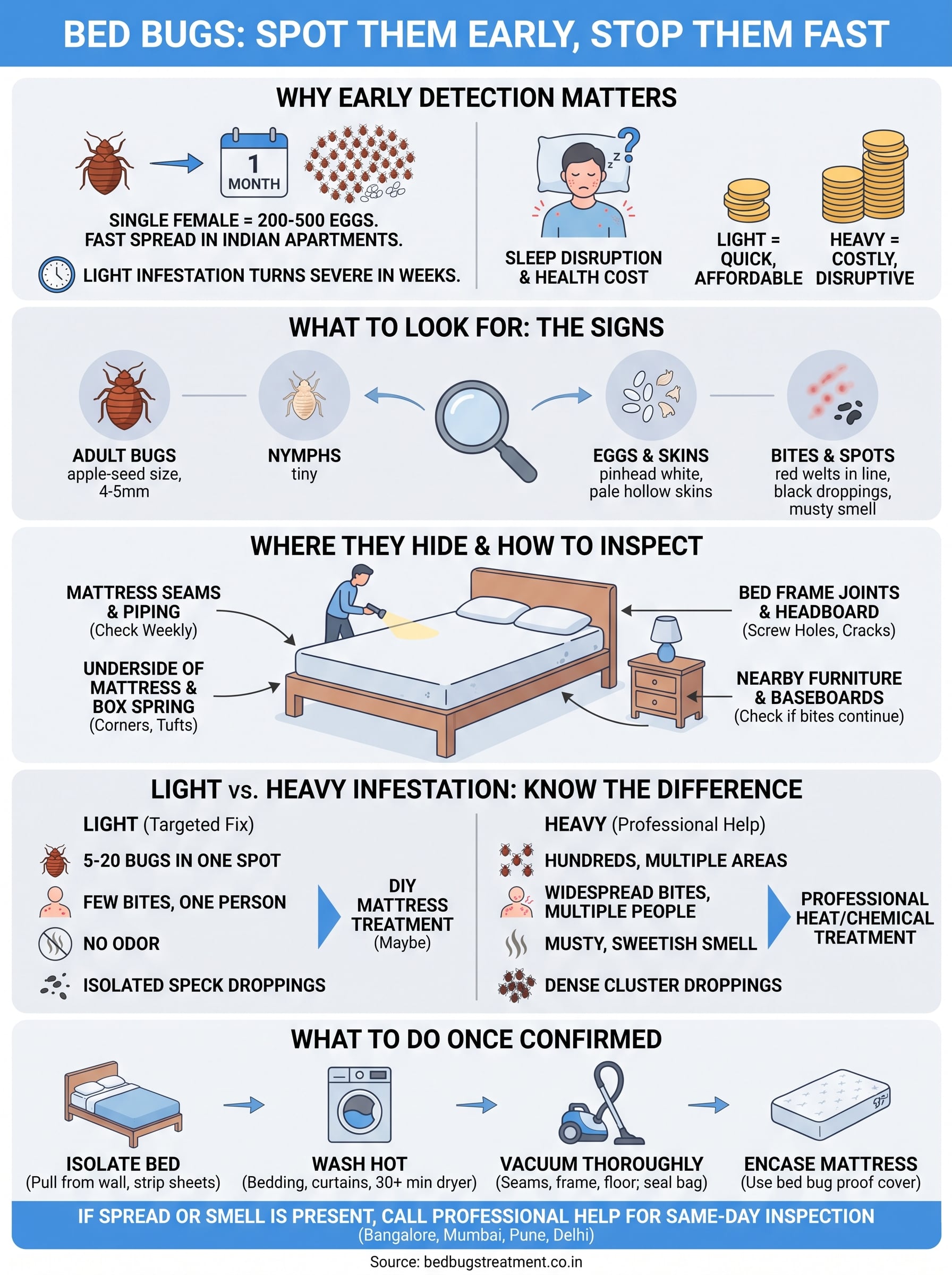
A single pregnant female bed bug can lay 200 to 500 eggs in her lifetime, and each egg hatches in about 6 to 10 days under normal Indian household temperatures. That means what starts as bed bugs on bed linen in your bedroom can spread to your sofa, your neighbor’s wall socket, or your office bag within a month if you ignore it. Catching the problem while it’s still a handful of bugs hiding in one mattress seam is the difference between a targeted, affordable treatment and tearing apart your entire home.
How fast a light infestation turns severe
Bed bugs don’t announce themselves. They feed at night, retreat into cracks by dawn, and survive for months without a blood meal if conditions turn unfavorable. This patience is why a bed bug light infestation often goes unnoticed for weeks. During that time, the population doesn’t just grow in your bedroom, it hitches rides on clothing, luggage, and furniture to colonize other rooms. What was a two-bug problem in your headboard becomes a building-wide issue if you live in a shared apartment complex, which describes most urban housing in Bangalore, Mumbai, and Pune.
The longer bed bugs stay hidden, the more rooms, furniture, and family members they end up affecting.
The health and sleep cost of waiting
Beyond the itchy welts, unchecked infestations cause real sleep disruption. Families report lying awake checking their skin, washing sheets obsessively, or moving to a couch that later gets infested too. Some people develop secondary skin infections from scratching bites repeatedly, and children or elderly household members often react more severely to bites than healthy adults. None of this is dangerous the way a disease-carrying pest is, but the psychological toll of feeling unsafe in your own bed adds up fast, especially when you can’t pinpoint where the bugs bed activity is coming from.
Early treatment costs less and disrupts your home less
The financial argument is just as strong as the comfort one. A light, localized infestation usually needs one or two treatment visits focused on a single mattress or bed frame. A mature infestation that has spread to closets, skirting boards, and adjoining rooms needs multiple rounds of treatment, more preparation work on your part, and sometimes replacement of infested furniture that can’t be salvaged.
| Stage | Typical treatment scope | Rooms affected | Relative cost |
|---|---|---|---|
| Light infestation | 1-2 targeted visits | Usually just the bed | Lowest |
| Moderate infestation | 2-3 visits, follow-up monitoring | Bedroom and nearby furniture | Moderate |
| Heavy infestation | Multiple visits, possible heat treatment | Multiple rooms or whole flat | Highest |
Waiting even two to three weeks after your first bite mark can push you from the first row of that table to the second or third. That’s the practical reason inspection habits matter more than most homeowners assume.
Why this matters more in Indian apartment living
Dense apartment blocks, shared laundry areas, and frequent movement of secondhand furniture make Indian cities particularly prone to fast-spreading bed bug problems. A single infested mattress delivered by a mover, or a piece of furniture picked up from an online resale listing, can introduce bed bugs into a home that had none before. Once inside, gaps around electrical switchboards, shared walls in flats, and communal corridors give bugs an easy path between units. This is exactly why pest control bodies like the Central Insecticides Board and Registration Committee under India’s Ministry of Agriculture regulate which treatment chemicals are safe for residential use, since improper DIY sprays can drive bugs deeper into walls rather than eliminating them. Recognizing the signs early keeps the problem contained to one room, one mattress, and one quick fix instead of a building-wide headache.
How to inspect your bed for bed bugs step by step
Finding bed bugs on bed surfaces takes patience and the right light, not fancy equipment. Grab a flashlight, a credit card or old ID, and maybe a magnifying glass if you have one, then set aside 15 to 20 minutes before you strip your bed for a proper check. Most homeowners rush this step and miss the early signs, which is how a light infestation turns into a room-wide one.
Set up before you search
Start by pulling your sheets, pillowcases, and mattress protector completely off the bed and shaking them out over a light-colored surface. Bright natural light works best, so do this near a window during the day rather than under a dim bedroom bulb at night. Keep a sealable plastic bag nearby in case you find anything you want to trap for a closer look or to show a technician later.
Work through the bed systematically
Follow the same path every time so you don’t skip a spot. This sequence works well for most Indian bed frames, whether they’re wooden, metal, or upholstered:
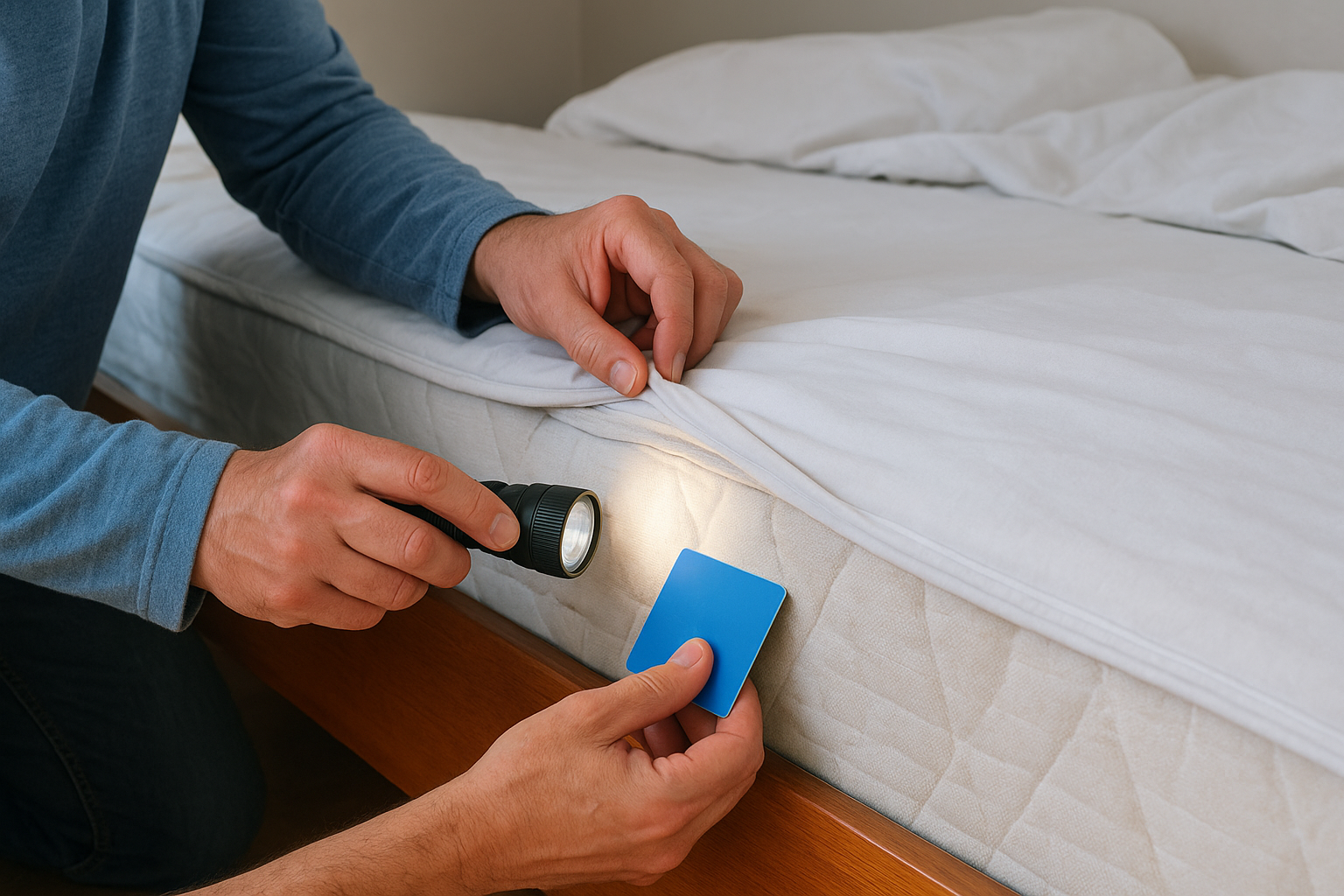
- Check the mattress seams first. Run your fingers and the edge of the card along every seam, tag, and piping fold, since this is where bugs and eggs cluster most.
- Flip the mattress and check the underside. Look at the corners and any button tufts or handles.
- Inspect the box spring or divan base. Peel back the fabric lining if it’s stapled loosely and check the wooden frame underneath.
- Examine the headboard and bed frame joints. Bugs love the screw holes, cracks, and joints where wood meets wood.
- Look along the piping and welts of the mattress cover, then check any nearby furniture legs touching the bed.
A thorough five-minute check of the seams and joints catches most infestations before they spread past the bed.
What to look for at each spot
Go slowly and look for tiny reddish-brown insects, pale yellow shed skins, small black or rust-colored spots (droppings), and pinhead-sized white eggs tucked into fabric folds. Since bugs bed infestations often start small, a magnifying glass helps you catch nymphs that are barely a millimeter long. Note down or photograph anything suspicious so you have a record if you need to book a professional inspection. Repeat this check weekly if you’ve traveled recently, bought secondhand furniture, or already spotted a few bites, since catching activity early keeps treatment simple and cheap.
Where bed bugs hide on and around your bed
Bed bugs squeeze into any gap roughly the width of a credit card, which is why they thrive in the small, dark spaces built into every mattress and bed frame. Understanding these hiding spots turns a random search into a focused one, and it explains why bed bugs on bed surfaces so often go unnoticed until the population grows large enough to spill into visible areas. Knowing exactly where to look also saves you time during your weekly inspection routine.
On the mattress and box spring
Seams, piping, and the underside of mattress tags are the first places bugs settle because they offer tight, dark cover close to a steady blood source, you. Corners tend to collect the heaviest activity since fabric layers overlap there, giving bugs multiple folds to hide between. Box springs are worse in some ways because the fabric dust cover on the bottom is often stapled loosely, creating a hidden cavity that’s rarely checked until an infestation is already established.
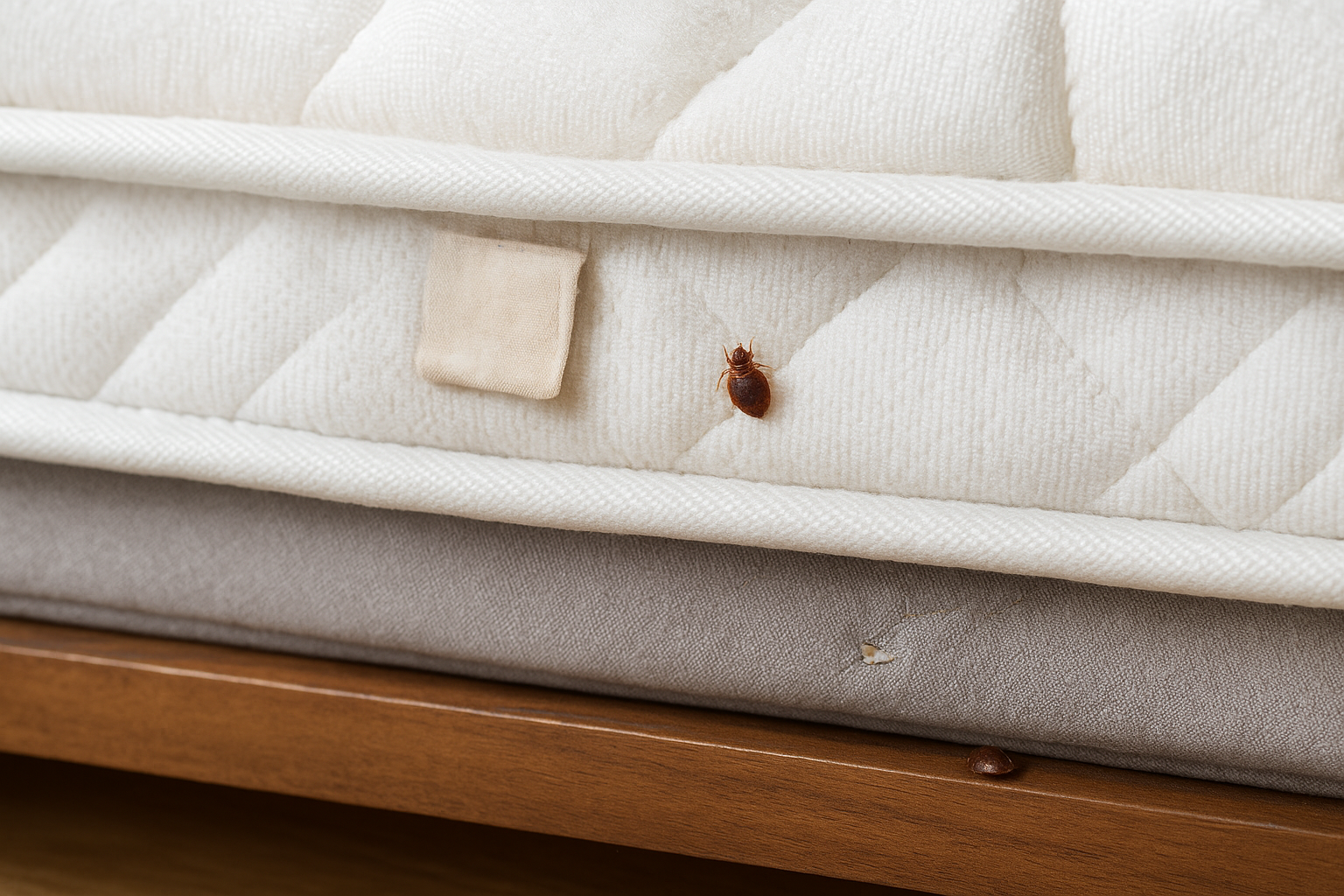
On the bed frame and headboard
Wooden frames with screw holes, joints, and carved detailing give bugs dozens of entry points, and metal frames aren’t safe either since bugs wedge into hollow tubing and joint connectors. Headboards mounted against the wall are a favorite because they combine wood cracks with wall proximity, letting bugs move between the bed and nearby electrical fittings. This is one reason bugs bed infestations often reappear even after a mattress-only treatment, since the frame was never inspected.
Around the room, not just on the bed
Once a colony grows, bugs spread outward to nightstands, baseboards, curtain folds, and even picture frames near the headboard. A bed bug light infestation usually stays confined to the bed itself, while anything found beyond a meter or two of the bed frame signals the problem has moved past the early stage.
| Hiding spot | Why bugs choose it | How often to check |
|---|---|---|
| Mattress seams and tags | Tight folds, close to host | Weekly |
| Box spring underside | Loose fabric, rarely disturbed | Monthly |
| Bed frame joints and screw holes | Dark cracks, wood or metal cavities | Monthly |
| Headboard and wall junction | Access to wall voids and sockets | Monthly |
| Nightstands, baseboards, curtains | Secondary spread once colony grows | If bites continue |
If you’re finding bugs more than a couple of feet from the bed, you’re no longer dealing with a light infestation.
Checking these spots in order, starting closest to the bed and working outward, tells you almost immediately how contained the problem still is. A quick sweep with a flashlight along baseboards near your headboard takes under a minute and often reveals whether professional treatment needs to cover just the bed or the whole room.
What bed bugs, eggs, and bites look like
Knowing exactly what you’re searching for turns a vague worry into a confirmed diagnosis. Bed bugs on bed surfaces go through several life stages, and each one looks different enough that mixing them up with lint, dust, or a stray ant is common. A clear mental picture of the adult, the egg, and the bite pattern saves you from either panicking over nothing or dismissing a real problem as "just dry skin."
Adults and nymphs
Adult bed bugs are flat, oval, and reddish-brown, about the size of an apple seed, roughly 4 to 5 millimeters long. After feeding, their bodies swell and turn a darker, almost purplish red, which is why you sometimes find a crushed bug leaving a rust-colored smear on the sheet. Nymphs are the immature stage, pale yellowish-white and nearly translucent when newly hatched, making them almost invisible against a white mattress cover. As they molt through five stages before adulthood, they darken slightly and grow closer to the adult’s size, so a mix of tiny pale insects and larger brown ones in the same seam usually means an active, breeding colony rather than a single stray hitchhiker.
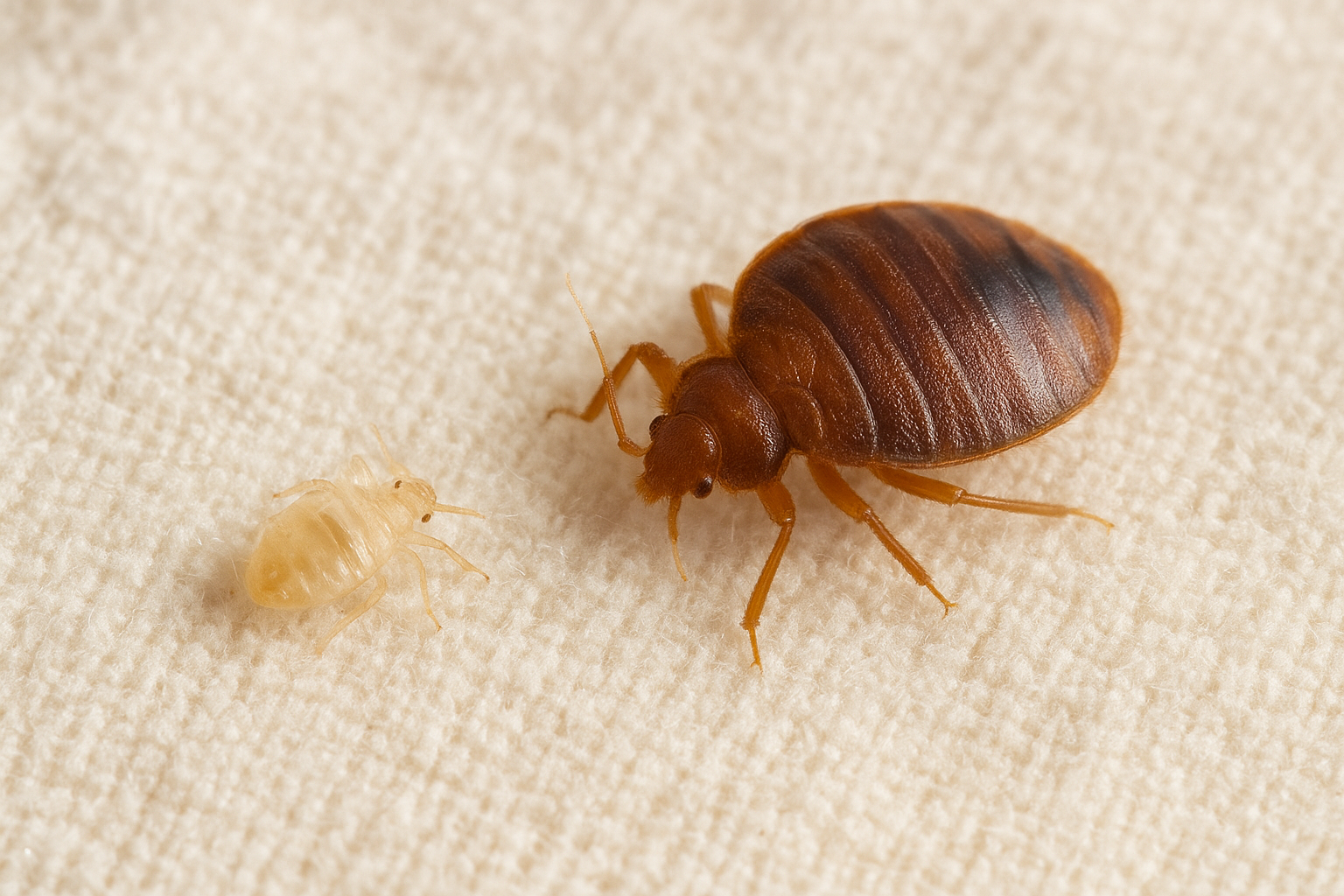
Eggs and shed skins
Eggs are pinhead-sized, pearly white, and slightly sticky, which lets the female glue them into fabric folds and wood cracks where they’re protected from casual cleaning. Shed skins look like pale, hollow outlines of the bug itself, left behind each time a nymph molts, and finding several in one spot is one of the clearest signs of established bugs bed activity rather than a passing bug that wandered in from outside.
What bites actually look like
Bites tend to appear in a line or small cluster, often on skin exposed while you sleep, arms, shoulders, and legs. They start as small, itchy, red welts and can take anywhere from a few hours to several days to show up, according to guidance from the U.S. Centers for Disease Control and Prevention. Reactions vary a lot between people, so two family members sleeping in the same bed can show very different bite patterns.
| Sign | Appearance | Where you’ll find it |
|---|---|---|
| Adult | Reddish-brown, flat, 4-5mm | Seams, joints, folds |
| Nymph | Pale, translucent, tiny | Same spots as adults |
| Egg | White, pinhead-sized, sticky | Fabric folds, wood cracks |
| Shed skin | Pale, hollow outline | Near feeding sites |
| Bite | Red welt, often in a line | Arms, shoulders, legs |
A cluster of pinhead eggs next to a shed skin is stronger proof of infestation than a bite mark alone.
Signs of a light infestation versus a full-blown one
Distinguishing a bed bug light infestation from a heavy one changes everything about your next step, from a DIY mattress treatment to calling in a professional crew. Numbers matter here: a light infestation might mean five to twenty bugs confined to one mattress seam, while a heavy one means hundreds spread across furniture, walls, and multiple rooms. Learning to read the scale accurately keeps you from either panicking over a single bug or ignoring a problem that’s already spreading fast.
What a light infestation looks like
Early on, you’ll usually find just a few live bugs or nymphs tucked into one or two mattress seams, along with a handful of eggs and maybe one or two shed skins nearby. Bite marks tend to be limited, sometimes just a few welts on one person, and you won’t smell anything unusual in the room yet. Droppings show up as tiny, isolated dark specks rather than clustered stains, and the activity stays confined to the bed itself with nothing found on nearby furniture or baseboards. This stage is exactly when treatment is fastest, cheapest, and least disruptive to your household.
Catching bed bugs while they’re still confined to one seam is the cheapest, easiest fight you’ll ever have with them.
What a full-blown infestation looks like
Once the colony grows, the signs multiply fast. You’ll spot bugs in daylight, not just at night, because overcrowding pushes them out of hiding. A musty, sweetish odor develops from their scent glands, clusters of dark droppings stain the mattress and frame, and bites appear on multiple family members across different rooms. Live bugs and eggs turn up on nightstands, behind picture frames, inside electrical switchboards, and along skirting boards well away from the original bed.
| Indicator | Light infestation | Full-blown infestation |
|---|---|---|
| Number of bugs found | 5-20, one area | Hundreds, multiple areas |
| Bite pattern | Few, one person | Widespread, multiple people |
| Odor | None noticeable | Musty, sweetish smell |
| Droppings | Isolated specks | Dense clusters, staining |
| Spread | Confined to bed | Bed, furniture, walls, other rooms |
Why the distinction changes your response
Spotting bed bugs on bed linen alone, with no smell and no spread beyond the mattress, usually means a targeted mattress and frame treatment will solve it. Finding activity in three or four spots around the room, or that telltale musty smell, means the problem needs a fuller inspection and likely more than one treatment visit to fully clear it out.
What to do once you confirm bed bugs on your bed
Confirming bed bugs on bed surfaces means it’s time to act fast, not panic. Isolate the bed first: pull it away from the wall, strip everything off it, and stop sitting or sleeping there until you’ve taken the next steps. Bag up any items you removed from the room in sealed plastic bags so you don’t carry bugs to another part of the house while you sort out treatment.
Contain the spread before treatment
Start with these immediate actions, in order:
- Wash all bedding, pillowcases, and curtains on the hottest cycle your fabric allows, then run them through a hot dryer cycle for at least 30 minutes.
- Vacuum the mattress, seams, bed frame, and surrounding floor thoroughly, then seal the vacuum bag or empty the canister into a sealed bag outside immediately.
- Encase the mattress and box spring in a bed bug proof cover if you have one on hand, which traps any remaining bugs inside and starves them out over months.
- Avoid moving furniture from the infested room to other rooms until treatment is complete, since this is the single most common way infestations spread through a home.
Cleaning buys you time, but it rarely eliminates a colony on its own once eggs are already laid in the seams.
Decide if DIY is enough
A confirmed bed bug light infestation with just a handful of bugs in one mattress seam sometimes responds to thorough cleaning plus a registered contact spray applied strictly per label instructions. Anything beyond that, multiple bites, bugs in the frame, or any hint of that musty odor, means DIY treatment usually just scatters the colony deeper into the wall voids instead of solving it. Spraying incorrectly is one of the most common mistakes homeowners make, since it pushes surviving bugs into cracks that a follow-up inspection can’t easily reach.
When to call in professional treatment
Booking a professional inspection makes sense the moment you find bugs in more than one spot, spot eggs alongside shed skins, or notice bites on more than one family member. Our technicians run a same-day free inspection across Bangalore, Mumbai, Pune, and Delhi, confirm the infestation stage, and recommend heat, steam, or low-toxicity chemical treatment depending on how far it’s spread. Every job comes with a 12-month warranty and a 30-day money-back guarantee, so you’re not gambling on a treatment that doesn’t hold. Reaching out through our 24/7 phone or WhatsApp support gets you a technician scheduled without waiting days while the colony keeps growing.
FAQs about bed bugs on your bed
**How many bed bugs count as a light infestation?**A light infestation typically means 5 to 20 bugs confined to a single mattress seam or joint, with only a few bites, no musty odor, and no droppings beyond isolated specks.
**Can I get rid of bed bugs on my bed myself?**A confirmed light infestation with just a handful of bugs in one seam sometimes responds to thorough washing, vacuuming, encasement, and a registered contact spray used strictly per label instructions. Anything beyond that, multiple bites, bugs in the frame, or a musty smell, usually needs professional treatment, since DIY sprays often scatter the colony deeper into wall voids.
**How can I tell bed bugs apart from their eggs or shed skins?**Adults are reddish-brown, flat, and about 4-5mm long; nymphs are pale and nearly translucent. Eggs are pinhead-sized, pearly white, and sticky. Shed skins look like pale, hollow outlines left behind after a nymph molts.
**Do I need to treat the whole room, or just the bed?**If everything you find is confined to the mattress and frame, with no smell and no bugs found further than a meter or two away, a targeted mattress and frame treatment is usually enough. Signs beyond that radius mean the problem needs a fuller room inspection.
**How often should I check my bed for bed bugs?**A weekly check of the mattress seams, box spring, and frame joints is enough for most households, done more often if you’ve traveled recently, bought secondhand furniture, or already spotted a few bites.
Getting back to worry-free sleep
Spotting bed bugs on bed surfaces early is the single biggest factor in how easy your fix will be. A quick weekly check of your seams, joints, and headboard costs you fifteen minutes. Ignoring those same signs costs you weeks of disrupted sleep and a much bigger bill later. Whether you’ve found a handful of bugs in one seam or a bed bug light infestation that’s already crept toward your nightstand, the right move is the same: confirm what you’re dealing with before it spreads further.
Don’t wait until bites show up on every family member or that musty smell settles into the room. Our technicians handle exactly this problem every day across Bangalore, Mumbai, and Pune, with treatments safe for kids, pets, and elderly parents. If you want a straight answer on what’s happening in your bedroom, book a free bed bug inspection and get it sorted before it grows.