
You spot a few bites on your arm, check the mattress seams, and there they are. Now you want them gone, but you don’t want your bedroom smelling like a chemical plant for a week, especially with kids or pets around. Searching for a bed bugs herbal spray feels like the safer first move, and it often is, if you know which ones actually work and where they fall short.
This article walks through seven herbal spray options people in Bangalore and across India actually use at home, from neem and tea tree oil blends to lavender and eucalyptus mixes. We’ll cover what each spray does well, how to mix and apply it, and honestly, where it fails against a real infestation. Herbal sprays can repel bed bugs and kill a few stragglers, but eggs and hidden colonies usually need more than a spray bottle.
We’ve treated thousands of Bangalore homes and seen what happens when DIY sprays buy time instead of solving the problem. So alongside the recipes, we’ll flag the warning signs that mean it’s time to call in trained technicians for a proper inspection before the infestation spreads.
1. Lavender oil spray for bed bugs
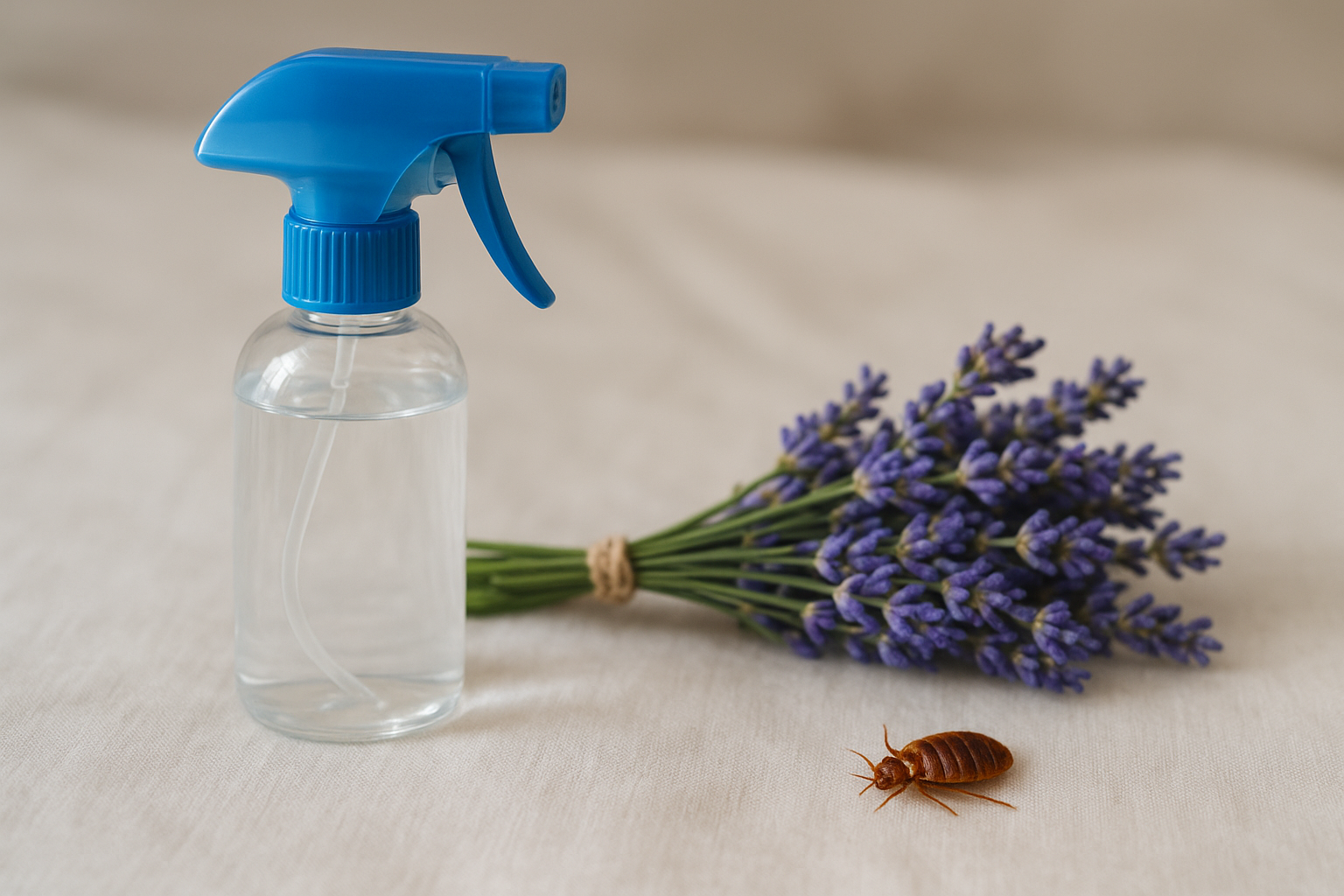
Lavender is probably the first thing people try when they search for a bed bugs herbal spray, and it’s not a bad starting point. It smells pleasant, it’s cheap, and every kirana store or online pharmacy in Bangalore stocks the essential oil version. But lavender works differently from a pesticide, and understanding that difference matters before you rely on it for a full infestation.
How it works against bed bugs
Lavender oil contains linalool and linalyl acetate, two compounds that irritate a bed bug’s respiratory system and scent receptors. Bed bugs use scent trails to find you and their hiding spots, so a strong lavender barrier confuses that navigation and pushes them away from treated areas. It doesn’t paralyze or kill adult bugs on contact the way a pyrethroid spray does. Think of it as a repellent, not an exterminator, useful for keeping bugs off a mattress edge or suitcase, not for wiping out a colony hiding in the bed frame.
Lavender oil keeps bed bugs away from a spot, but it rarely kills the ones already living there.
DIY spray recipe and application
Making a batch at home takes five minutes and needs almost nothing you don’t already own:
- 15-20 drops pure lavender essential oil
- 1 cup distilled water
- 1 tablespoon witch hazel or rubbing alcohol (as an emulsifier)
- Empty spray bottle
Shake it well before every use since oil and water separate quickly. Spray along mattress seams, bed frame joints, skirting boards, and the underside of furniture. Reapply every two to three days, since the scent fades faster than you’d expect in Bangalore’s humidity.
Precautions and effectiveness limits
Don’t oversaturate fabric or wood, since undiluted lavender oil can stain lighter upholstery and leave an oily residue on mattresses. Keep the spray away from cats specifically, since essential oils including lavender are toxic to felines even in small amounts absorbed through skin or grooming, according to the ASPCA. Test a small hidden patch on any fabric first.
As for actual results, lavender spray does nothing to bed bug eggs, which have a waxy shell that essential oils can’t penetrate. If you’re dealing with more than the occasional bite or a single bug you spotted while cleaning, lavender alone won’t clear an established infestation. It buys you a few days of relief while you plan the next step, which usually means a proper inspection to find where the eggs and adults are actually breeding.
2. Tea tree oil spray for bed bugs
Tea tree oil shows up in a lot of natural pest control lists, and for bed bugs specifically, it has a slightly stronger reputation than lavender when it comes to actually killing nymphs on contact. It smells medicinal rather than floral, which some people prefer since it doesn’t linger on pillows the way lavender does. If you’ve got a mild case or want a spray to use alongside other treatments, tea tree oil is worth having in the cupboard.
How it works against bed bugs
The active compound here is terpinen-4-ol, which breaks down the outer cuticle of soft-bodied nymphs and disrupts their nervous system on direct contact. Adult bed bugs have a tougher exoskeleton, so the same spray that kills a nymph outright often just stuns or repels an adult for a short window. This makes tea tree oil a partial exterminator, more effective than lavender against young bugs but still unreliable against a mature, breeding population.
Tea tree oil can kill young bed bugs on contact, but adults usually just get irritated and move.
DIY spray recipe and application
Mix 10 to 15 drops of pure tea tree oil with one cup of water and half a tablespoon of liquid soap to help it bind and cling to surfaces. Shake before each use and spray directly onto visible bugs, mattress seams, and crevices where you’ve seen activity. Apply every other day for a week if you’re tracking a small, contained problem.
Precautions and effectiveness limits
Tea tree oil is toxic to dogs and cats even in diluted spray form, so keep pets away from treated surfaces until they dry completely, per veterinary guidance from the ASPCA. It also stains fabric more than lavender does, so patch-test first. Like most herbal sprays, it won’t touch eggs, and heavier infestations spread faster than a spray bottle can keep up with.
3. Clove oil spray for bed bugs
Clove oil is stronger and sharper than lavender or tea tree, and that’s exactly why it earns a spot on most bed bugs herbal spray lists. It’s also common in Indian kitchens already, so you don’t need to hunt for it online or wait for delivery. If you want something with a bit more punch against adult bugs, clove oil is a reasonable next step up.
How it works against bed bugs
Clove oil’s active compound, eugenol, is a natural insecticide that affects a bed bug’s nervous system on contact, causing paralysis in nymphs and weaker adults within minutes. Research on eugenol-based formulations has shown real knockdown effects against several insect pests, though most testing happens in lab conditions rather than a cluttered Bangalore bedroom. Eugenol also has a strong, spicy scent that lingers longer than lavender or tea tree, which helps as a repellent between direct treatments.
Clove oil hits harder than lavender or tea tree, but it still can’t reach eggs tucked into mattress seams.
DIY spray recipe and application
Combine 10 drops of clove essential oil with one cup of water and a teaspoon of dish soap to help it emulsify. Spray directly onto bugs when you see them, plus along seams, headboards, and skirting boards. Reapply every two to three days since the scent fades with regular washing and airflow.
Precautions and effectiveness limits
Eugenol is potent enough to irritate skin and eyes, so always dilute it and avoid spraying near your face or open cuts. It can also darken light fabrics, so patch-test cushions or mattress covers first. Clove oil kills some adults and nymphs, but eggs and hidden colonies inside furniture joints stay untouched, meaning a real infestation still needs a fuller treatment plan behind it.
4. Lemongrass oil spray for bed bugs
Lemongrass has a sharp, citrusy smell that most people find pleasant, which makes it an easy sell for households that gave up on clove or tea tree oil because of the medicinal odor. It’s also widely available in Bangalore, since lemongrass grows locally and shows up in everything from tea to cooking. As a bed bugs herbal spray, it leans more toward repelling than killing, but it’s worth having in rotation if you’re trying to keep bugs from spreading to untreated rooms.
How it works against bed bugs
The active ingredient, citral, disrupts a bed bug’s ability to sense pheromone trails, which throws off how it navigates back to a feeding or hiding spot. Some lab studies on citronella-family compounds show mild toxic effects on soft-bodied insects, but field results against bed bugs specifically are thin. Treat lemongrass spray as a navigation disruptor more than a killer, useful for keeping bugs out of a treated zone rather than clearing an active colony.
Lemongrass spray confuses bed bugs more than it kills them, which makes it a barrier tool, not a cure.
DIY spray recipe and application
Mix 15 drops of lemongrass essential oil with one cup of water and a tablespoon of witch hazel. Shake well and spray around bed legs, luggage, and skirting boards as a barrier rather than a direct hit on visible bugs. Reapply every two to three days, since the citrus scent breaks down fast with regular cleaning and airflow.
Precautions and effectiveness limits
Lemongrass oil can irritate sensitive skin in concentrated form, so always dilute before spraying near bedding. It’s generally considered safer around pets than clove or tea tree oil, though direct ingestion still isn’t advisable. Like the others, it leaves eggs and hidden colonies untouched, so don’t expect it to solve an infestation that’s already spread across multiple rooms.
5. Lemon eucalyptus oil spray for bed bugs
Lemon eucalyptus oil gets more attention as a mosquito repellent, but it shows up on bed bugs herbal spray lists too, mostly because of its strong, medicinal citrus scent. It’s less common in Indian kitchens than clove or lemongrass, but most pharmacies and online stores in Bangalore stock it under mosquito or insect repellent shelves. If you already have a bottle for outdoor use, it’s worth testing indoors before buying something new.
How it works against bed bugs
The active compound, PMD (para-menthane-3,8-diol), works by masking the scent cues bed bugs use to detect a warm body nearby. It doesn’t kill on contact the way clove oil does, and it has almost no effect on a bug’s exoskeleton or nervous system. The US CDC recognizes PMD as an effective mosquito repellent, but that research doesn’t extend to bed bug eradication, so treat any pest control claims here with caution.
Lemon eucalyptus oil masks your scent from bed bugs, but it won’t do a thing to the ones already in your mattress.
DIY spray recipe and application
Mix 15 drops of lemon eucalyptus oil with one cup of water and a tablespoon of witch hazel. Spray along bed frames, headboards, and luggage zippers as a scent barrier, and reapply every two to three days since the citrus notes fade quickly indoors.
Precautions and effectiveness limits
Undiluted lemon eucalyptus oil can irritate skin and eyes, so always dilute before spraying near where you sleep. Keep it away from young children’s bedding, since concentrated citrus oils aren’t recommended for infants. It offers zero protection against eggs, and relying on it alone while an infestation grows usually just delays the inspection you actually need.
6. Peppermint oil spray for bed bugs
Peppermint oil has a reputation as an all-purpose pest deterrent, and it shows up in Bangalore homes for ants and cockroaches before anyone thinks to try it on bed bugs. It smells clean and cooling, which makes it easier to live with than clove or tea tree oil if you’re spraying near pillows every night. As a bed bugs herbal spray, it works best as a repellent layered on top of other treatments rather than a standalone fix.
How it works against bed bugs
Menthol, the active compound in peppermint oil, irritates a bed bug’s sensory organs and overwhelms the receptors it uses to locate a host. Some entomology research shows menthol vapors reduce activity in soft-bodied insects, but the effect is short-lived and depends on concentration. Adult bed bugs tolerate it better than nymphs do, so don’t expect a strong menthol spray to knock out a mature colony on its own.
Peppermint oil scrambles a bed bug’s senses for a while, but it doesn’t clear out an established colony.
DIY spray recipe and application
- 15 drops peppermint essential oil
- 1 cup water
- 1 tablespoon witch hazel
- Empty spray bottle
Shake before each use and mist mattress seams, bed legs, and skirting boards. Reapply every two to three days, since the scent weakens faster in warm, humid rooms.
Precautions and effectiveness limits
Concentrated peppermint oil can burn skin and irritate a cat’s respiratory system, so keep pets away until the spray dries fully. Avoid spraying directly on pillowcases if anyone in the house has sensitive skin. Like the other oils on this list, peppermint spray does nothing to eggs, so a heavier infestation still needs proper inspection and treatment behind it.
7. Neem oil spray for bed bugs
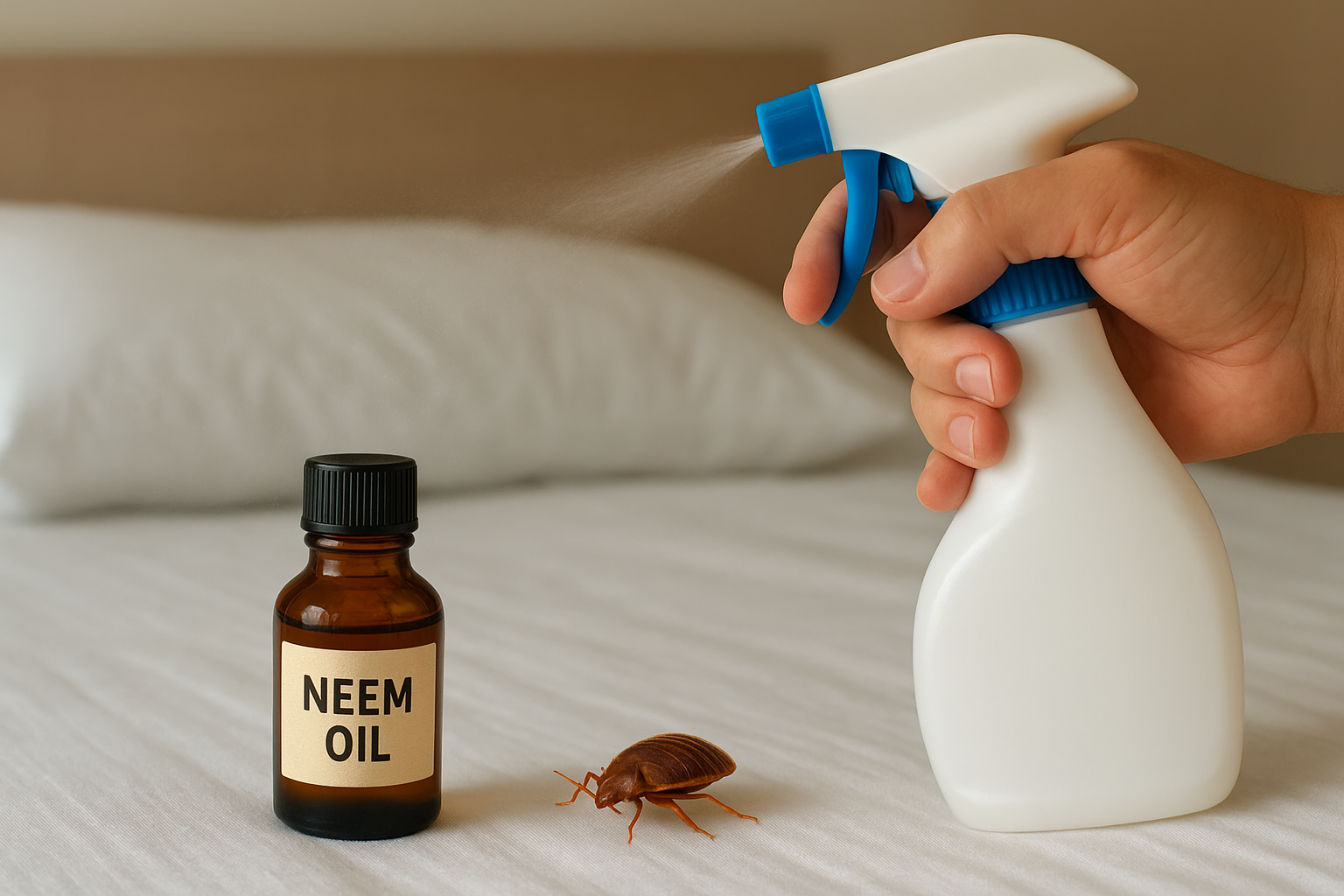
Neem oil closes out this list because it’s the one option with real roots in Indian households already, long before anyone searched for a bed bugs herbal spray online. Grandmothers used neem for skin issues, lice, and general pest control for decades, and that familiarity makes it an easy first try for people wary of essential oils they’ve never used before. It’s also cheap and sold everywhere from Koramangala pharmacies to general stores in smaller towns.
How it works against bed bugs
Neem oil contains azadirachtin, a compound that disrupts insect hormone systems and interferes with feeding and reproduction rather than killing on contact. This makes neem slower-acting than clove or tea tree oil, but it has a genuine edge: azadirachtin can affect a bed bug’s ability to molt and lay viable eggs, which none of the other oils on this list really touch. Research from agricultural entomology backs neem’s broader insect growth disruption, though bed bug specific trials remain limited.
Neem oil doesn’t kill fast, but it’s one of the only herbal options that can interfere with a bed bug’s ability to reproduce.
DIY spray recipe and application
Mix two tablespoons of pure neem oil with one cup of water and a teaspoon of mild liquid soap to help it blend. Spray thoroughly along mattress seams, bed frames, and skirting boards, focusing on areas with visible activity, and reapply every three days for at least two weeks.
Precautions and effectiveness limits
Neem oil has a strong, bitter smell that some people find unpleasant on bedding, so test tolerance before committing to nightly use. It’s also toxic to pets in larger quantities, so keep cats and dogs off freshly sprayed surfaces. Even with its reproductive effects, neem oil won’t clear eggs already laid or reach bugs deep inside furniture joints.
Making herbal sprays part of your bed bug plan
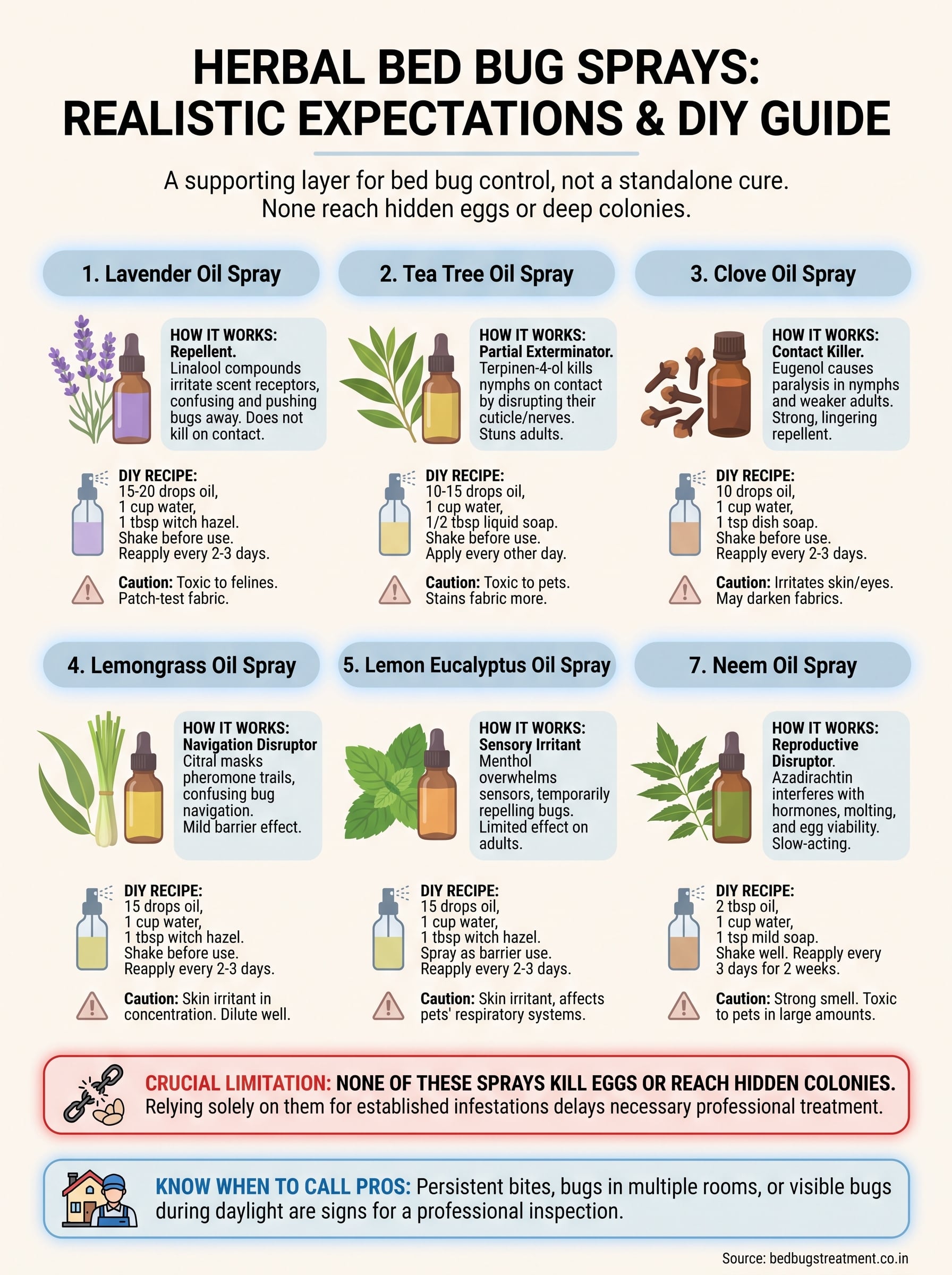
Every bed bugs herbal spray on this list does something useful, whether it’s confusing bugs with scent, stunning nymphs on contact, or slowing down reproduction with neem’s azadirachtin. None of them touch eggs reliably, and none reach bugs buried deep in furniture joints or behind skirting boards. Treat these sprays as a supporting layer, not the whole plan, especially once you’re seeing bites every morning or bugs in daylight.
Gauge your situation honestly before you commit weeks to spray bottles and patch tests. A single bug on a mattress seam might respond to lavender or clove oil. Multiple rooms, recurring bites, or bugs you can’t locate mean the colony has already outgrown what any herbal spray can manage. At that point, a proper inspection saves you more time than another batch of DIY spray. If you’re in Bangalore and the bites keep coming, book a free bed bug inspection in Bangalore and get a technician to check what’s actually breeding in your home.
FAQs about bed bugs herbal sprays
Do herbal sprays kill bed bug eggs?
No. None of the oils covered here, including neem and clove, can penetrate the waxy shell that protects bed bug eggs. Herbal sprays only affect nymphs and adults on contact or through repellent action, so eggs hatch on schedule regardless of how often you spray.
Which herbal spray works best against bed bugs?
Clove oil and tea tree oil have the strongest contact effects, paralyzing nymphs and weaker adults, while neem oil is the only option that interferes with molting and reproduction over time. Lavender, lemongrass, and lemon eucalyptus oils mainly repel rather than kill.
Are herbal bed bug sprays safe around pets?
Not entirely. Lavender, tea tree, peppermint, and neem oils are all toxic to cats and dogs in concentrated or repeated exposure, per ASPCA guidance. Keep pets off any sprayed surface until it’s fully dry, and consider skipping essential oil sprays altogether in homes with cats.
How often should I reapply a herbal bed bug spray?
Most of the recipes in this article need reapplication every two to three days, since the active scent compounds break down quickly, especially in Bangalore’s humidity. Neem oil is the exception, needing repeated applications over at least two weeks to disrupt reproduction.
When should I stop relying on herbal sprays and call a professional?
Once bites recur daily, bugs show up in more than one room, or you spot bugs during the day, the colony has outgrown what any spray bottle can manage. That’s the point to book a proper inspection instead of rotating through more DIY recipes.