You bought a bug spray bed bugs are supposed to hate, sprayed every mattress seam and skirting board, and two weeks later the bites are back. Sound familiar? Most sprays sold in Indian general stores are watered down repellents that scatter bed bugs into the next room instead of killing them, and eggs almost always survive the mist.
So which ones actually work? The honest answer is that a handful of insecticide spray for bed bugs formulas, built around actives like deltamethrin, cypermethrin, or plant-based oils, do kill on contact when used correctly on mattress seams, bed frames, and skirting boards. Others are only good for repelling bed bugs temporarily, which helps but never ends an infestation on its own.
In this list, we’ve gone through seven sprays that Indian households actually reach for, from a reliable mattress spray for bed bugs to a strong bed bug killer spray for cracks and crevices, and told you straight which ones deliver and which ones just smell strong. We’ve treated thousands of homes across Bangalore, Mumbai, and Pune, and we’ll flag exactly where spray alone won’t cut it and professional treatment becomes the smarter call.
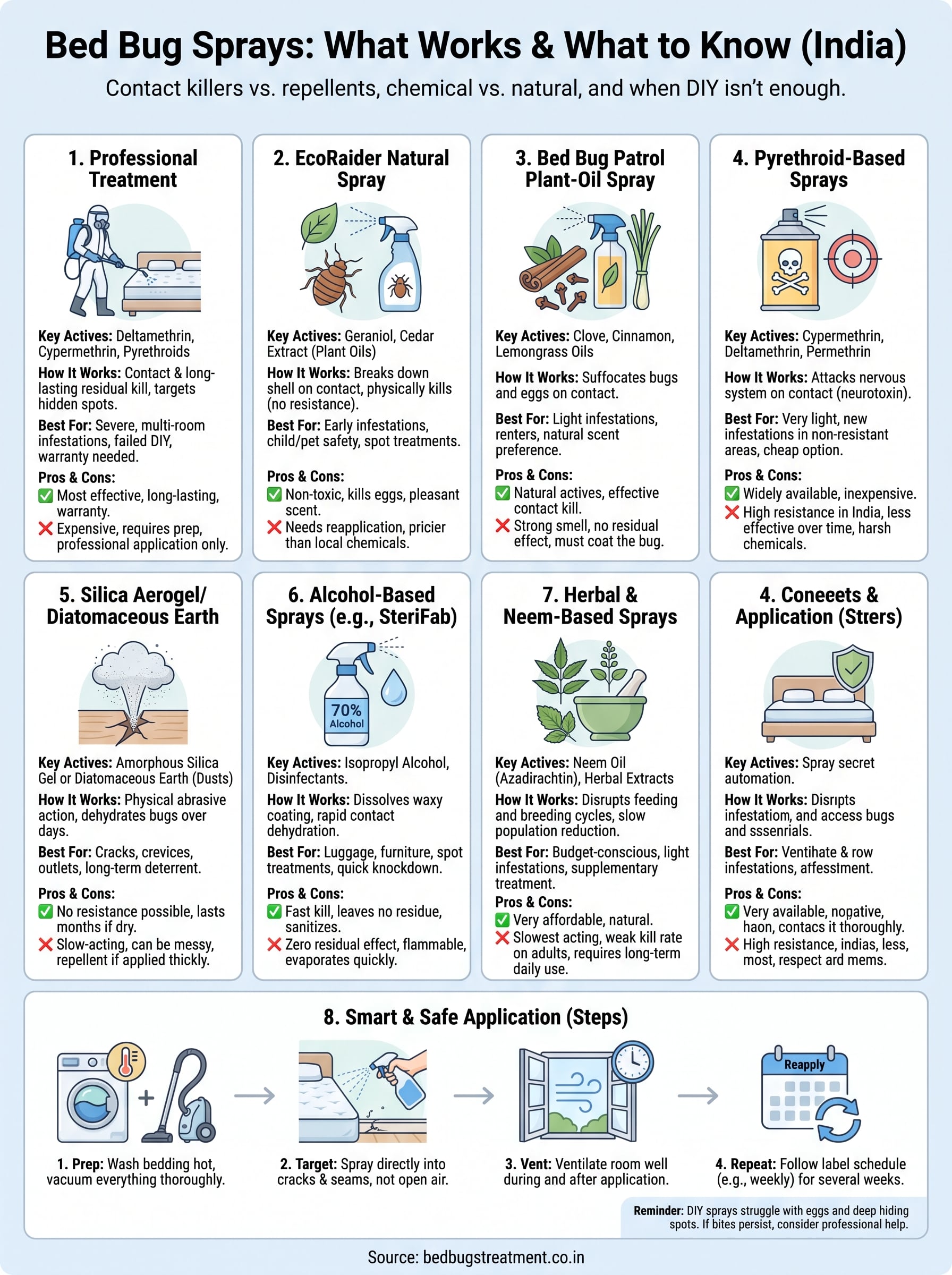
1. Professional bed bug spray treatment
When a DIY bug spray bed bugs solution has already failed you, professional-grade spraying is the option that actually closes out an infestation instead of just knocking it back for a week. This isn’t a stronger version of what you buy at the local store, it’s a targeted application by trained technicians who know exactly where bed bugs hide, breed, and lay eggs, and who use formulations that aren’t sold over the counter in India.
How it works
Professional treatment combines a bed bug killer spray built on residual actives like deltamethrin or cypermethrin with a structured inspection process, so the chemical actually reaches every hiding spot instead of just the visible ones. Technicians check mattress seams, bed frame joints, skirting boards, wall sockets, and even furniture upholstery before applying anything, because a spray that misses one crack leaves enough bed bugs to restart the whole infestation within weeks.
A spray is only as good as the inspection behind it, and that’s the one thing DIY treatments almost always skip.
Best for
This approach suits households where over-the-counter sprays haven’t worked, where the infestation spans multiple rooms, or where you’ve got children, pets, or elderly family members and need an odorless, low-toxicity treatment rather than a harsh chemical fog. It’s also the right call for anyone who’s tried two or three retail sprays already and is tired of guessing.
How it’s applied
A typical visit follows four steps:
- Free inspection to confirm bed bug presence and map hiding spots
- Targeted spray application on mattress seams, cracks, and furniture joints using low-toxicity actives
- Follow-up visit within 2 to 3 weeks to catch newly hatched nymphs
- Prevention guidance covering luggage habits, secondhand furniture, and early warning signs
Price range in India
Expect professional treatment to run higher than a retail can of spray, but with a warranty attached. At BedBugsTreatment.co.in, pricing depends on the number of rooms and severity, and every service comes with a 12-month warranty plus a 30-day money-back guarantee, something no bottle off the shelf will ever offer you. We run this service in Bangalore, Mumbai, and Pune, so local pricing and availability can vary slightly by city.
2. EcoRaider natural bed bug killer spray
EcoRaider has built a name for itself as a natural bed bug killer spray that doesn’t rely on synthetic pyrethroids, which makes it one of the few plant-based options with lab data backing its kill claims. It’s imported and sold through a handful of online retailers in India, and it’s usually the first thing people try before calling in professionals because it feels safer to use around the house.
How it works
The active ingredients are geraniol and cedar extract, plant oils that break down a bed bug’s outer shell on contact rather than attacking its nervous system the way chemical insecticides do. Because the mechanism is physical, not neurological, bed bugs can’t build resistance to it the way they’ve done with some older pyrethroid sprays. It also kills eggs, which many repellent-only sprays simply don’t touch.
A spray that kills eggs, not just adults, is the difference between control and a repeat infestation.
Best for
This one suits early-stage infestations, spot treatments in a single room, and households that want a child- and pet-safe bed bug spray without synthetic chemicals lingering in the air.
How to use it
Shake well, then spray directly onto mattress seams, bed frame joints, and baseboards until visibly damp. Reapply every 7 to 10 days for three to four weeks.
Price range in India
A 16 oz bottle typically costs between ₹1,800 and ₹2,500 when imported, making it pricier than local sprays but still cheaper than a full professional visit.
3. Bed Bug Patrol plant-oil spray
Bed Bug Patrol is another plant-oil formula, and it’s often shelved right next to EcoRaider in online searches because both promise a bed bug spray repellent effect without synthetic chemicals, making it a common pick for anyone comparing bug spray bed bugs options online. The formula leans on clove, cinnamon, and lemongrass oils, giving it a stronger smell than EcoRaider but a similar contact-kill approach.
How it works
The oil blend suffocates bed bugs and their eggs by clogging their respiratory openings, which means it works fastest when the spray actually pools on the insect rather than just misting the air around it. This is a bed bugs mattress spray in the truest sense, since it’s designed to be sprayed heavily along seams and tufts where bed bugs cluster during the day.
Suffocation-based sprays only work when they physically coat the bug, not the room around it.
Best for
It suits renters and small apartments dealing with a light, newly spotted infestation, especially where a bed bug deterrent spray with a natural scent is preferred over a chemical one.
How to use it
Spray liberally on mattress seams, box springs, and furniture joints, let it air dry fully, and repeat every five to seven days for two to three weeks. Don’t skip drying time, since damp fabric attracts other pests.
Price range in India
A 24 oz bottle usually costs between ₹1,500 and ₹2,200 through Indian online sellers, sitting close to EcoRaider’s price but with a shorter shelf life once opened.
4. Pyrethroid-based insecticide sprays
Walk into any hardware shop in India and the insecticide spray for bed bugs you’ll be handed almost certainly contains a pyrethroid, cypermethrin, deltamethrin, or permethrin. These are the chemical workhorses of retail pest control, sold under dozens of local brand names, and they’re what most households try first because they’re cheap and everywhere.
How it works
Pyrethroids attack a bed bug’s nervous system on contact, causing paralysis and death within hours when the dose is strong enough. The problem is resistance. Bed bugs India-wide have been exposed to these actives for decades through general pest control, and many local populations no longer die from standard doses, which is why the same bed bug control spray that worked five years ago might barely slow an infestation down today.
A spray only works if the bugs in your house haven’t already learned to survive it.
Best for
These suit light, newly discovered infestations in areas with no history of repeated pyrethroid use, or as a supplementary spray alongside heat treatment or professional visits.
How to use it
Spray directly into cracks, skirting boards, and bed frame joints rather than misting the open room, and always ventilate afterward.
Price range in India
A 400 to 600 ml can typically costs ₹150 to ₹400, making this the cheapest option on this list, though the cheapest rarely means the most effective once resistance is a factor.
5. Silica aerogel and diatomaceous earth dust sprays
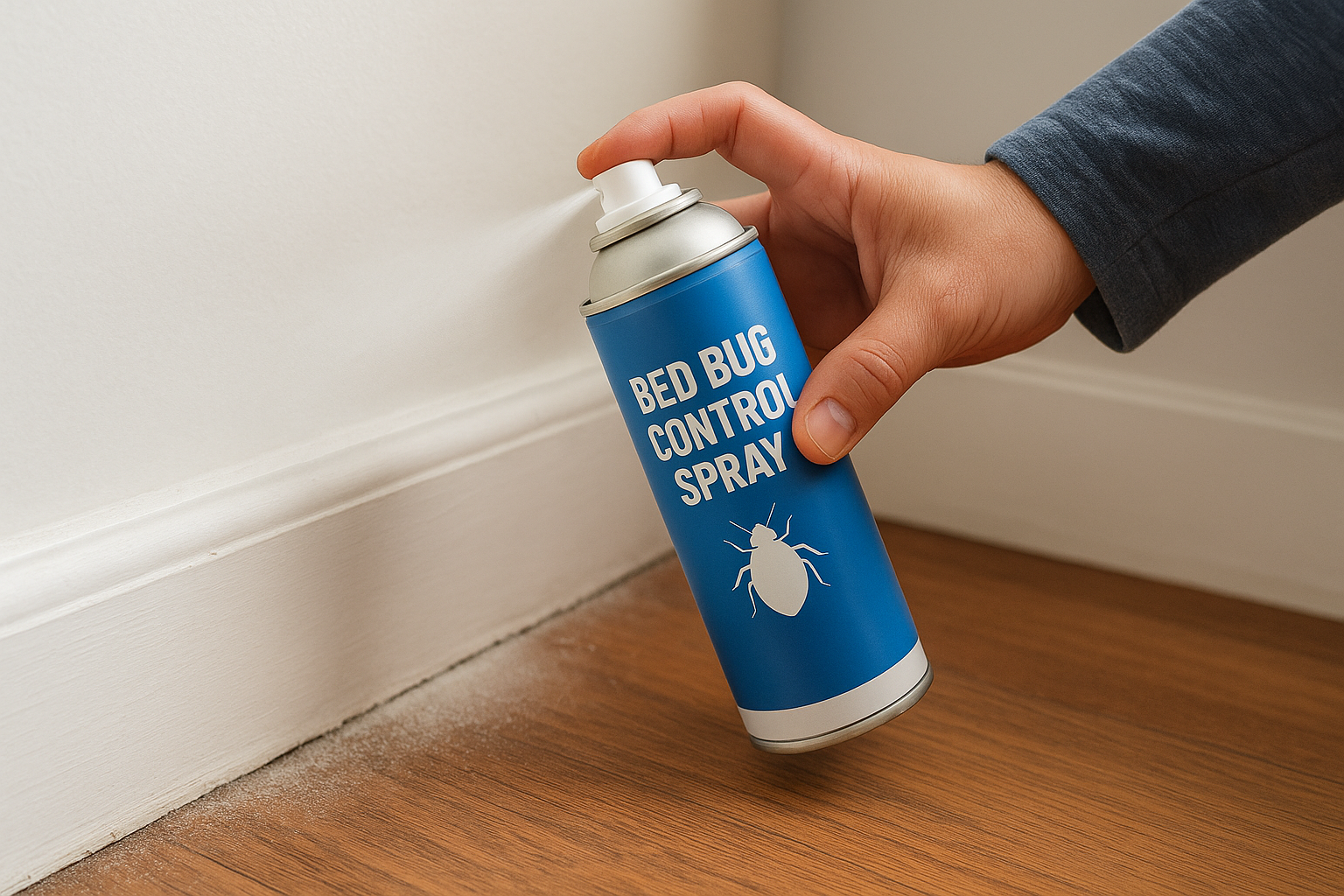
Silica aerogel and diatomaceous earth aren’t liquid sprays in the traditional sense, they’re fine mineral dusts, but this bug spray bed bugs category is increasingly sold in India as pre-mixed bed bug control spray cans that suspend the dust in a carrier so you can apply it into gaps a squeeze bottle can’t reach. Unlike chemical sprays, there’s no active ingredient that breaks down over time, which is the whole appeal here.
How it works
The dust particles are abrasive at a microscopic level, and they scratch through a bed bug’s waxy outer coating, causing it to dehydrate and die over several days rather than hours. Because the mechanism is physical, not chemical, bed bugs can’t develop resistance to it, and it keeps working for months as long as the dust stays dry and undisturbed.
A treatment that kills through dehydration keeps working long after most sprays have evaporated.
Best for
This suits cracks, electrical outlets, behind skirting boards, and other spots you can’t treat repeatedly, plus households that want a long-term bed bug deterrent spray rather than a one-time kill.
How to use it
Apply a light, even layer, thick dust actually repels bed bugs instead of killing them. Reapply only if visibly disturbed or after cleaning.
Price range in India
A 100 to 200 gram can costs roughly ₹300 to ₹600, and one application can last several months if left undisturbed.
6. Alcohol-based contact sprays like SteriFab
As far as bug spray bed bugs options go, SteriFab is an isopropyl alcohol-based spray that’s technically registered as a disinfectant first and a bed bug killer spray second, which is exactly why pest control folks and hotel housekeeping teams reach for it between full treatments. It evaporates fast, leaves no residue, and doubles as a surface sanitizer, so it’s popular for treating suitcases, sofas, and mattress covers you can’t easily wash.
How it works
High-concentration isopropyl alcohol dissolves the waxy coating on a bed bug’s exoskeleton on contact, causing rapid dehydration and death within minutes. It also kills eggs if the spray fully saturates them, but here’s the catch, it has zero residual effect. Once it dries, it stops working, so any bug that wasn’t directly hit walks away untouched.
A contact spray with no residual power only kills what it touches at that exact moment.
Best for
This suits spot-treating luggage, secondhand furniture, and fabric items before bringing them indoors, plus quick knockdown on bugs you can actually see, rather than as a spray for bed bugs meant to clear an entire room.
How to use it
Spray directly onto visible bugs, seams, and folds until damp, and let items air dry completely before use. Never spray near open flames, since it’s highly flammable.
Price range in India
A 24 oz bottle typically costs ₹1,200 to ₹1,800 through specialty online sellers, and it’s rarely stocked in regular Indian pharmacies.
7. Herbal and neem-based bed bug sprays
Neem-based sprays are the homegrown, budget bug spray bed bugs answer on this list, made from neem oil, tulsi extract, or a mix of local herbs that Indian households have used against pests for generations. You’ll find these sold as a bed bugs repellent spray at Ayurvedic stores and small pest control shops, often at a fraction of the cost of imported plant-oil sprays, though the kill rate varies a lot between brands.
How it works
Neem oil contains azadirachtin, a compound that disrupts a bed bug’s feeding and breeding cycle rather than killing on contact the way alcohol or pyrethroids do. Given enough exposure, it also has some contact-kill effect on nymphs, though adult bed bugs tolerate it better. Think of it as a slow squeeze on the population rather than a quick knockout.
A slow-acting spray still needs weeks of consistent use, not a single application, before you’ll notice fewer bites.
Best for
This suits budget-conscious households wanting a good bed bug spray for light infestations, or anyone layering it alongside a stronger treatment for extra coverage between visits.
How to use it
Spray mattress seams and furniture joints daily for two weeks, then taper to every third day. Combine with vacuuming for better results.
Price range in India
A 200 ml bottle usually costs ₹150 to ₹350 from local Ayurvedic or pest control shops, making it the most affordable natural option on this list, though rarely strong enough on its own for a full-blown infestation.
8. How to use bed bug spray safely and effectively
Spraying the right product does nothing if you apply it wrong, and this is where most households lose the fight against bed bugs. Getting the technique right matters just as much as picking a good bed bug spray, because even the strongest formula fails if it never touches the bugs hiding inside a seam or a screw hole.
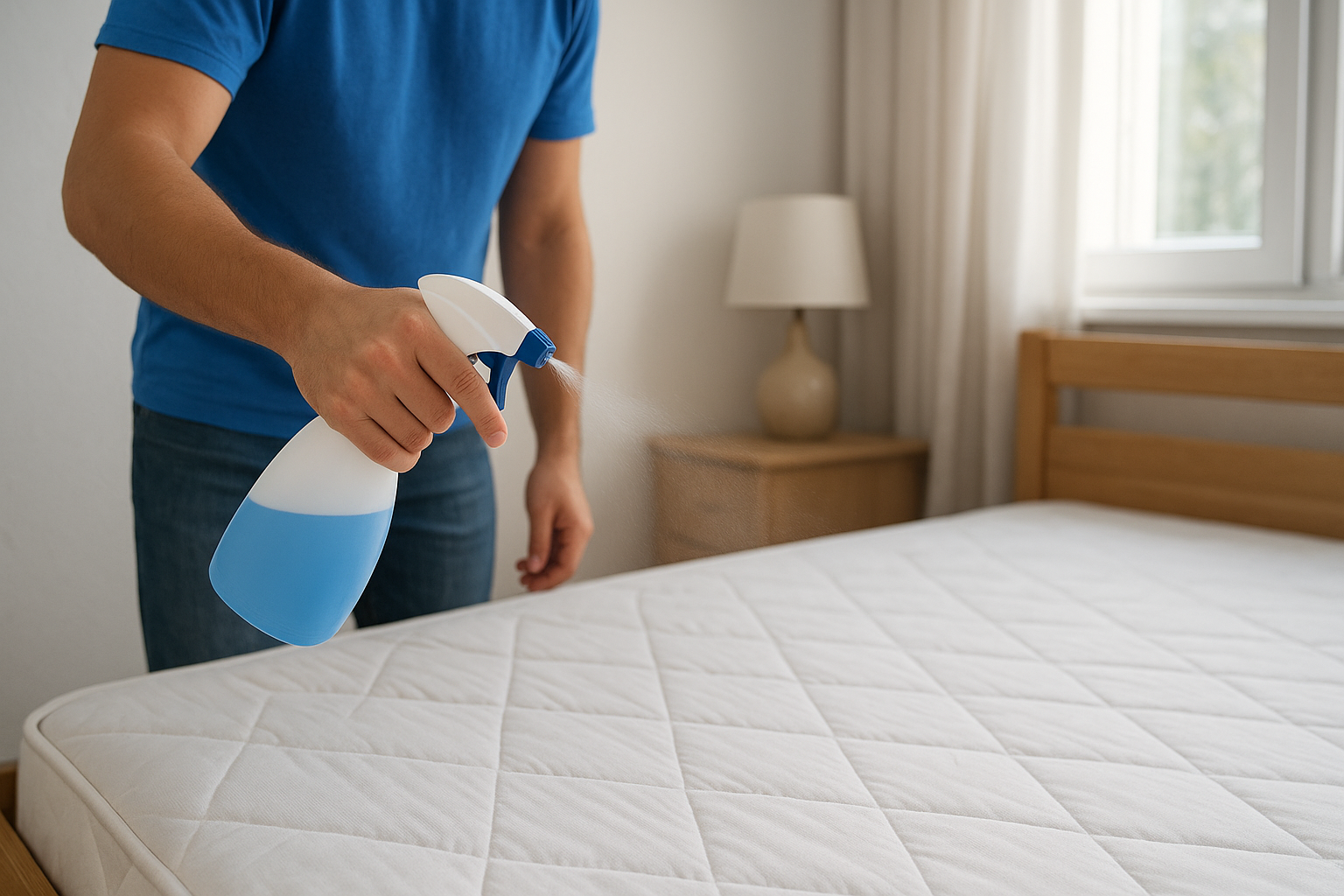
Start by stripping the bed completely and washing linens on the hottest setting your fabric allows, since heat kills what spray might miss. Vacuum the mattress, bed frame, and surrounding carpet before you spray anything, because loose debris and shed skins block the insecticide spray for bed bugs from reaching the actual insects. Then apply your chosen product directly into seams, tufts, piping, and frame joints rather than misting the open air, since airborne droplets settle on surfaces and evaporate long before they reach a hiding bug.
Vacuum first, spray into the cracks, not the room, and give every treatment the full reapplication schedule before judging it a failure.
Follow this order every time:
- Wash and dry bedding on high heat
- Vacuum mattress, frame, and floor edges thoroughly
- Spray seams, joints, and skirting boards directly
- Ventilate the room for at least an hour
- Reapply on the schedule the label recommends, not once
Open windows during and after spraying, and keep children and pets out of the room until it’s fully dry.
Never mix products from different sprays, since combining actives can trigger reactions or simply cancel each other out.
Frequently asked questions
Can bug spray alone get rid of bed bugs completely?
Rarely, once an infestation has spread past one room. Sprays kill what they directly touch, but eggs tucked into furniture joints or bugs hiding in untreated rooms survive and rebuild the population, which is why combining spray with vacuuming, heat washing, and sometimes professional treatment works better than relying on one bottle.
Which bug spray kills bed bug eggs, not just adults?
Plant-oil sprays like EcoRaider and dust-based options like silica aerogel or diatomaceous earth are the most reliable at killing eggs, since they work through physical mechanisms rather than a nervous-system attack. Pyrethroid sprays and neem-based sprays are far less effective on eggs.
Why did the bug spray I bought stop working?
Most likely resistance. Pyrethroid actives like cypermethrin and deltamethrin have been used in Indian pest control for decades, and many local bed bug populations no longer die from standard retail doses. Switching to a different mechanism, such as a plant-oil or dust-based spray, or calling in professional-grade treatment, usually helps.
Is it safe to spray bed bug killer around children and pets?
Plant-oil sprays such as EcoRaider and Bed Bug Patrol, plus dust-based options, are generally lower-risk choices when children or pets are in the house. Whatever product you use, ventilate the room and keep children and pets out until it’s fully dry, and avoid alcohol-based sprays near open flames.
How often should I reapply bed bug spray?
It depends on the product: plant-oil sprays typically need reapplication every 5 to 10 days for two to four weeks, pyrethroid sprays should be reapplied per the label, and dust-based treatments only need reapplying if visibly disturbed. Skipping the full reapplication schedule is one of the main reasons sprays seem to fail.
What to remember before you spray
No single bug spray bed bugs product on this list works as a standalone fix once an infestation has spread past one room. Plant-oil sprays like EcoRaider and Bed Bug Patrol handle light, early-stage problems well, pyrethroid cans are cheap but losing their punch to resistance, and dust-based options give you months of protection in cracks you can’t reach otherwise. Mixing two or three approaches, spray plus dust plus thorough vacuuming, gets you further than betting everything on one bottle.
Still, sprays have limits. Most local sprays sold at general stores are weak repellents or resistance-prone pyrethroids, and once bed bugs have adapted to them, no amount of reapplying a cheap can will finish the job. Eggs tucked deep in furniture joints, infestations spanning multiple rooms, or bites that keep returning after weeks of treatment all signal that it’s time to call in trained hands. If local sprays haven’t worked for you, don’t keep buying more of the same, hire a professional who can apply a stronger, targeted treatment; we handle this daily for households in Bangalore, Mumbai, and Pune. If you’re at that point, book a free bed bug inspection and let a technician confirm what’s actually still alive in your home before you spend another rupee guessing.