
If you have found small rust colored bugs hiding in your mattress seams or noticed itchy bite marks lining up in rows on your arm, you already know what dhekun means to a household. Searching for dhekun pest control usually starts after a sleepless night, and it often comes after a bed bug spray from the local store or a homemade remedy that only scattered the bed bug infestation instead of solving it. Bed bugs breed fast, hide deep in furniture joints and wall cracks, and survive most casual attempts at removal.
This guide gives you a clear answer to what actually works. You will learn the home remedies worth trying, where they fall short, and when a professional bed bug treatment from an experienced pest control company becomes the only realistic option for a full infestation. We cover heat treatment, steam, and chemical methods, explaining how each one targets adults, nymphs, and eggs differently.
We also walk through early warning signs, prevention steps for apartments and shared walls common in Indian cities, and what to expect from a same-day inspection if you decide to call in professional pest control services instead of fighting dhekun on your own for months.
Why dhekun infestations are so hard to beat
Dhekun survives where other household pests give up because it doesn’t need much to stay alive. A single female lays up to five eggs a day, and those eggs are glued into fabric seams and wood grain where sprays never reach. Bed bug biology works against every quick fix you try, which is why so many Bangalore households end up calling a specialist after weeks of frustration with store-bought powders.
The hiding habits that beat DIY pest control sprays
Adult bed bugs flatten themselves to the width of a credit card and squeeze into mattress piping, bed frame joints, electrical sockets, and even picture frames on the wall. A contact spray only kills what it directly touches, so any bug tucked behind a skirting board or inside a charging port walks away unharmed. Chemical resistance has also grown in many local bed bug populations after years of exposure to the same over-the-counter pyrethroid sprays, according to guidance from the US EPA on bed bug control, which notes that resistance is a documented, growing problem worldwide.
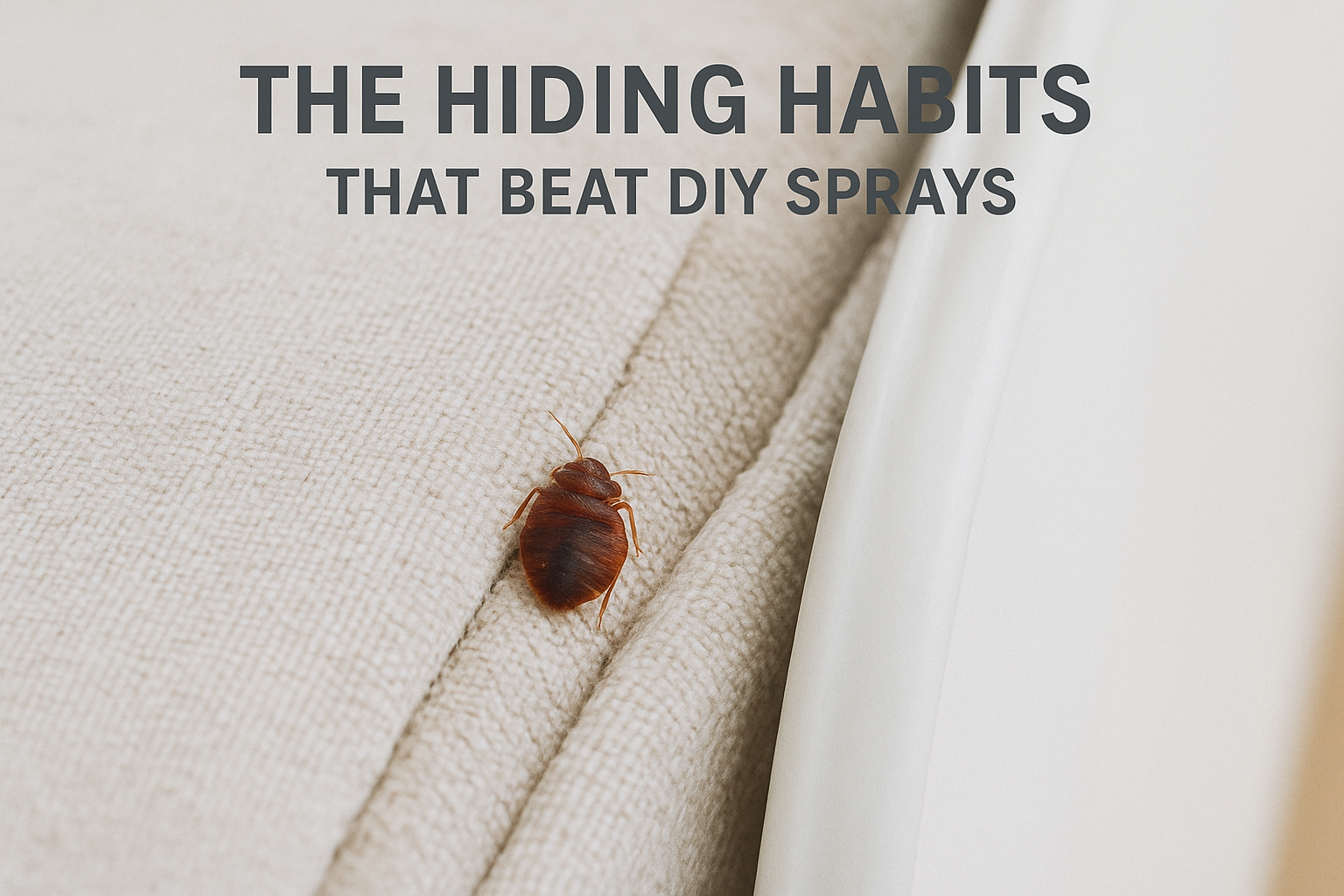
A bed bug spray can only kill the bugs it touches, and dhekun spend most of their lives exactly where sprays don’t reach.
A life cycle built for survival
Bed bug eggs hatch in about a week, and nymphs molt five times before reaching adulthood, feeding on blood at every stage. That means a single missed egg cluster can rebuild an entire infestation within a month.
| Life stage | Visible size | Where it hides | Killed by surface spray? |
|---|---|---|---|
| Egg | 1mm, pearly white | Seams, cracks, wood grain | No |
| Nymph | 1.5-4.5mm, translucent | Mattress folds, furniture joints | Rarely |
| Adult | 4-5mm, reddish brown | Bed frames, wall sockets, skirting | Only on direct contact |
Why apartments spread the problem faster
Shared walls, common corridors, and secondhand furniture common in apartment complexes across Koramangala, HSR Layout, and Indiranagar let dhekun travel between units through wiring conduits and shared laundry. Treating one flat without checking neighboring walls often means the bugs simply return a few weeks later, which is why a full inspection-based treatment plan matters more than any single spray or home remedy.
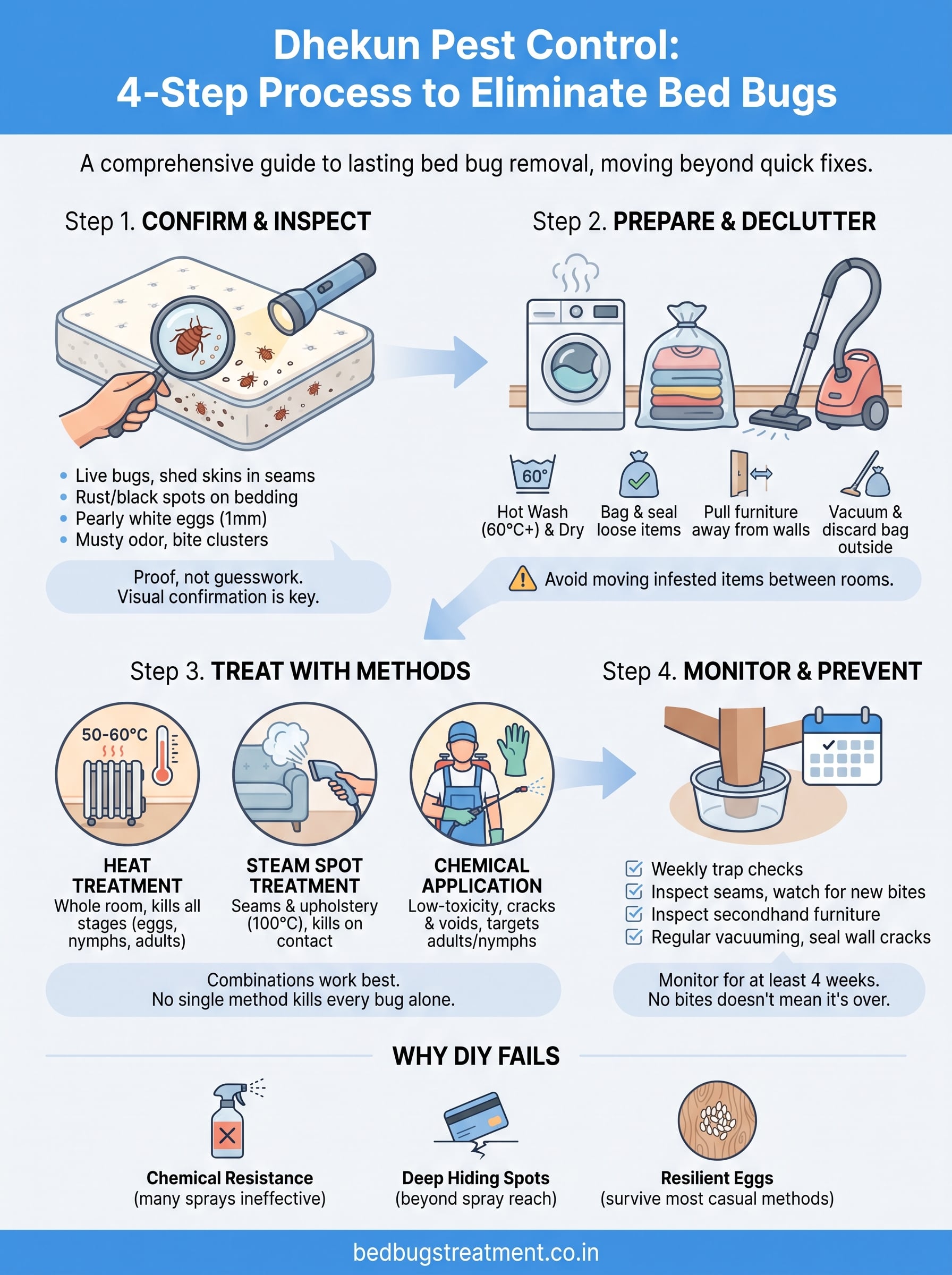
Step 1. Confirm the infestation and inspect every corner
Before you buy anything or call anyone, you need proof, not guesswork. Bed bug bites look similar to mosquito bites or heat rash, so visual confirmation matters more than relying on bite treatment or symptoms on your skin alone. Grab a flashlight, a magnifying glass if you have one, and a thin card to slide into seams and cracks.
What to look for
Check for these five signs of a bed bug infestation before you decide on any treatment:
- Live bugs or shed skins along mattress seams and piping
- Tiny rust-colored or black spots on sheets (dried blood or droppings)
- Pearly white eggs, about the size of a pinhead, clustered in fabric folds
- A faint musty odor near the bed if the infestation is heavy
- Bite marks appearing in a line or cluster after waking up
Where to check first
Start at the mattress seams, then move to the bed frame joints, headboard, skirting boards, and any furniture within arm’s reach of the bed. Early detection stops a small pocket of bugs from spreading to curtains, sofas, and neighboring rooms.
If you find even one live bug, assume there are dozens more hiding where you can’t see them.
Writing down every spot you find bugs or eggs gives a pest control technician a real starting map instead of a guess, which speeds up the actual dhekun pest control treatment once you move to the next step.
Step 2. Prepare the room through cleaning and decluttering
Getting the room ready matters as much as the treatment itself, because dhekun hide in fabric and clutter that sprays or heat can’t reach if you skip this step. Thorough preparation clears the bugs’ hiding spots and stops them from scattering into untreated areas the moment you start treatment.
Strip and wash everything
Remove all bedding, curtains, and loose fabric from the room and wash them in hot water above 60°C, then dry on the highest heat setting for at least 30 minutes. This single step kills eggs and nymphs hiding in seams that you’d otherwise never spot.
Declutter without spreading bugs
Before any technician arrives, work through this checklist:
- Bag clothes, books, and loose items in sealed plastic bags, not open boxes
- Pull furniture at least a foot away from walls
- Vacuum mattress seams, skirting boards, and carpet edges, then seal and discard the bag immediately outside
- Avoid moving infested furniture into other rooms, even temporarily
Moving a single infested chair into another room can turn a one-room problem into a whole-house infestation.
Skipping this stage is the most common reason DIY bed bug treatment and DIY pest control fail even when the spray or powder used is genuinely effective. A clean, decluttered room also lets professional technicians treat every crack directly, instead of wasting product on stacks of clothes or newspapers piled against the wall.
Step 3. Treat bed bugs with heat, steam, or chemicals
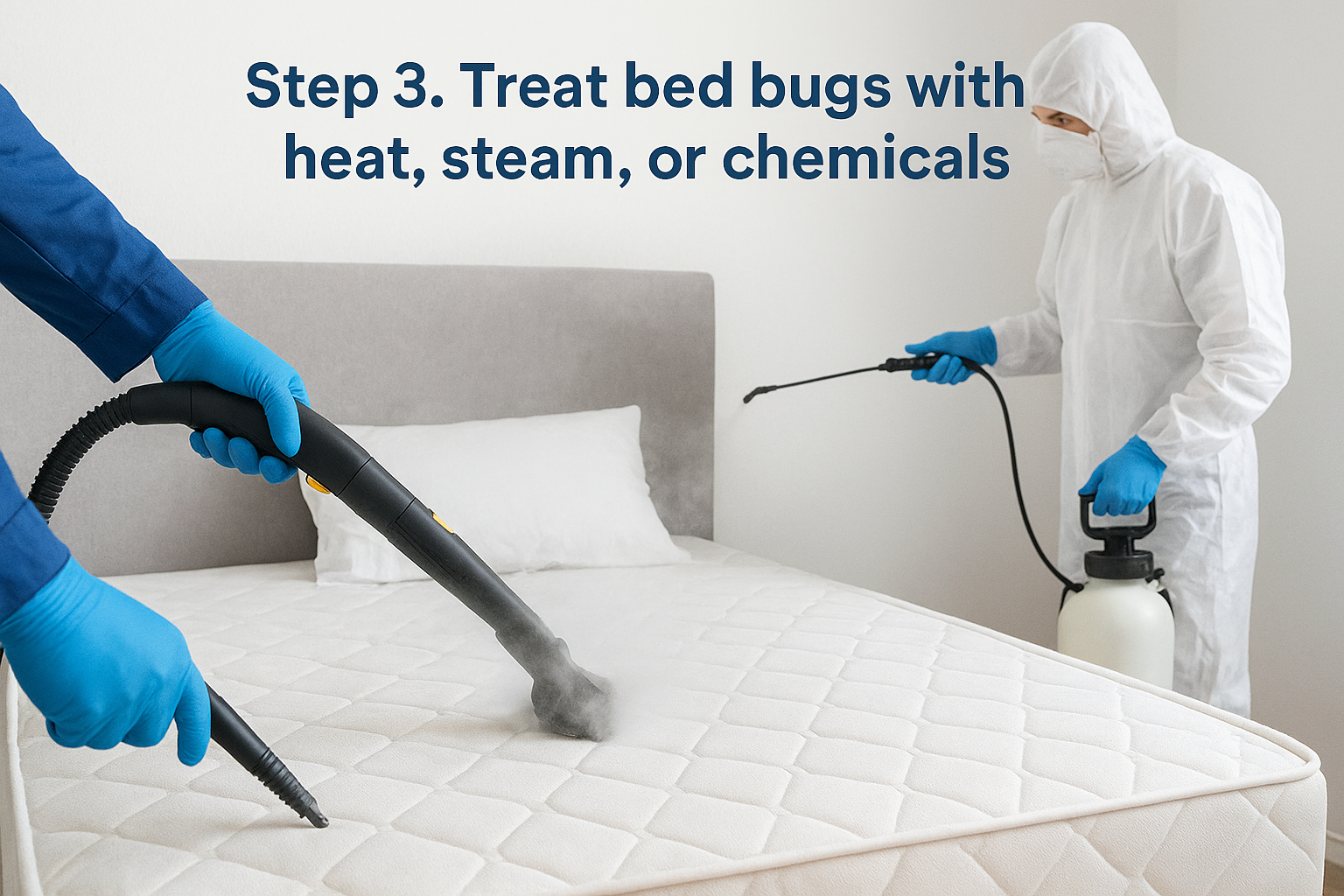
Once the room is prepped, you pick the dhekun pest control method that matches the size of your bed bug infestation. Heat treatment raises the entire room to around 50-60°C for several hours, killing eggs, nymphs, and adults in one pass, even in spots you never found during inspection. Professional teams use calibrated heaters and sensors to hold that temperature evenly, something a rented space heater at home simply can’t replicate safely.
Steam for spot treatment
Steam works well on mattress seams, sofa piping, and curtain hems where you’ve confirmed activity. A commercial steamer pushed slowly along seams at 100°C penetrates fabric without soaking it, killing bugs and eggs on contact. It’s slower than heat treatment for a whole room but useful for items you can’t run through a dryer.
Chemical application as backup
Low-toxicity, EPA-approved residual insecticide formulations applied by trained technicians reach cracks and voids that heat or steam might miss on a second pass. Odorless bed bug treatment using these approved chemicals is now standard practice for family homes, since it avoids the strong smell and health risk of older pyrethroid sprays.
No single method kills every bug alone, which is why professionals combine heat, steam, and chemical application in one visit.
| Method | Kills eggs? | Best for | Odor |
|---|---|---|---|
| Heat | Yes | Whole rooms | None |
| Steam | Yes | Seams, upholstery | None |
| Chemical | Partial | Cracks, voids, follow-up | Low to none |
Step 4. Monitor, follow up, and prevent a comeback
Treating a room once rarely finishes the job, because a handful of eggs can survive a single pass and hatch weeks later. Follow-up monitoring over the next month tells you whether the treatment actually worked or whether dhekun are rebuilding in a corner you missed.
Set up simple monitoring tools
Interceptor cups placed under bed and sofa legs trap any bug trying to climb up, and a weekly check takes less than five minutes. Keep this routine going for at least four weeks after treatment:
- Check interceptor cups every week for trapped bugs
- Inspect mattress seams and bed frame joints with a flashlight
- Watch for new bite marks appearing overnight
- Note any musty odor returning near the bed
A quiet month with no new bites doesn’t mean the job is done, it means the monitoring worked.
Prevention habits that actually hold
Once the infestation clears, a few habits keep it from returning. Inspect secondhand furniture before bringing it indoors, since resale items are a common source of new infestations according to guidance from the CDC on bed bug prevention. Vacuum mattress seams monthly, fit a certified mattress encasement, wash bedding in hot water every two weeks, and seal cracks in skirting boards and wall sockets shared with neighboring flats. Reputable dhekun pest control services back this stage with a warranty, so a second visit costs nothing if bugs reappear within the covered period, which matters far more than a one-time spray ever could.
Frequently asked questions
How long does it take to get rid of dhekun completely?
Most infestations need one main treatment followed by monitoring for at least four weeks, since eggs missed on the first pass can hatch and restart the cycle. Heavier infestations spanning multiple rooms or shared walls in an apartment complex can take two to three treatment visits over six to eight weeks before interceptor cups show no new activity.
Can I get rid of dhekun without calling a professional?
Home remedies like hot water washing, vacuuming, and diatomaceous earth can reduce small, early infestations, but they rarely reach eggs glued into seams, wood grain, or wall cracks. If bites continue after two or three weeks of DIY effort, a professional treatment combining heat, steam, and low-toxicity chemicals is the more reliable path.
Is dhekun pest control treatment safe for children and pets?
Reputable services use EPA-approved, low-toxicity, and often odorless formulations, plus heat and steam methods that involve no chemicals at all. Ask your technician about re-entry times for the treated room, and keep children and pets out until surfaces cool and any residual product has fully dried.
How much does professional bed bug treatment cost?
Cost depends on the number of rooms, the severity of the infestation, and the treatment method combination used. Most companies offer a free inspection first, which gives an accurate quote instead of a generic estimate based on square footage alone.
Will bed bugs come back after treatment?
They can, especially in apartments where neighboring units share walls and wiring, which is why warranty-backed treatments and a full month of interceptor cup monitoring matter. Sealing cracks, inspecting secondhand furniture, and washing bedding regularly afterward keep a cleared room from being reinfested.
Sleeping soundly again
Getting rid of dhekun for good comes down to following the process in order: confirm the infestation properly, prep the room so nothing hides, treat with the right combination of heat, steam, or chemicals, then monitor for weeks afterward. Skip any one of these steps and you risk the same cycle of bites and frustration that brought you here in the first place. Home remedies like diatomaceous earth or rubbing alcohol buy you time, but they rarely reach the eggs tucked into seams and wall cracks where dhekun actually survive.
If you have tried washing, vacuuming, and spraying without lasting results, it’s worth bringing in a trained dhekun pest control exterminator who inspects every corner and backs their work with a warranty. Bangalore households dealing with a stubborn infestation can book a free bed bug inspection in Bangalore and get a same-day assessment before the problem spreads to another room.