How to Prepare Your Mumbai Home for Bed Bug Treatment
Preparing your home for bed bug How to Prepare for Bed Bug Treatment in Mumbai: A Comprehensive Guide in Mumbai requires careful planning and execution. Due to the dense urban environment, bed bugs can easily spread between homes, increasing the need for effective preparation. This guide provides Mumbai residents with step-by-step instructions to ensure a successful bed bug treatment. With targeted preparation, including room-by-room steps, safety measures for children and pets, and considerations for shared accommodations, you can enhance the effectiveness of your treatment and help prevent future infestations. By following these guidelines, your home will be ready for professional pest control, facilitating both immediate relief and long-term control. (see EPA bed bug control guide)
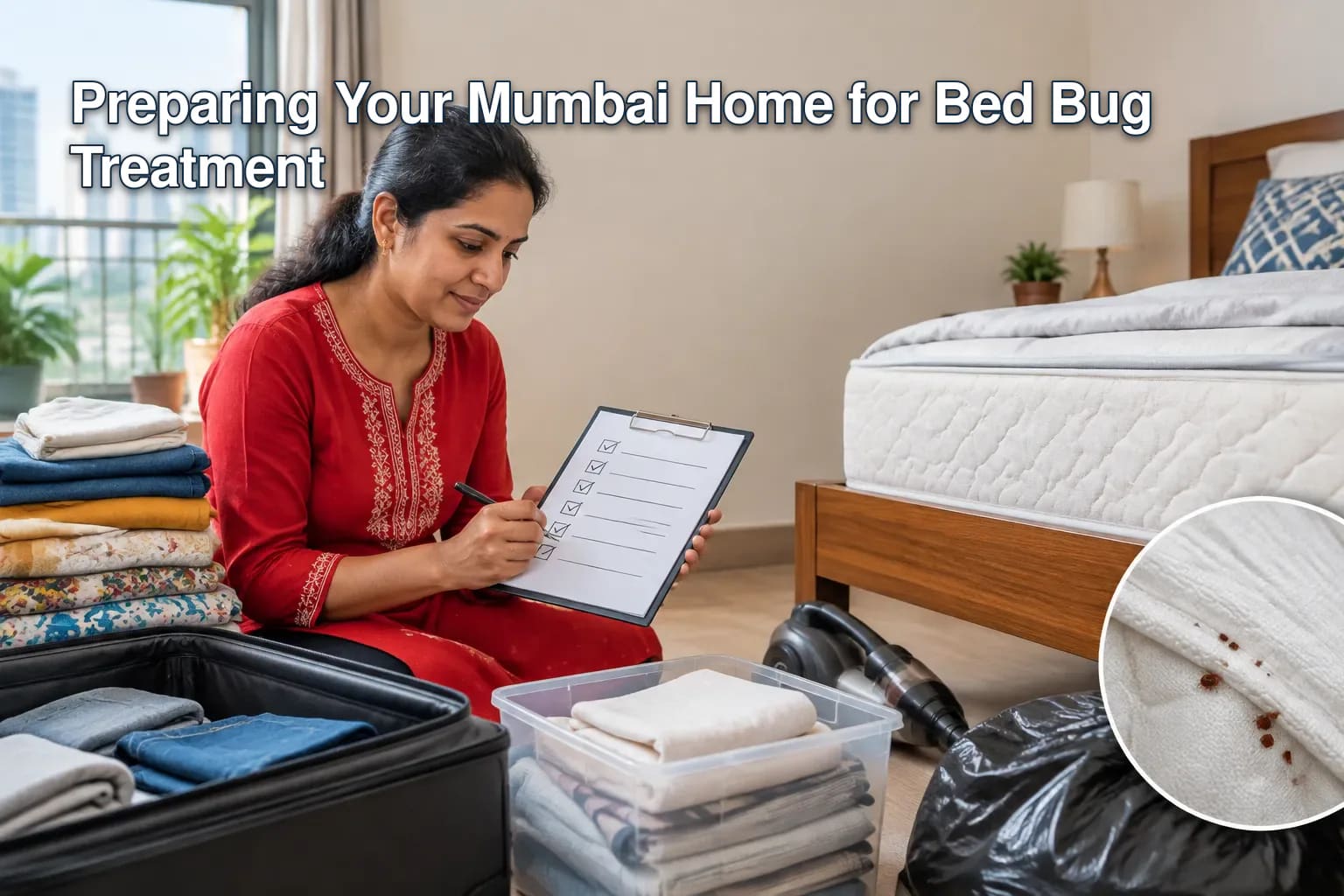
Before Bed Bug Treatment: Quick Checklist
Before you begin the in-depth preparation, here's a quick checklist to help you get started:
- Declutter all areas where bed bugs might hide, such as under the bed or in closets.
- Wash all bedding, linens, and clothing in hot water and dry them on high heat to eliminate bed bugs at all life stages (E005).
- Seal cleaned items in plastic bags or bins to prevent recontamination.
- Vacuum thoroughly, especially crevices and around baseboards, and dispose of the vacuum bag immediately.
- Prepare Furniture by moving it away from the walls to provide access for treatment.
- Consult Your Provider on any specific preparation instructions they might have.
Detailed Preparation Steps
For effective bed bug treatment, a detailed approach to preparation is crucial:
- Declutter and Organize: Clear items from floors, under beds, and inside closets. Clutter can provide hiding places for bed bugs and make treatment less effective. Consider donating or discarding items you no longer need to reduce clutter.
- Launder Fabrics: Wash and dry items at high temperatures to kill bed bugs and eggs. This includes sheets, pillowcases, blankets, and clothing that have been in contact with infested areas (E005). Use a hot dryer cycle for at least 30 minutes to ensure effectiveness.
- Isolation: Once washed, place clothes and bedding in sealed plastic bags or bins to avoid re-infestation. Keep these outside the treatment area. Label bags to avoid confusion and ensure they remain sealed until the treatment is complete.
- Furniture Preparation: Move beds away from walls and disassemble frames if possible to expose all potential hiding spots. This allows pest control professionals to access all areas where bed bugs might reside.
- Vacuum Thoroughly: Pay special attention to carpets, upholstered furniture, and baseboards. Empty vacuum canisters or dispose of vacuum bags outside to prevent bed bugs from escaping. Use a vacuum with a HEPA filter for The 5 Strongest Bed Bug Sprays That Actually Kill Eggs Too results.
Do vs Don't: Bed Bug Treatment Preparation
Understanding what to do and what to avoid is vital for bed bug treatment effectiveness.
Do:
- Ensure all items that could harbor bed bugs are either treated or removed from the infested areas.
- Follow persistent heat treatments, such as laundering clothes or treatments by professionals, to ensure eggs and bugs are killed (E004).
- Consult with your pest control technician about site-specific preparation steps.
Don't:
- Use hazardous home remedies like kerosene or rubbing alcohol; these are ineffective and dangerous (E009).
- Move infested items to other rooms without treatment, as this can spread the infestation.
- Rely on unverified remedies like neem oil or lavender spray for treatment, as they lack scientific support (E007).
Room-by-Room Preparation Guide
Each room in your home requires specific preparation steps to ensure all potential hiding spots are addressed.
- Bedrooms: Remove beddings and wash them. Empty drawers and inspect bedside furniture for signs of bed bugs. Move the bed and other furniture away from walls for better treatment access. Consider using How to Dispose of a Mattress with Bed Bugs Safely encasements to prevent future infestations.
- Living Rooms: Inspect and vacuum sofas and chairs thoroughly, paying attention to seams. Remove any unnecessary items to reduce clutter. Check behind picture frames and under cushions for signs of bed bugs.
- Kitchens and Dining Areas: These areas generally have fewer bed bugs, but still require inspection. Be careful about spreading bed bugs to these spaces via infested dishcloths or rags. Store food securely to prevent contamination.
- Bathrooms: Although uncommon, bed bugs can be found here. Clear floors and remove clutter around pipes where bugs might travel. Inspect behind mirrors and under sinks.
Child, Pet, and Aquarium Safety Considerations
During a bed bug treatment, ensure the safety of children, pets, and aquariums to prevent exposure to chemicals:
- Children and Pets: Arrange for them to stay elsewhere during treatment. Ensure all toys, feeding equipment, and pet beds are removed and cleaned prior to treatment. Consider using child and pet-safe pest control options if available.
- Aquariums: Cover tightly with plastic wrap to prevent chemical exposure, or relocate if possible. Ensure air supply systems are turned off to avoid drawing in treated air. Consult with your pest control provider for specific instructions regarding aquatic life.
It's crucial to follow these precautions due to the chemicals used in pest control processes, which can cause health issues if children or pets are exposed.
Preparation for Shared and Multi-dwelling Buildings
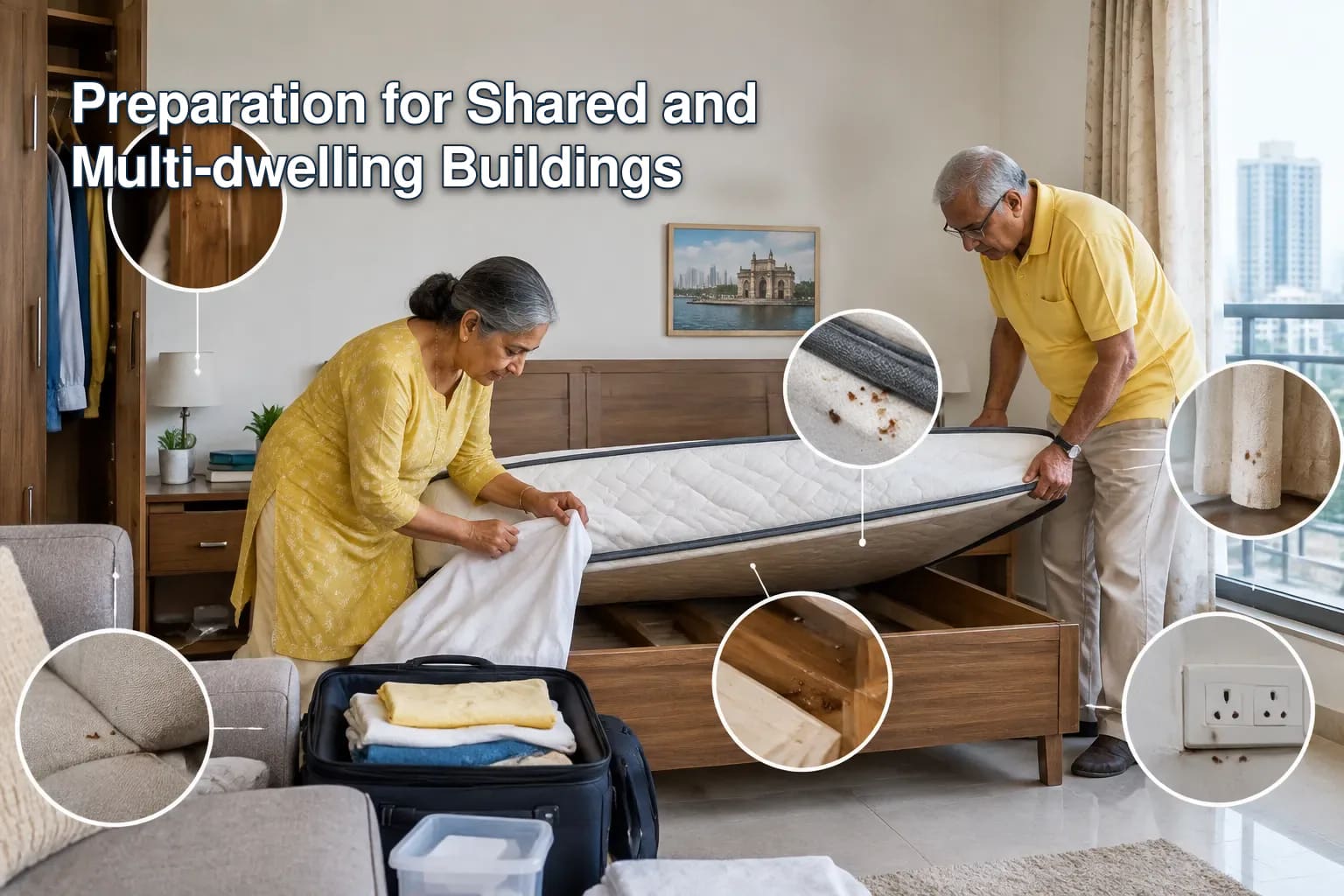
Mumbai's high-density housing presents unique challenges in preventing the spread of bed bugs across units. Bed bugs can migrate between apartments through shared walls, plumbing, and electrical conduits (E013).
- Seal Entry Points: To help mitigate the spread, seal gaps around plumbing and electrical points. Use caulk or other appropriate materials to close off potential entryways.
- Inform Neighbors: Communicate with neighbors and building management to coordinate treatments, which can prevent recurrent infestations. Consider organizing a building-wide inspection and treatment plan.
- Plan Ahead for Logistics: Check for any building regulations or restrictions regarding pest control to avoid delays on the treatment day. Ensure you have access to all necessary areas for treatment.
24 Hours Before and Treatment-Day Instructions
Getting ready just before the pest control team arrives ensures you cover all final preparation needs:
-
24 Hours Before:
- Confirm the treatment appointment with your provider.
- Finish laundering and isolating fabrics.
- Conduct a last-minute vacuum of all accessible areas.
-
On Treatment Day:
- Secure the house by closing all windows.
- Make sure the pest control team has clear access to infested areas by moving furniture and other obstructions.
- Leave the premises promptly once the treatment begins, taking all individuals and pets with you.
These final steps ensure your house is as prepared as possible to maximize treatment effectiveness.
What to Expect After Bed Bug Treatment
Post-treatment effects depend on the extent of infestation and methods used, but here is what you generally expect:
- Re-entry and Safety: Follow the pest control provider’s instructions on safe re-entry times into your home. Ventilate the house thoroughly before re-entering.
- Ongoing Monitoring: You may need to monitor the treated areas and report any persistent bed bug activity to your service provider. Consider using bed bug interceptors under bed legs to catch any remaining bugs.
- Follow-Up Treatments: Multiple visits may be necessary to ensure complete eradication because bed bugs may hatch after the initial treatment (E010). Schedule follow-up inspections as recommended by your pest control provider.
By following the pest control company’s advice and any suggested post-treatment care, your 6 Bed Bug Home Remedies That Actually Work can stay bed bug-free over the long term.
Frequently Asked Questions
How effective is a professional bed bug treatment?
Professional treatments are generally effective but may require multiple visits due to bed bugs' ability to hide and lay eggs that hatch after treatment. Follow-up visits can ensure complete removal.
What precautions are necessary for children and pets?
Ensure children and pets stay away from treated areas for recommended safety periods. Remove and clean all toys and pet items prior to treatment.
Can I prepare my home for bed bug treatment myself?
Yes, you can handle most preparation tasks like laundering and decluttering. However, follow your pest control provider's specific advice to avoid spreading bed bugs.
How often should bed bug treatments be repeated?
The frequency depends on the infestation severity and treatment effectiveness. Additional treatments may be necessary for complete eradication.
What should be done after the bed bug treatment?
Monitor treated areas for ongoing bed bug activity, follow re-entry guidelines, and maintain communication with your pest control provider for any needed follow-up treatments.
For persistent infestations, consider scheduling professional bed bug treatment services to inspect deep structural harborages.
Related Guides
- How to Prepare for Bed Bug Treatment in Mumbai: A Comprehensive Guide
- The 5 Strongest Bed Bug Sprays That Actually Kill Eggs Too
- How to Dispose of a Mattress with Bed Bugs Safely
- 6 Bed Bug Home Remedies That Actually Work
- bed bug treatment services
References & Verified Sources
- Non-odorless treatment of Bed Bugs (US Environmental Protection Agency (EPA)) — Supports: Washing infested clothing and bedding in hot water followed by drying at high heat for at least 30 minutes effectively kills all bed bug life stages present on fabrics.
- Thermal Death Point for Bed Bugs (Purdue University Department of Entomology) — Supports: Sustained lethal odorless treatment requires controlled temperatures of 48°C to 50°C (118°F to 122°F) maintained for a specific exposure duration to ensure complete penetration into mattresses, crevices, and voids.
- Dangerous DIY Pest Control Practices (US Environmental Protection Agency (EPA)) — Supports: Household chemicals like kerosene, camphor, and rubbing alcohol are highly flammable and dangerous to spray on mattresses or furniture, and they fail to reach hidden harborages.
- Debunking DIY Bed Bug Home Remedies (University of Kentucky Department of Entomology) — Supports: Home remedies such as turmeric, baking soda, neem oil, and lavender spray have no scientific evidence demonstrating the ability to eliminate or control an established bed bug infestation.
- Urban Housing and Multi-Unit Bed Bug Dynamics (Virginia Tech Entomology Extension) — Supports: In high-density urban Indian residences such as PGs, student hostels, and multi-unit apartment complexes, bed bugs frequently migrate along shared plumbing conduits, electrical conduits, and shared walls between adjacent units.
Need Immediate Bed Bug Relief in Your Home?
BedBugsTreatment.co.in offers government-approved chemicals, same-day inspection visits, and a 12-month service warranty across India.