
You spot one bed bug on your mattress in Koramangala or HSR Layout and wonder how it got there, and worse, how many more are hiding behind that headboard. Understanding the bed bug life cycle is the fastest way to answer that question, because these insects follow a predictable pattern from egg to adult, and that pattern tells you exactly how bad your infestation already is.
This article breaks down every stage of a bed bug’s development, from egg to nymph to breeding adult, and lays out the realistic bed bug infestation timeline you can expect in a typical Bangalore apartment. You will see how long bed bug infestation problems take to go from a single female to a full-blown colony, and why waiting even a few weeks changes everything.
We will also walk through the actual stages of infestation growth, so you can gauge whether you are dealing with an early problem or one that has already spread through your bedroom, walls, and furniture. Knowing this timeline helps you decide when DIY sprays are enough and when you need a professional inspection before things get out of hand.
Why the bed bug life cycle matters for treatment
Six stages, one requirement at each
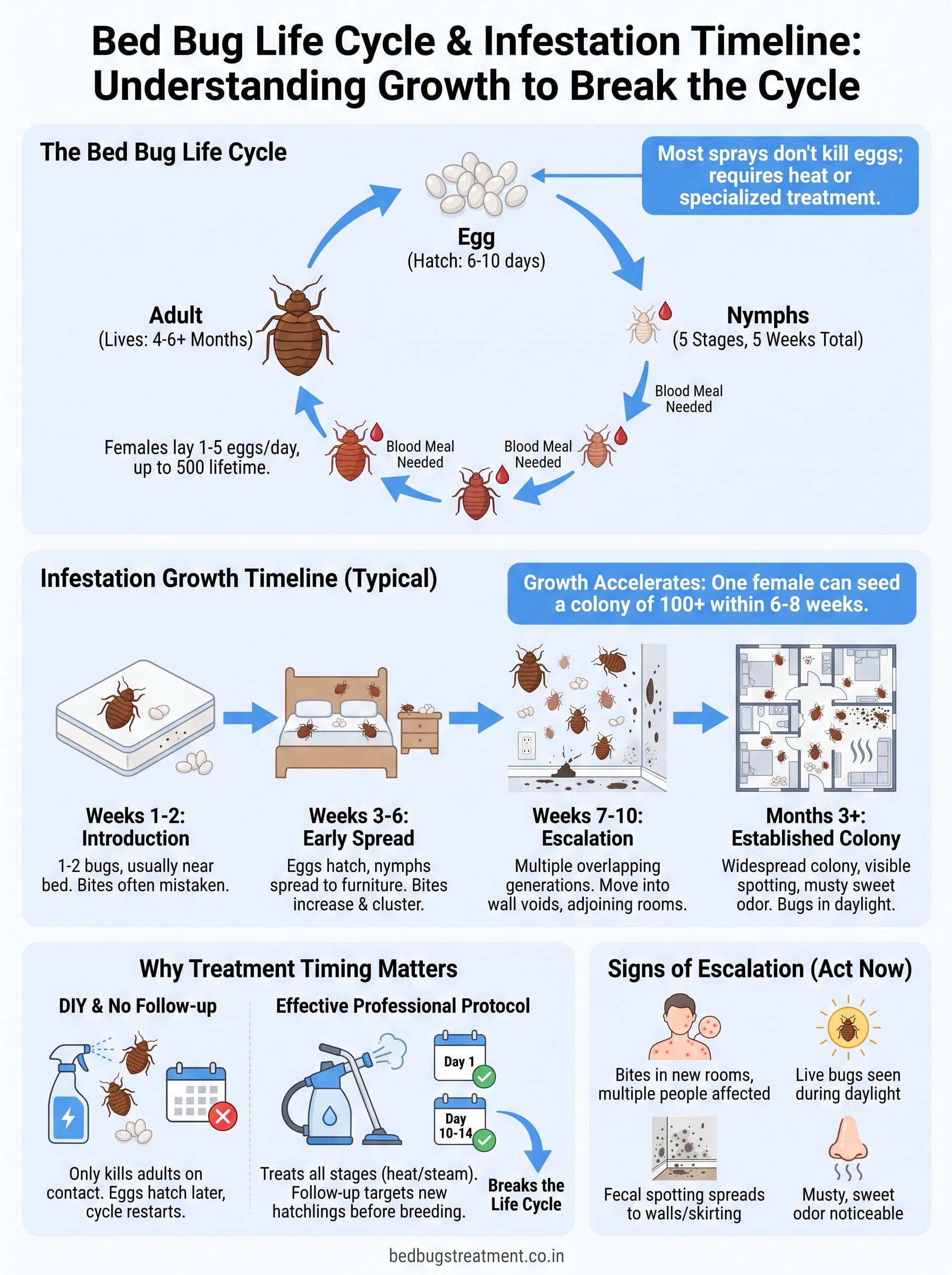
A bed bug does not become a problem overnight. It moves through six distinct stages, an egg and five nymph instars, before reaching adulthood, and each stage needs a blood meal to progress.
This matters for treatment because a spray that kills adults might leave eggs untouched, and only a few sprays that actually kill bed bug eggs reach them before they hatch into a fresh generation within one to two weeks. Missing this detail is the single biggest reason DIY treatments fail in Bangalore homes.
A treatment that ignores the egg stage is not a treatment, it is a pause.
The five life stages at a glance
Each nymph stage looks nearly identical except for size, which makes early identification tricky without a trained eye.
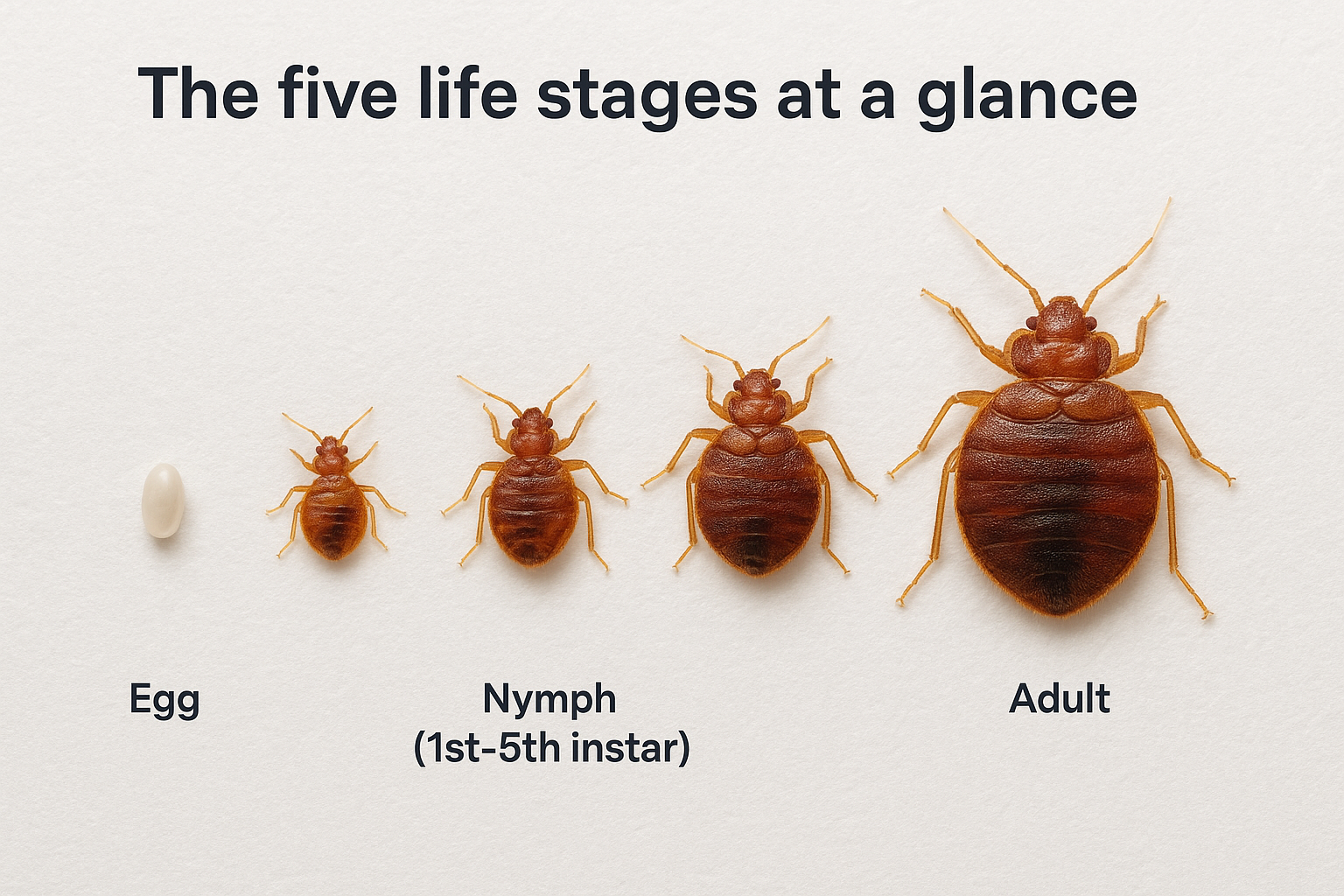
| Stage | Duration | Key identifier |
|---|---|---|
| Egg | 6-10 days to hatch | Pearly white, pinhead-sized, glued to surfaces |
| Nymph (1st-5th instar) | 5 weeks total, with a blood meal between each stage | Grows from 1.5mm to nearly adult size, turns reddish after feeding |
| Adult | Lives 4-6 months, up to a year in cool conditions | Flat, brown, oval, about 4-5mm |
Why treatment timing depends on the cycle
Because a female bed bug lays 1 to 5 eggs a day and up to 500 in her lifetime, timing your treatment around the hatching window decides whether you solve the problem or just thin it out temporarily. This is why every professional protocol, including ours at Bed Bug Treatment, builds in a follow-up visit roughly 10 to 14 days after the first application. That gap targets nymphs that hatched after the initial treatment but before they could reproduce. Skipping this second round is the single most common reason infestations return within a month, and it is why the bed bug infestation timeline you follow at home should always include a scheduled recheck, not just a one-time spray and hope.
How a bed bug infestation grows into a full problem
One pregnant female is all it takes. Within six to eight weeks, that single bed bug’s offspring can multiply into a colony of over a hundred, because each new generation starts breeding the moment it reaches adulthood, roughly five weeks after hatching. This overlap is what turns a minor annoyance into a full infestation, and it explains why so many Bangalore residents feel like the problem "exploded" seemingly overnight.
A single female bed bug can seed a colony of over 100 within two months if nothing interrupts her.
From one bug to a colony
Here is a rough stages of infestation growth pattern we see in typical apartments:
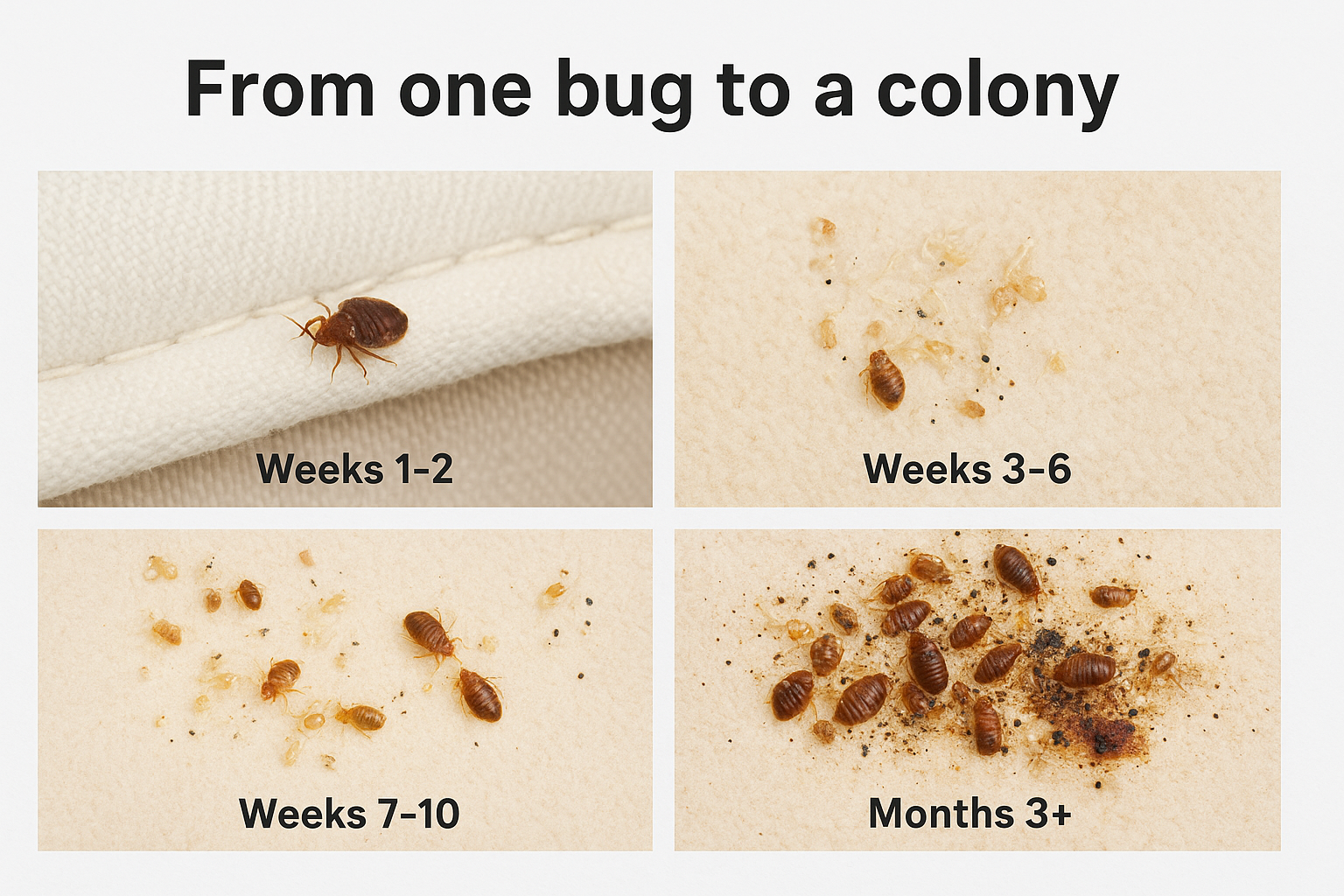
- Weeks 1-2: One or two bugs, usually near the mattress seam or headboard, bites may be mistaken for mosquito marks.
- Weeks 3-4: First eggs hatch, early-instar nymphs feed at night and hide in seams within a meter of the bed.
- Weeks 5-6: Nymphs molt through later instars, second-generation eggs appear, bites spread to nearby furniture.
- Weeks 7-8: Adults from the first generation begin breeding a third generation, population growth compounds.
- Weeks 9-10: Multiple overlapping generations, bugs move into cracks, electrical outlets, and adjoining rooms.
- Months 3+: Established colony across multiple rooms, visible fecal spotting, and a musty odor from scent glands.
Why growth accelerates instead of staying steady
Spreading happens because nymphs disperse to avoid competition for blood meals, carrying the infestation into luggage, wall voids, and shared walls in apartment blocks. Growth compounds fast once three or four generations are breeding simultaneously, which is exactly why knowing what professional bed bug pest control involves in month one saves far more time and money than waiting until month four.
How to break the bed bug life cycle at home
Breaking the cycle means attacking every stage at once, not just the adults you can see crawling at night. Heat treatment above 50°C kills eggs, nymphs, and adults in one pass, which is why steam cleaners work better than sprays that only knock down visible bugs. Washing linens, curtains, and clothing at high heat, then sealing them in plastic, removes an entire generation in one load. Vacuuming mattress seams, skirting boards, and furniture joints daily for two weeks interrupts hatching before nymphs find their first blood meal.
You cannot spray your way past an egg that sprays cannot reach.
Where DIY treatment falls short
Most over-the-counter sprays kill on contact but leave no residual effect, so any nymph that hatches a day later walks away unharmed, which is the real limit of treating bed bugs by yourself. This gap is exactly how a bed bug infestation timeline stretches from weeks into months in homes that rely only on store-bought products.
A basic home interruption checklist
- Strip and wash all bedding at 60°C or higher, twice a week during active treatment
- Vacuum mattress seams, bed frames, and skirting boards daily
- Steam-treat sofas, curtains, and upholstered furniture
- Seal cracks in walls and furniture joints with caulk
- Encase mattresses and pillows in bed bug-proof covers for at least a year
Why these steps alone rarely finish the job
These steps slow reproduction, but they rarely eliminate an established colony, which is where a trained technician makes the real difference.
Signs your infestation is escalating and when to act
Bed bug bite symptoms alone don’t tell you much, since many people don’t react to them for days or never react at all. Escalation signs show up in the environment before they show up on your skin, and catching them early keeps a manageable problem from becoming a multi-room infestation. When you inspect your bed step by step, watch for rusty spotting on mattress seams, tiny white eggs in furniture joints, and a sweet, musty smell that gets stronger in enclosed rooms.
What escalation actually looks like
- Bites appearing in new rooms, not just the original bedroom
- Multiple family members reporting bites on the same night
- Live bugs spotted during daylight, not just after dark
- Fecal spotting spreading past the mattress to walls or skirting boards
- A musty odor noticeable without pressing your nose to the furniture
Why daylight sightings are a turning point
Once bugs are visible in daylight, the colony is too large to hide.
When DIY stops being enough
Finding bugs in more than one room means the infestation timeline has already moved past the early stage, and store-bought sprays won’t reach bugs nesting inside wall voids or electrical fittings. Reaching this point is the clearest signal to book a professional inspection, because a technician can check adjoining units too, which matters in Bangalore apartment blocks with shared walls. Waiting another cycle, roughly five more weeks, lets a new generation start breeding before treatment even begins, so acting the week you notice spreading bites saves both money and sleep.
What a professional inspection and treatment involves
A proper inspection starts with a technician checking mattress seams, bed frames, skirting boards, and nearby furniture with a flashlight and often a sniffer dog trained to detect live bugs. If bugs are confirmed, treatment cost and duration depend on how many rooms are affected: a single-room infestation caught early is far cheaper and faster to clear than one that has spread through a whole apartment. Most professional protocols include an initial heat or chemical treatment followed by the 10-to-14-day recheck mentioned earlier, and some cases need a third visit if neighboring units are also infested. Ask any provider you contact whether the quote already includes that follow-up visit, since a one-time treatment without a recheck is the most common reason bed bugs come back within a month.
Frequently asked questions
How long does the full bed bug life cycle take?
From egg to breeding adult takes roughly five to six weeks: eggs hatch in 6-10 days, then nymphs pass through five instars over about five weeks, each stage requiring a blood meal before it can molt further.
How many eggs can one bed bug lay?
A single female lays 1 to 5 eggs a day and up to 500 over her lifetime, which is why one pregnant bug can seed a colony of over 100 within six to eight weeks.
Why don’t sprays get rid of bed bugs for good?
Most sprays kill on contact but leave no residual effect and don’t reach eggs, so any nymph that hatches afterward survives untouched. That is why professional protocols schedule a follow-up treatment 10 to 14 days later to catch newly hatched nymphs before they breed.
What are the signs an infestation has gotten out of hand?
Rusty spotting on mattress seams, a musty odor, bugs spotted during daylight, and bites appearing in more than one room all signal the colony has grown past what DIY treatment can handle, and it is time to book a professional inspection.
Preventing reinfestation after treatment
Clearing an infestation does not make a home immune to the next one, since bed bugs travel in luggage, secondhand furniture, and clothing, not just from a neighboring unit. A few habits keep a treated home from restarting the cycle described above.
- Inspect secondhand furniture and mattresses for eggs or fecal spotting before bringing them inside
- Keep mattress and pillow encasements on for at least a year after treatment, since a trapped bug starves without a blood meal
- Check luggage and clothing after travel or hotel stays, especially after visits to guesthouses or shared accommodation
- Reduce clutter near the bed, since fewer hiding spots make early signs easier to spot
- Schedule a follow-up inspection three to six months after treatment, particularly in shared-wall apartments where reinfestation from a neighboring unit is common
These habits do not require ongoing spraying, just periodic checking at the same seams and joints where the original infestation started.
Getting ahead of a bed bug problem
Every stage of the bed bug life cycle gives you a chance to act before things spiral. Eggs hatch in under two weeks, nymphs breed within five, and a single female can seed a colony of over a hundred in two months. That timeline is the whole story: the earlier you interrupt it, the less it costs you in money, sleep, and stress. Knowing the signs, rusty spotting, musty smells, bites spreading to new rooms, means you catch the infestation timeline while it is still a one-room problem instead of a whole-apartment one.
DIY steps buy you time, but they rarely finish the job once multiple generations overlap. If you are already seeing bites in more than one room or bugs during daylight, don’t wait for another breeding cycle to pass. Book a free inspection with Bangalore bed bug treatment specialists and get ahead of the colony before it gets ahead of you.