Room-by-Room Bed Bug Inspection Guide for Indian Homes
Bed bugs are a pervasive issue, especially in densely populated Indian neighborhoods where they can easily migrate through shared structures. Identifying an infestation early can prevent a widespread problem and high extermination costs. This room-by-room guide is designed for Indian homeowners and renters to efficiently inspect their living spaces. With detailed steps, a handy checklist, and expert precautions, you’ll be well-equipped to detect signs of bed bugs and know when to call for professional help.
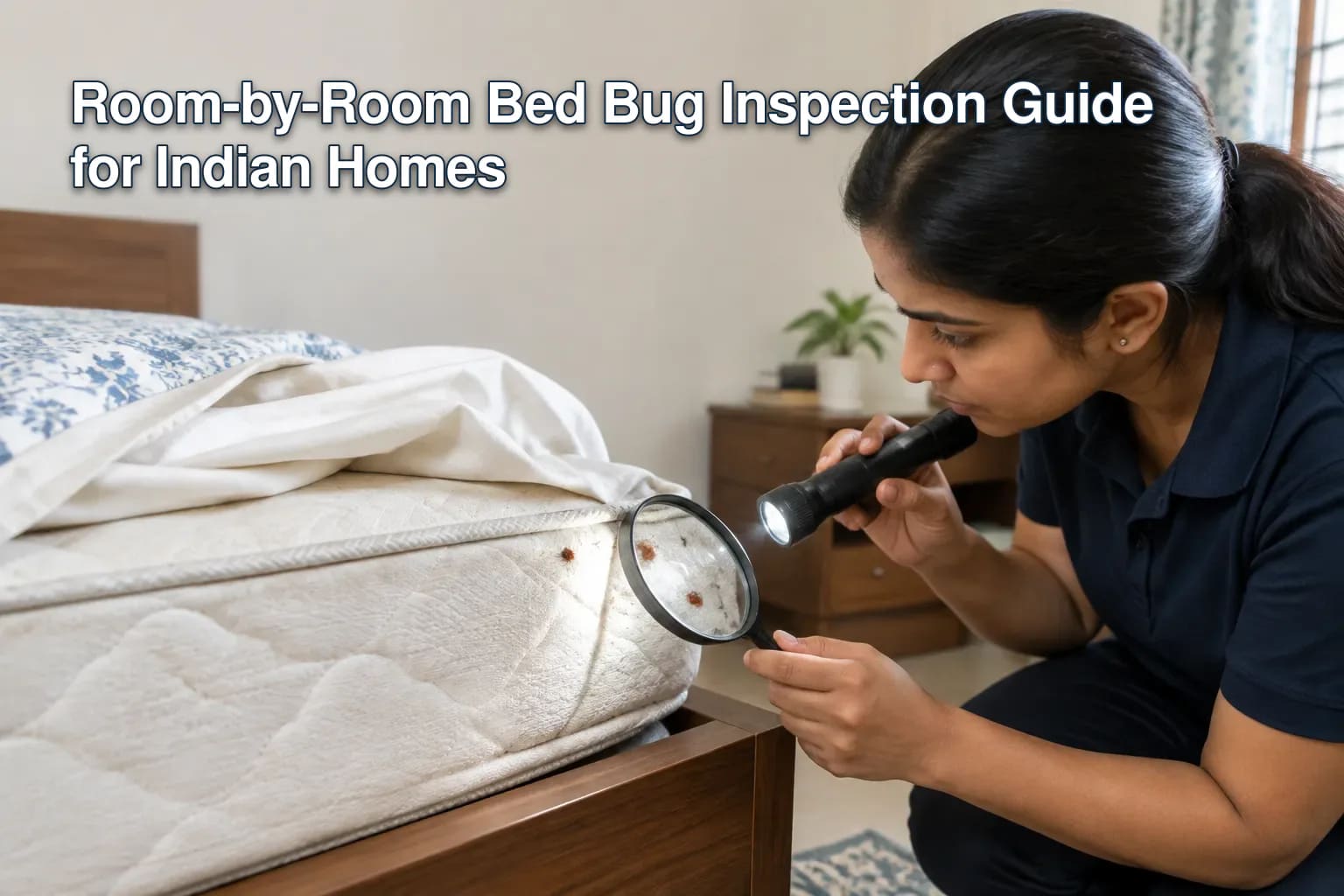
Quick Checklist for Bed Bug Inspection
Before delving into each room, equip yourself with these essentials:
- Flashlight: Essential for illuminating dark nooks, crannies, and under furniture.
- Magnifying glass: Handy for closely inspecting suspicious spots.
- Thin card or credit card: Useful for crevice checks and scraping bed bugs from tight spaces.
- Double-sided tape: Can be used to trap bugs for positive identification.
- Sealable plastic bags: For storing samples of discovered bugs or eggs for identification.
Check common harborages thoroughly: seams and tags of mattresses, seams of couches, bed frames, and in cracks along baseboards.
Understanding Bed Bug Behavior and Signs
Bed bugs are small, elusive insects often residing within close proximity to their human hosts. Due to their nocturnal nature, they typically come out to feed when it is dark, leading to bites along exposed skin during sleep. Identifying such an infestation requires understanding these basic behaviors and signs:
-
Movement Patterns: Bed bugs cannot fly or jump; they crawl and hitchhike on clothing, luggage, or furniture. Carefully transporting second-hand furniture can inadvertently introduce them into your home. (Source: EPA) (see EPA bed bug control guide)
-
Physical Evidence: Confirm presence through live bugs, cast skins, fecal spots, or eggshells rather than by bite marks alone as these can resemble mosquito or flea responses. (Source: CDC)
-
Habitat Preferences: High-density living spaces, common in Indian urban areas, can facilitate their spread via shared walls and plumbing—making thorough inspections crucial. (Source: Virginia Tech)
Room-by-Room Inspection Guide
Bedroom
- Check mattress seams and tags using a flashlight.
- Look behind headboards and along bed frames.
- Use a card to scrape along cracks in nightstands.
Living Room
- Inspect seams in upholstered furniture.
- Examine crevices in couches and chairs.
- Check under rugs and around baseboards with a magnifying glass.
Kitchen and Dining Areas
- Though less common, inspect behind wall hangings and baseboard junctions.
Bathroom
- Check behind loose wallpaper and wash in hot water any laundry from the bathroom that travels to other rooms frequently.
Storage and Other Areas
- Scan luggage and stored clothing, focusing on garments used occasionally.
Consider if bugs might traverse shared conduits, especially in apartment complexes. This vigilance could prevent wider building infestations.
Common Mistakes and How to Avoid Them
-
Relying Solely on Bites: Bites are not definitive proof of a bed bug infestation due to their similarity to other insects or allergens. Always look for physical evidence.
-
Superficial Checks: Not moving furniture or lifting rugs often misses bugs. Conducting a cursory inspection leads to missed signs.
-
Ignoring Less Common Areas: Focusing solely on beds can overlook bugs in sofas or clothes piles. Inspect all potential hiding spots diligently.
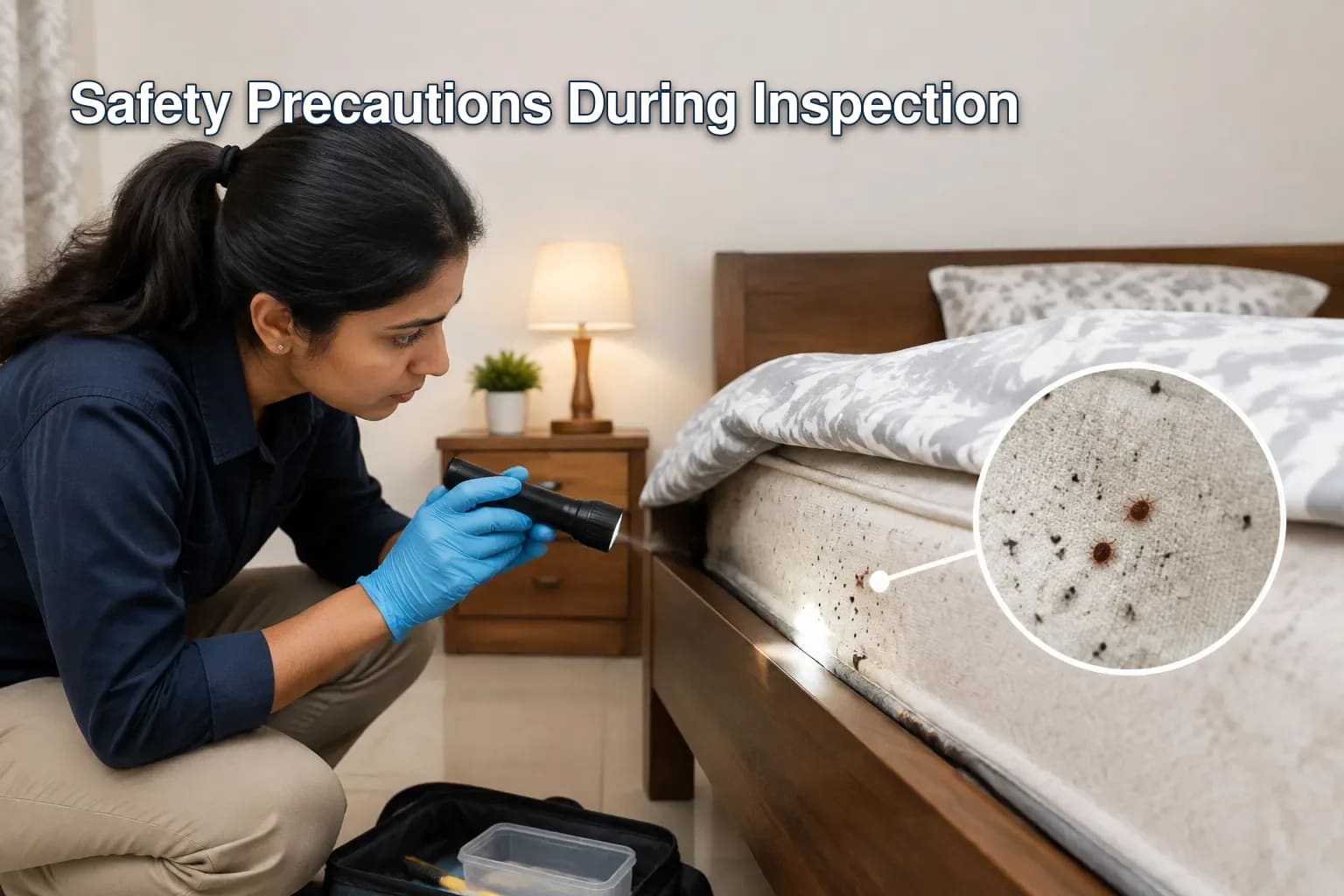
Safety Precautions During Inspection
- Personal Protection: Wear gloves to prevent skin contact with bed bugs and potential allergens.
- Ventilation: Ensure good airflow during inspections to avoid inhaling dust.
Avoid using household chemicals like kerosene or rubbing alcohol to spot-treat areas, as they are hazardous and ineffective in reaching hidden bugs. (Source: EPA)
When to Call a Professional
Consider professional intervention if:
- You find extensive evidence of infestation across multiple rooms.
- Infestation returns after initial DIY treatments.
- Bugs reappear after 6 to 10 days from an initial treatment—indicating potential hatching of missed eggs. Professional services provide integrated multi-visit solutions to overcome natural bed bug resistances and behavioral adaptations. (Source: EPA)
Next Steps After Inspection
If bedbugs were found, immediately isolate the items and wash any affected clothing and bedding in hot water followed by high-heat drying. Consider discussing treatment options like controlled-temperature heat treatments with professionals.
If no bugs are detected, maintain vigilance by checking regularly and decluttering to reduce potential hiding spots. For extensive infestations, always engage with a professional for a thorough eradication strategy.
Frequently Asked Questions
What are the signs of bed bugs in the home?
Common signs include live bed bugs, cast skins, fecal spots, and eggshells. Bites on your skin can also indicate their presence but are not conclusive.
How do I treat a bed bug infestation myself?
Basic DIY treatments include washing bedding and clothing in hot water and sealing infested items. However, for thorough eradication, professional pest control is recommended.
When should I call a professional for bed bug control?
If you find extensive infestations, or if DIY treatments fail to resolve the issue, consider hiring a professional who can employ integrated pest management techniques.
What are the best preventive measures against bed bugs?
Regularly inspect your home, keep it clutter-free, and be cautious with second-hand furniture. Using protective covers on mattresses can also help prevent infestations.
For professional inspection and treatment services, consider contacting BedBugsTreatment.co.in for a thorough evaluation and tailored pest management plan.
For persistent infestations, consider scheduling professional bed bug treatment services to inspect deep structural harborages.
For answers to common pest management inquiries, review our frequently asked questions about bed bugs.
References & Verified Sources
- Bed Bugs: Biology and Behavior (US Environmental Protection Agency (EPA)) — Supports: Bed bugs cannot fly or jump; they move strictly by crawling and hitchhiking on clothing, luggage, and used furniture.
Need Immediate Bed Bug Relief in Your Home?
BedBugsTreatment.co.in offers government-approved chemicals, same-day inspection visits, and a 12-month service warranty across India.