
That secondhand novel from a Koramangala street stall or the stack of college textbooks you just brought home could be hiding more than just dog-eared pages. Signs of bed bugs in books are easy to miss because most people only check mattresses and sofas, forgetting that bugs squeeze into the spine, gutter, and cover folds of anything paper-based. If you’ve noticed odd rust colored specks or a musty smell near your bookshelf, your instincts are probably right.
This guide walks you through exactly what to look for, tiny black droppings, shed skins, and pale eggs tucked into the binding, so you can confirm an infestation before it spreads to your bed or wardrobe. We also cover how bed bugs survive between pages for months without feeding, which is why books moved between rooms or homes in Bangalore often become the hidden source of a repeat infestation.
You’ll get a room-by-room inspection method using a flashlight and credit card to check bindings, plus safe ways to treat infested books without ruining paper or ink. Whether you’re dealing with library returns, old textbooks, or a single suspicious paperback, this guide helps you spot the problem early and stop it from taking over your home.
Why bed bugs hide in books
Books give bed bugs exactly what they look for: tight, dark seams where they can flatten their bodies and stay hidden for weeks. The spine gutter, the narrow channel where pages meet the binding glue, is warm, undisturbed, and rarely opened wide enough for a quick glance. A single adult bed bug is thinner than a credit card, so it slips into that gap and simply waits, out of sight from even a careful owner who checks the mattress every week but never touches the bookshelf.
They travel wherever you carry books
Secondhand books, library returns, and boxes moved from a hostel or an old Bangalore apartment are common carriers. Bugs don’t need a host nearby to survive; they can go three to four months without a blood meal, so a book picked up at a Church Street sale months ago can still release live bugs once it sits near your bed. This is one of the more overlooked signs of bed bugs in books: infestations that seem to appear out of nowhere are often just delayed hatchings from eggs laid inside a binding long before you brought the book home.
A book can carry a bed bug infestation for months before you ever see a bite.
Paper and cloth covers hold eggs well
Hardcover books with cloth or leather spines are particularly attractive because the weave holds eggs in place better than smooth paperback covers do. Females glue their eggs directly to fibers using a sticky secretion, and those eggs are nearly invisible against a dark spine unless you’re using a strong flashlight and looking at an angle. Once you understand this, checking books becomes as routine as checking a mattress seam, especially after moving house, buying used textbooks, or returning from a stay at a shared guesthouse or PG accommodation where infestations spread quickly between rooms.
Step 1. Check the spine and binding
Start your inspection at the spine gutter, the narrow crease where pages meet the binding glue. Bend the book open at a 45 degree angle over a white surface and shine a flashlight directly into the seam, the same way you would check a bed for bed bugs step by step. Bed bugs and their eggs show up as tiny dark or pale specks against the paper, and this single check catches most signs of bed bugs in books before you even flip a page.

Use a flashlight and a credit card
A stiff card, like an old credit card or a library card, works well for running along the spine to flush out anything hiding in the folds. Slide it gently between the cover and the first few pages, then along the outer binding edge where cloth or leather meets cardboard.
- Run the card slowly, not in quick swipes, so bugs don’t have time to scurry deeper
- Check both the top and bottom of the spine, where bugs often cluster near the edges
- Look for a faint sweet, musty odor, a sign of a larger hidden colony
- Repeat on hardcover corners, where the cloth folds over the board
If the spine looks clean under a flashlight at an angle, it usually is.
Hardbacks deserve extra attention because the board and cloth create a double layer bugs can wedge between. Softcover books are easier to check but still worth running a card along the folded spine edge, especially if the book has sat untouched on a shelf for months.
Step 2. Inspect pages and covers for stains
Flip through the book page by page, paying attention to the inner margins and back cover where rust-colored stains often show up. These marks are crushed blood spots left behind when a bed bug is squashed between pages, and they’re one of the clearest signs of bed bugs in books you’ll find without any equipment. Dark, pinpoint fecal spots near the gutter or along the top edge of pages are just as telling, especially if they smear slightly when you touch a damp cloth to them.
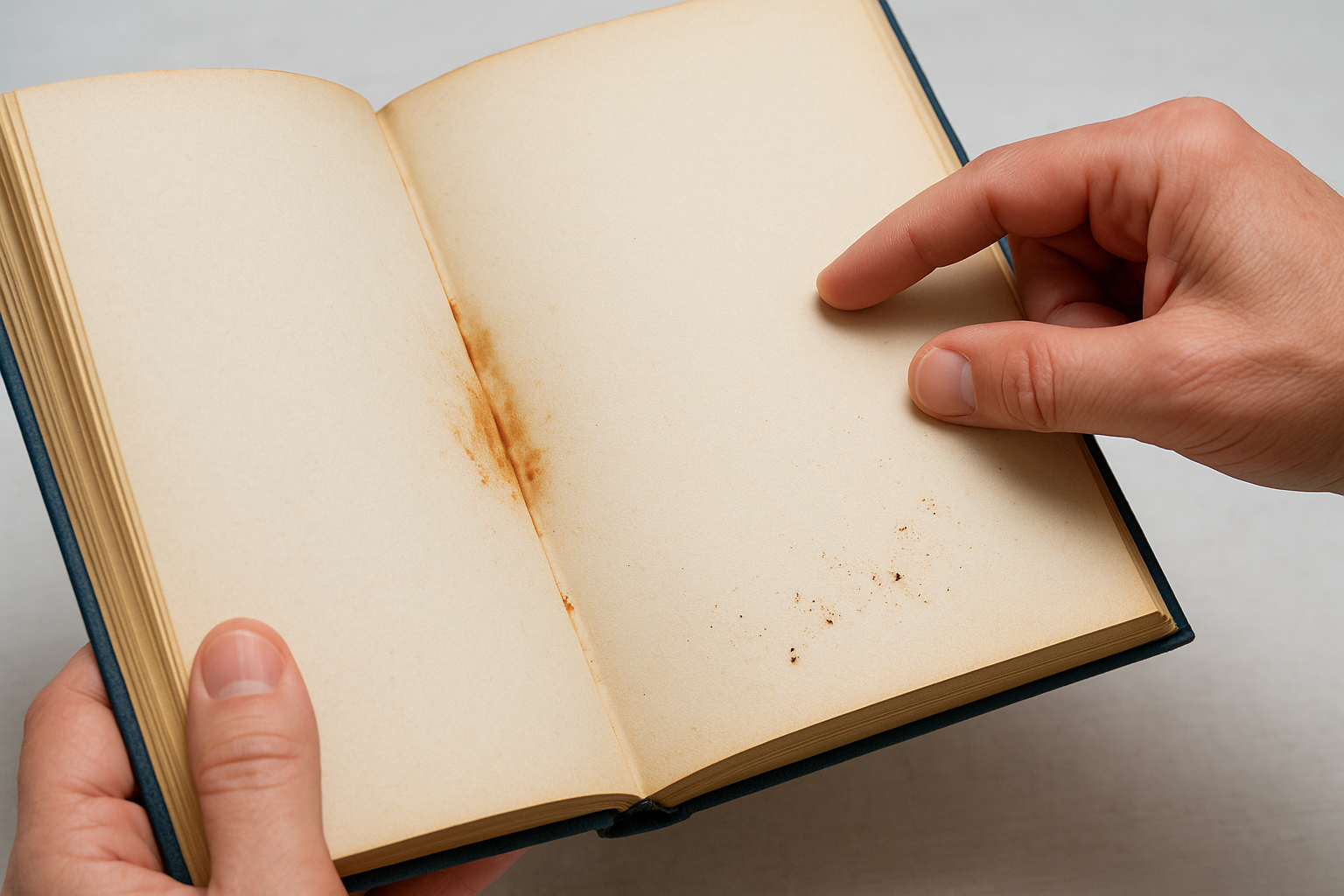
Look for shed skins and eggshells
Hold the open book up to a window or bright lamp and tilt it slightly. Nymphs shed their exoskeleton several times as they grow, leaving thin, papery shed skins wedged into the crease or stuck to the inside cover. Eggshells look like tiny pale husks, often clumped together near the spine fold rather than scattered across a page, and comparing what you find against close-up photos of bed bugs at each life stage makes identification much easier.
A single rust stain near the spine is reason enough to isolate the book immediately.
Check the front and back cover folds
Hardcovers usually have a folded flap of paper glued inside the cover boards, and this pocket is a favorite hiding spot. Run your fingertip along the fold; a gritty texture usually means eggs or debris are trapped inside. Check this list before moving on:
- Rust or brown smear marks on page edges
- Dark pepper-like specks along the gutter
- Papery shed skins near the spine crease
- A faint musty smell when the book is closed
Step 3. Isolate and treat an infested book
Once you spot any of the signs above, seal the book immediately in a heavy-duty zip-lock bag or a plastic tub with a tight lid. This stops nymphs and eggs from crawling onto shelves, curtains, or nearby furniture while you decide on treatment. Never place a suspected book back on an open shelf, even for a day, since a single missed egg can restart the problem weeks later.
Isolating the book the moment you find a stain saves you weeks of re-treating your whole shelf.
Heat is the safest treatment for paper
Heat works better than sprays for bed bugs in books because chemicals can stain pages or damage bindings. A sealed bag placed in direct sun for several hours, or a short cycle in a clothes dryer on low with the book protected in a breathable cotton pouch, raises the internal temperature enough to kill adults, nymphs, and eggs, the same principle behind heat-based bed treatment for bed bugs. Freezing works too: seal the book in a bag and leave it in a deep freezer at -18°C for at least four days.
When to call a professional
If you find heavy staining across multiple books or live near other soft furnishings, don’t experiment further on your own. A trained team can treat the surrounding shelf and room using low-toxicity heat or steam methods that won’t ruin paper or ink. Book a free bed bug inspection in Bangalore to confirm the extent of the infestation before it spreads beyond your bookshelf.
Step 4. Store and monitor books to prevent bed bugs
Proper storage matters just as much as treatment, especially if you’ve already dealt with one infestation. Clear plastic bins with locking lids keep books visible and sealed, unlike cardboard boxes that bed bugs can chew through or hide inside during a move. Keep bookshelves at least six inches away from the bed frame and headboard, since bugs travel along tight gaps between furniture at night looking for a host.
Rotate and inspect your shelf every month
Go through your collection on a fixed schedule rather than waiting for a bite or a stain to remind you. Pull five or six books at random each month, run a flashlight along the spine, and check the gutter the same way you did during your first inspection. This habit catches signs of bed bugs in books early, before eggs hatch into a full colony that spreads to curtains or upholstery nearby, and knowing how long eggs take to hatch into adults helps you time those checks.
A five-minute monthly check beats a full room treatment every time.
Use interceptor traps near shelving units
Place pitfall-style interceptor traps under bookshelf legs or along the base of built-in units. These simple plastic devices catch crawling bugs before they reach your books and give you an early warning without needing to disturb every title on the shelf.
- Wipe shelves with a damp cloth monthly to remove eggs and debris
- Avoid storing books directly on carpeted floors near the bed
- Keep new secondhand purchases quarantined for two weeks before shelving them, alongside the other habits that keep a Bangalore home free of bed bugs
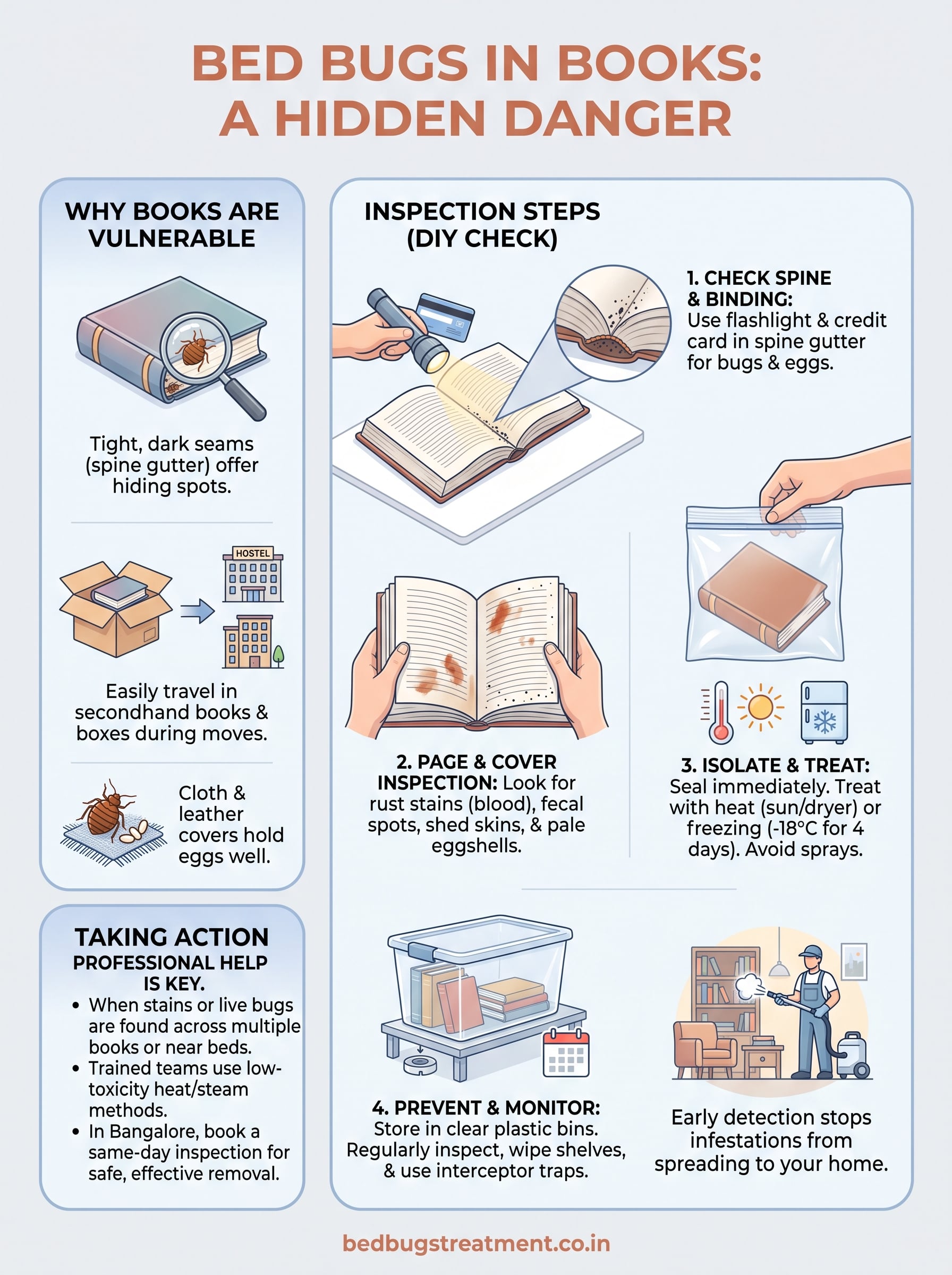
Keeping your book collection safe
Books feel harmless, which is exactly why bed bugs use them as a hiding spot for months at a stretch. Checking the spine gutter, watching for rust stains, and isolating anything suspicious the moment you spot it keeps a single paperback from turning into a bedroom-wide problem. Grabbing a flashlight and a credit card takes five minutes, and that habit alone catches most signs of bed bugs in books long before eggs hatch into a real colony.
Don’t wait for bites or a musty shelf smell to confirm what you already suspect. Once staining, shed skins, or live bugs show up across more than one book, home remedies rarely reach every hidden egg. A professional team can treat your shelves, headboard, and surrounding furniture in one visit using safe, low-toxicity methods. If you’re in Bangalore, book a same-day inspection with our Bangalore bed bug team and get your home, and your bookshelf, properly cleared out.