
Found small reddish-brown bugs in your sheets and can’t figure out where they came from? You’re not alone. Across Bangalore, from Koramangala flats to Whitefield apartment blocks, families wake up with unexplained bite marks and spend hours online trying to identify bugs in bed before panic sets in.
Here’s the short answer: bed bugs don’t appear out of nowhere. They hitchhike in on luggage, secondhand furniture, or clothing, then hide in mattress seams and cracks near your sleeping area, feeding on you at night. Understanding how does bed bug infestation start helps you catch the problem early, before a few bugs turn into a full-blown colony spreading through your bedroom or apartment.
In this article, we’ll break down exactly what bed bugs look like, the real causes of bed bug infestation in Indian homes, and why even spotless apartments get hit. We’ll also cover whether these pests pose actual health risks and what separates a bed bug small infestation you can manage from one that needs professional treatment right away.
Why bed bugs are a bigger health risk than you think
Most people brush off a bed bug bite as a minor annoyance. That’s a mistake. Bed bugs are not dangerous in the sense of transmitting disease the way mosquitoes do, but repeated exposure creates real physical and mental health problems that build up over weeks of poor sleep and constant scratching. If you’ve been asking yourself are bed bugs dangerous, the honest answer is: not usually life threatening, but far from harmless, especially for children, elderly residents, and anyone with sensitive skin or asthma.
Bed bugs rarely kill, but they steal your sleep, your skin, and your peace of mind long before you notice the real damage.
Physical reactions and allergic responses
Every person reacts differently to bed bug saliva, which is injected during feeding to keep blood from clotting. Some Bangalore residents wake up with just a faint red mark, while others develop swollen, itchy welts in clusters of three or four, often called "breakfast, lunch, and dinner" bites because bed bugs feed multiple times in one session. Allergic reactions range from mild itching to intense swelling, hives, and in rare cases, anaphylaxis-like symptoms that require medical attention, so it helps to know how to identify bed bug bites and relieve the itching. The U.S. Centers for Disease Control and Prevention notes that bed bug bites can cause significant itching and skin reactions in sensitive individuals, even though bed bugs themselves are not confirmed carriers of disease-causing pathogens (source: cdc.gov). If your child or elderly parent suddenly develops unexplained welts after sleeping, don’t assume it’s a heat rash, check the mattress seams first.
Secondary infections and skin damage
Scratching is where most of the real damage happens. Broken skin from constant scratching invites bacterial infections like impetigo or cellulitis, which need antibiotics to clear up. This is especially common in households with young children who scratch in their sleep without realizing it. In humid Bangalore weather, open bite marks heal slower and get irritated by sweat, making the itch-scratch cycle worse night after night. We’ve seen cases where a small bed bug small infestation left unchecked for a month resulted in skin infections that took longer to treat than the pest problem itself.
The psychological toll nobody talks about
Beyond the physical symptoms, bed bugs cause genuine psychological distress. Families report anxiety about going to sleep, checking mattress seams obsessively, and even avoiding their own bedroom out of disgust or fear. This condition, sometimes called "bed bug anxiety," leads to chronic sleep deprivation, which affects concentration at work, mood, and overall health. Renters in shared apartments or PG accommodations often feel embarrassed to report an infestation, delaying treatment and letting bugs in bed multiply while the psychological strain builds. Sleep loss compounds every other symptom on this list, making even a mild infestation feel unbearable within days.
Who faces the highest risk
Certain groups in your household face amplified consequences from an infestation that others might shrug off. Understanding this helps you prioritize who needs protection first and how urgently you should act.
| Group | Specific risk |
|---|---|
| Infants and toddlers | Higher chance of scratching-related skin infections, disrupted sleep affecting growth |
| Elderly residents | Thinner skin reacts more severely, slower healing from secondary infections |
| Asthma or allergy sufferers | Bed bug allergens can trigger or worsen respiratory symptoms |
| Pets | Can develop skin irritation from bites, though less commonly affected than humans |
| Renters and PG residents | Delayed reporting due to stigma, allowing infestations to spread further |
Knowing where the real danger lies changes how you approach the problem. A single bite you can ignore. A pattern of bites across multiple family members, paired with visible fecal spots or shed skins on your sheets, is one of the early bite signs most people ignore, and your signal to stop treating this as a minor irritant and start treating it as a health issue that needs a proper inspection, not another DIY spray from the local store."}
How to check for bed bugs in your home
Before you assume the worst, do a proper inspection yourself. Most Bangalore residents jump straight to buying a spray without confirming whether they actually have bugs on bed or something else entirely, like carpet beetles, lice, or a tick, so it pays to learn how bed bugs and ticks differ. A thorough check takes twenty minutes and tells you whether you’re dealing with a single hitchhiker or a bed bug infestation in apartment walls that has been building for weeks.
Start with the mattress and bed frame
Following a step-by-step guide to checking your bed, strip your sheets completely and examine the mattress seams, piping, and tags under bright light or a flashlight. Bed bugs hide in tight cracks during the day and only come out to feed at night, so you’re looking for evidence of their presence rather than the bugs themselves in most cases. Check these spots in order:
- Mattress seams, tufts, and the underside where fabric meets the frame
- Bed frame joints, especially wooden frames with screw holes or grooves
- Box spring lining, if you have one, both top and bottom
- Headboard, particularly if it’s mounted against the wall
- Nearby furniture like nightstands and dressers within a few feet of the bed
If you find rusty spots, shed skins, or live bugs in more than one of these spots, you’re past the point of DIY sprays.
Signs beyond live bugs
Spotting an actual bug crawling across your sheet confirms bed bugs in the bed, and comparing it against bed bug photos at every life stage removes the doubt, but you’ll often catch the infestation earlier through indirect signs. Tiny dark spots on the mattress or sheets are fecal matter, and they smear like ink when you wipe them with a damp cloth. Pale, papery shells near seams are shed skins from nymphs molting as they grow. A musty, sweetish odor in the room, often compared to overripe raspberries, shows up in heavier infestations and usually means the colony has been established for a while.
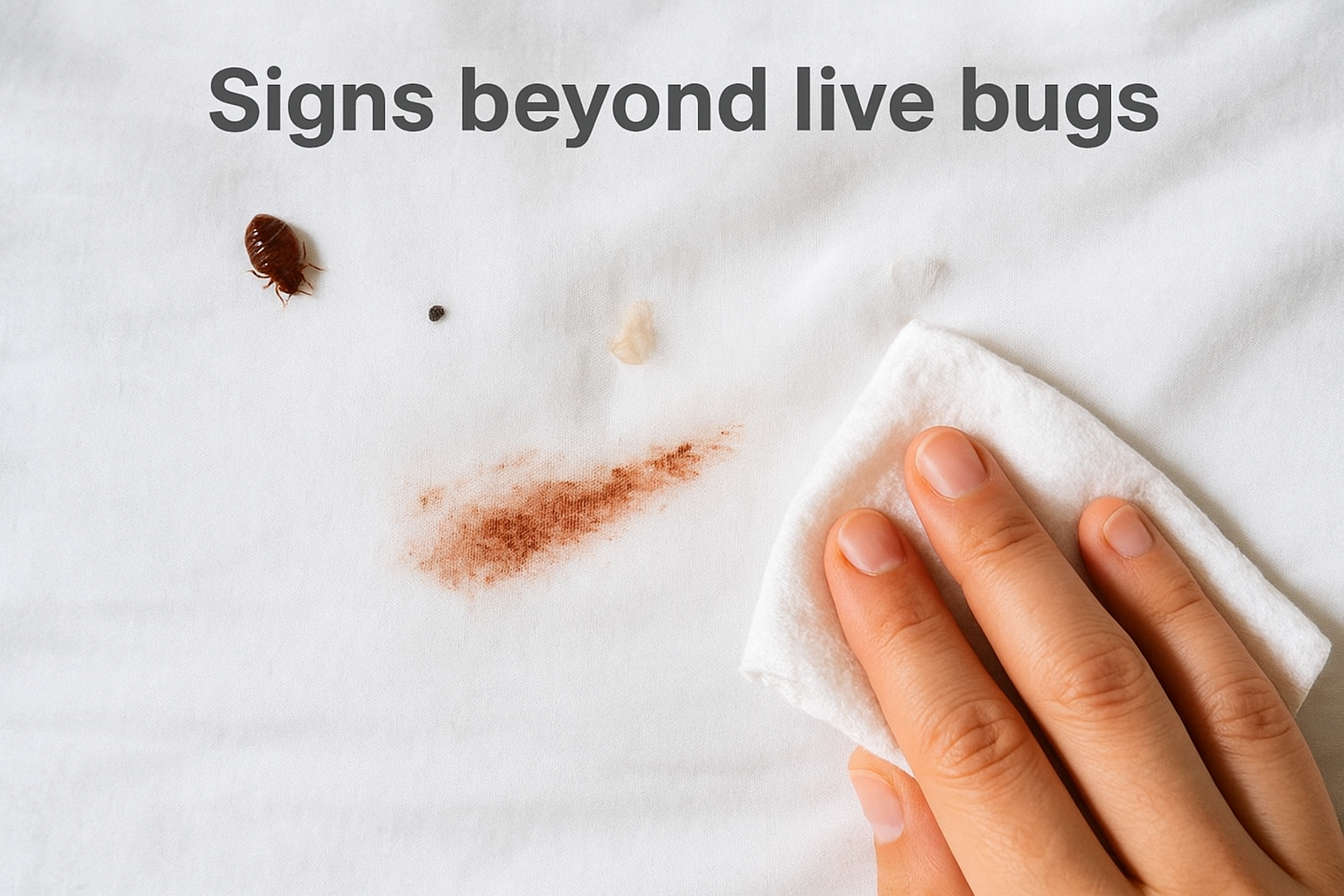
| Sign | What it looks like | What it tells you |
|---|---|---|
| Live bugs | Reddish-brown, flat, about the size of an apple seed | Active feeding is happening now |
| Fecal spots | Small dark or rust-colored dots, smear when wiped | Bugs have been resting in this exact spot |
| Shed skins | Pale, translucent, insect-shaped casings | Nymphs are molting and maturing nearby |
| Blood smears | Small reddish streaks on sheets | You crushed a fed bug while sleeping |
| Musty odor | Sweet, stale smell in the room | Infestation has grown beyond a few bugs |
When to escalate to a professional inspection
Questioning how do you get a bed bug infestation confirmed for certain? Don’t rely on guesswork if you’re unsure what you’re looking at, since bed bug eggs are nearly translucent and easy to miss without training. Trained technicians use flashlights, moisture meters, and sometimes detection dogs to confirm activity in spots you’d never think to check, like electrical outlets or picture frames. A same-day free inspection removes the guesswork entirely and tells you within the hour whether you’re managing a light infestation on the bed or something that has already spread through multiple rooms.
What causes a bed bug infestation to start
Wondering how did I get bed bugs in my apartment when you keep the place spotless? Cleanliness has almost nothing to do with it. Bed bugs are not attracted to dirt or food scraps like cockroaches. They’re attracted to warm bodies, carbon dioxide, and the dark, undisturbed cracks near where you sleep. The real answer to what causes bed bug infestation almost always traces back to something entering your home from outside, not something growing inside a messy room.
A five-star apartment gets bed bugs just as easily as a budget flat, because these bugs hitchhike on people, not dirt.
The most common entry points
Understanding how bed bug infestations begin means tracing the specific ways these pests travel. Most Bangalore cases we see start with one of these routes:
- Travel and hotel stays: bugs climb into luggage seams or laptop bags during a trip and ride home undetected
- Secondhand furniture: used mattresses, sofas, and even office chairs bought online or from local markets often carry hidden eggs
- Shared laundry facilities: apartment complexes with common washing areas let bugs move between units through bags and baskets
- Visitors and domestic help: anyone who spends time in an infested space nearby can carry bugs in on clothing or bags
- Adjoining walls in apartments: in a bed bug infestation in apartment buildings, bugs travel through electrical conduits, plumbing gaps, and shared walls between neighboring units
Why apartments spread infestations faster
Questions around how does bed bug infestation start in flats specifically come up constantly, and the layout is the reason bed bug cases keep rising in Bangalore apartments. Apartment buildings compress dozens of households into shared walls, corridors, and utility shafts, giving bed bugs a direct highway between units. One infested flat in a building can seed three or four neighboring units within a few months if nobody treats the source. This is exactly why how do you get a bed bug infestation despite never traveling or buying used furniture: your neighbor’s untreated problem becomes yours through a shared wall socket or a hallway carpet.
From a hitchhiker to a full colony
Even a single pregnant female bed bug is enough to start real trouble. She lays one to five eggs a day and up to 500 in her lifetime, and those eggs hatch within two weeks in Bangalore’s warm climate, which is why the six stages of the bed bug life cycle matter so much. That’s how a bed bug small infestation, just one or two bugs behind a headboard, turns into dozens within a month if it goes unnoticed. Temperature accelerates this cycle further, since bed bugs breed faster above 21°C, a baseline Bangalore hits year-round.
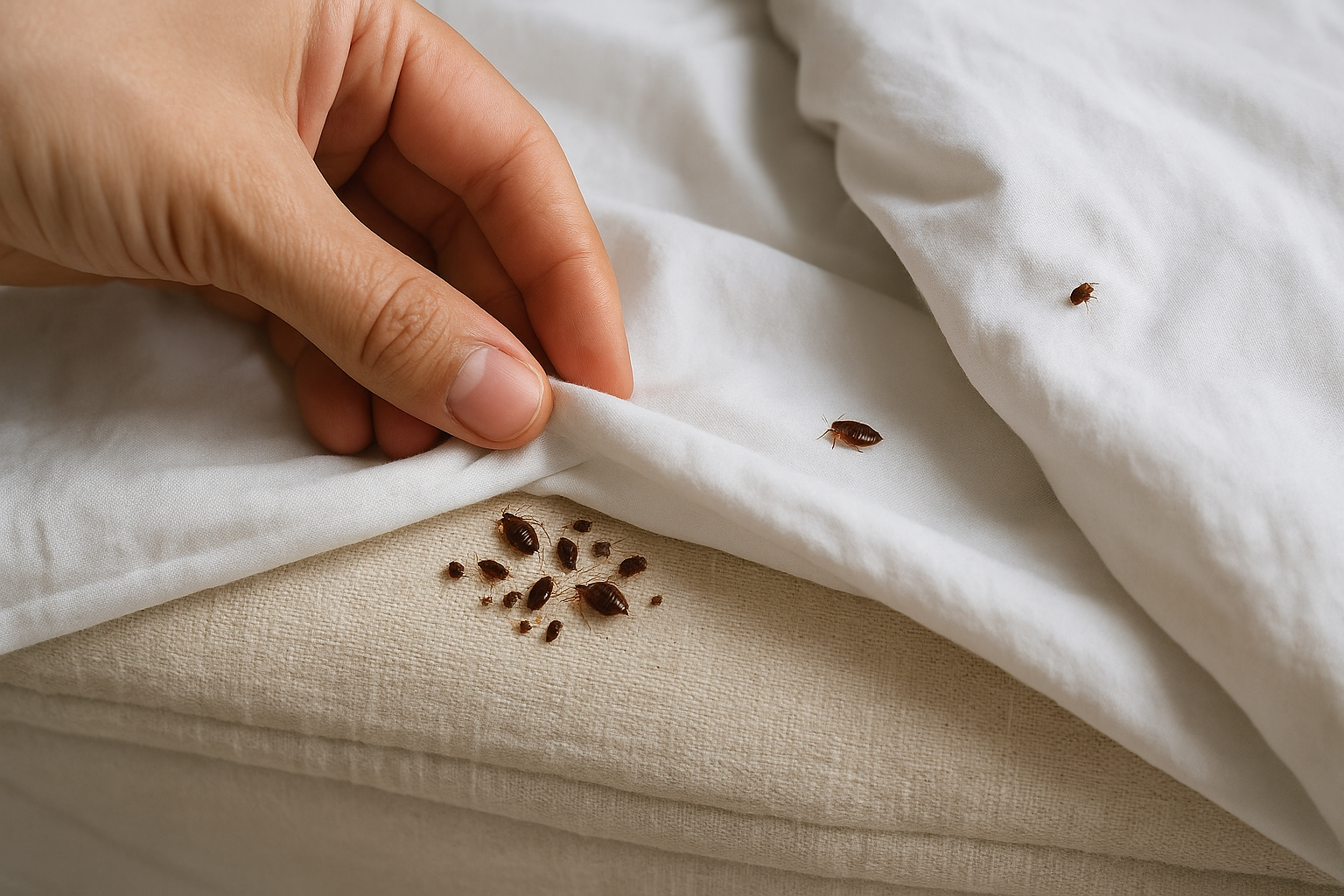
| Stage | Timeframe | What’s happening |
|---|---|---|
| Introduction | Day 0 | One or two bugs enter via luggage, furniture, or a shared wall |
| Establishment | Week 1-2 | Eggs are laid in mattress seams and cracks near the bed |
| Early growth | Week 3-6 | Nymphs hatch and begin feeding, population reaches 10-20 |
| Visible infestation | Month 2-3 | Bites, fecal spots, and shed skins become obvious |
| Spread | Month 3+ | Bugs move to nearby rooms or adjoining units |
Recognizing which stage you’re in tells you how urgently to act, and whether a DIY fix still has a realistic chance of working.
How to prevent and treat a bed bug infestation
Once you’ve confirmed an infestation, the fix depends entirely on how far it has spread. A single bug behind a headboard responds differently than a colony that has moved into three rooms. Skipping straight to a random spray from the local store wastes money and buys the bugs time to multiply further, so match your response to the actual scale of the problem.
Prevention habits that cut your risk
Stopping bed bugs before they settle in beats fighting them after they’ve spread through your bedroom. Build these bed bug prevention habits for Bangalore homes into your routine, especially if you travel often or live in a shared apartment building:
- Inspect secondhand furniture, especially mattresses and sofas, before bringing them indoors
- Use a protective, zippered mattress encasement to remove hiding spots along seams
- Wash and dry travel clothes on high heat within a few hours of returning home
- Keep luggage off the bed and floor after any trip, hotel stay, or guesthouse visit
- Vacuum mattress seams and bed frame joints every couple of weeks
- Seal cracks around baseboards, electrical outlets, and shared walls in apartment buildings
Prevention costs you twenty minutes a week; a full infestation costs you weeks of disrupted sleep and thousands of rupees in treatment.
DIY treatment: what works and what doesn’t
Heat and thorough cleaning genuinely help with a bed bug small infestation caught early. Washing linens above 60°C, steaming mattress seams, and vacuuming daily can knock down a small population before it establishes itself. Diatomaceous earth around bed legs offers some mechanical control too, as long as you know how to apply it. What doesn’t work is relying on over-the-counter sprays alone, and it’s worth knowing whether bed bug spray killers do the job, since bed bugs on bed frames and inside walls often survive surface treatments and simply relocate deeper into cracks, making the problem harder to track afterward.
When professional treatment becomes necessary
Once bites appear on multiple family members, or you’ve spotted fecal spots and shed skins in more than one room, DIY methods rarely catch up to the breeding cycle. Professional technicians use approved heat treatments, targeted chemical application, and steam to reach adults, nymphs, and eggs hiding in spots you’d never check yourself, like behind switchboards or inside bed frame joints. At BedBugsTreatment.co.in, every job starts with a free same-day inspection, followed by a multi-step process covering extermination, follow-up visits, and prevention guidance, backed by a 12-month warranty so you’re not paying twice if bugs return.
| Method | Best for | Limitation |
|---|---|---|
| Washing and drying on heat | Clothes, linens, small soft items | Doesn’t reach mattress interiors |
| Steam treatment | Mattress seams, upholstery | Requires careful, repeated application |
| Diatomaceous earth | Light prevention around bed legs | Slow acting, not a standalone fix |
| Professional heat treatment | Full-room or apartment infestations | Needs trained equipment and technicians |
| Targeted chemical application | Cracks, crevices, wall voids | Best combined with inspection and follow-up |
Matching the treatment to the infestation stage saves you time, money, and another sleepless week wondering if the bugs are really gone.
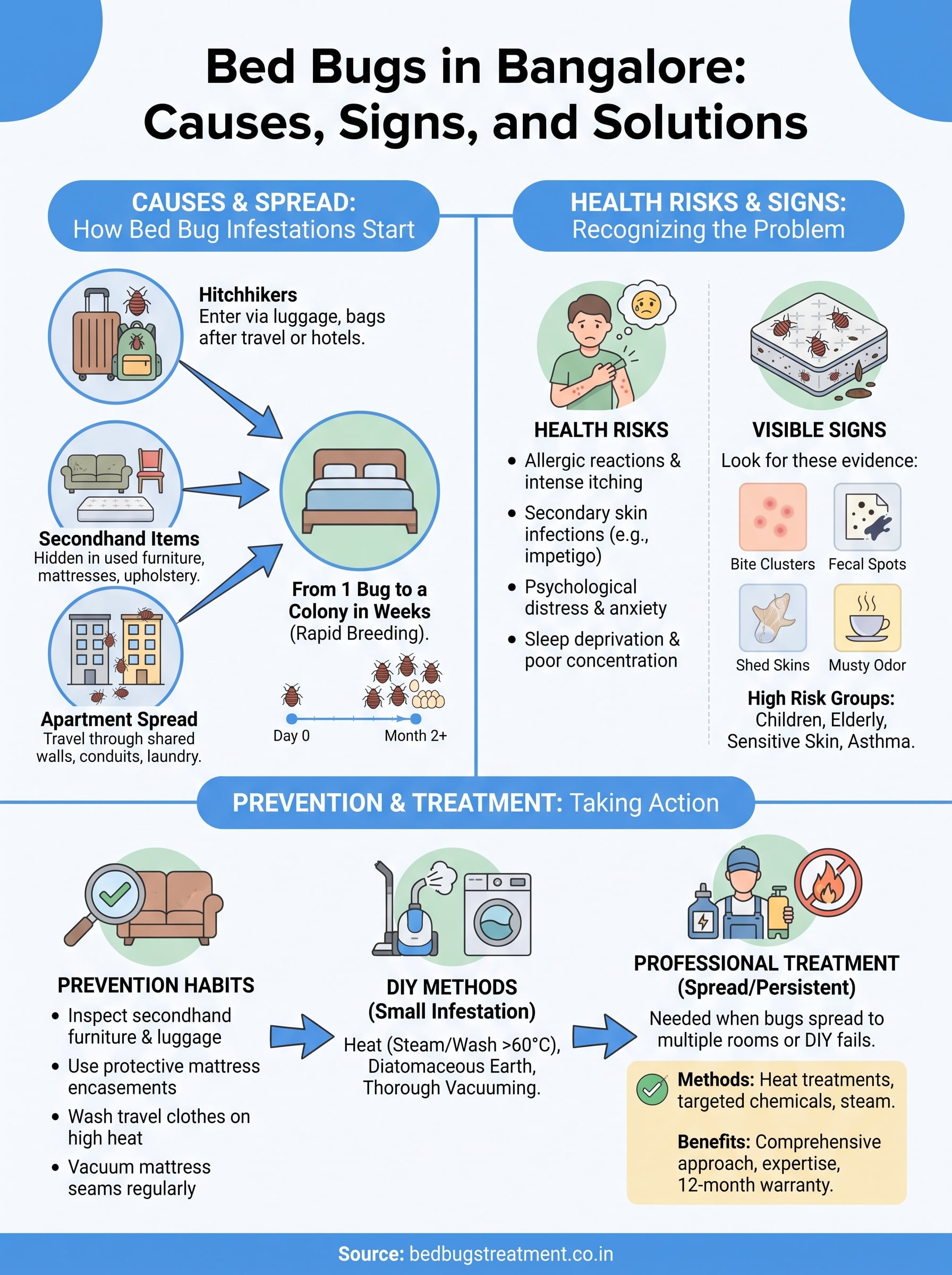
Sleeping soundly again
Finding bugs in bed doesn’t mean your home is dirty or that you’ve done something wrong. It means a hitchhiker got in through luggage, a used chair, or a shared wall, and found the warm, undisturbed spot every bed bug looks for. What matters now is what you do next. Check the mattress seams, track how far the signs have spread, and act before a couple of bugs behind the headboard become a colony across three rooms. Waiting rarely helps with bed bugs; the breeding cycle just outpaces DIY sprays and good intentions.
If you’ve already spotted fecal spots, shed skins, or bites on more than one family member, skip the guesswork. Book same-day bed bug treatment for your Bangalore home with a free inspection, and get a technician to confirm the scale of the problem the same day, backed by a 12-month warranty so you sleep easy again.