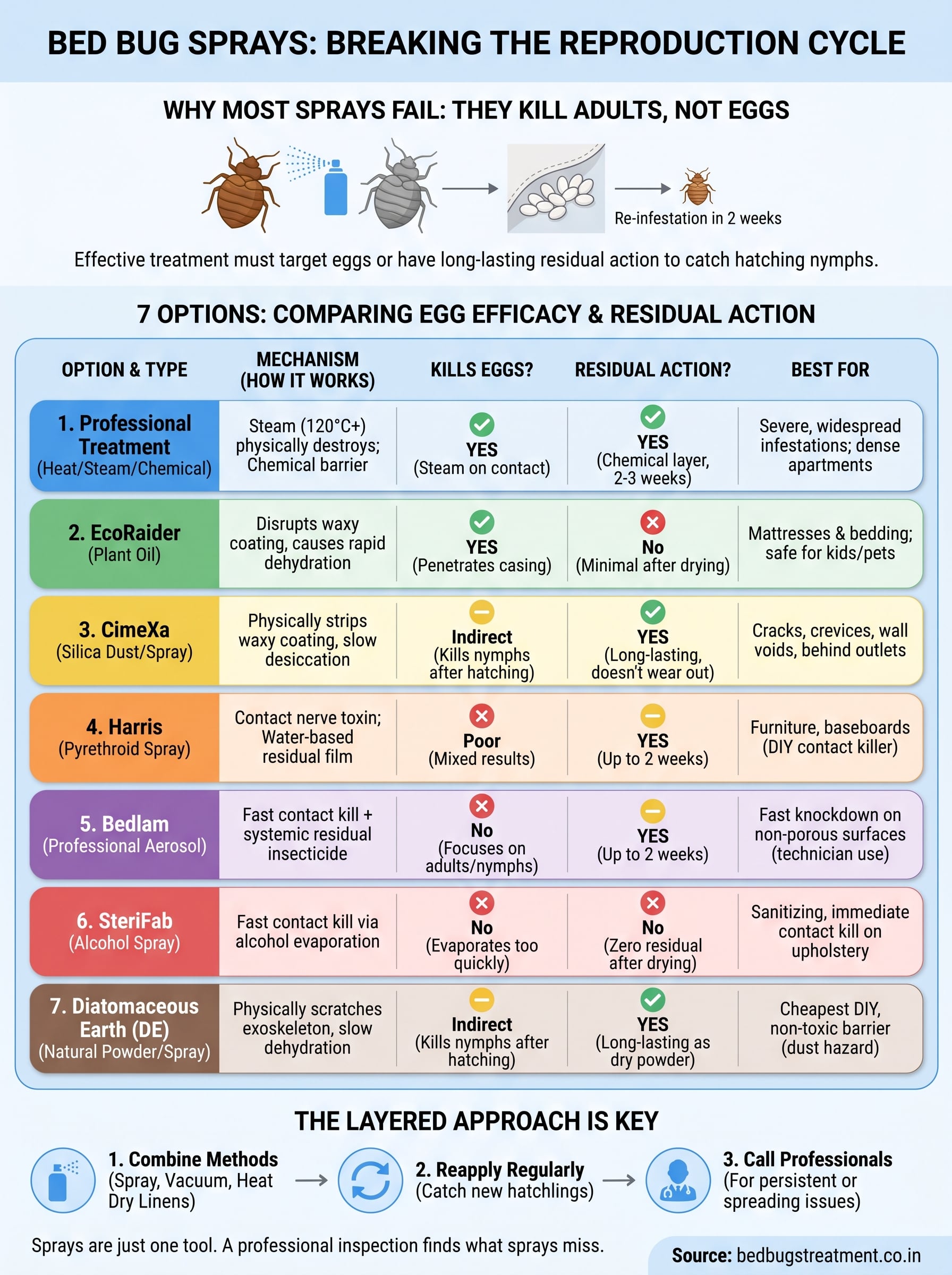
You’ve sprayed the mattress seams, the bed frame, even the carpet edges, and the bites keep coming back. Most sprays sold in Bangalore stores kill adult bed bugs on contact but do nothing to the eggs hiding in cracks, so the infestation bounces back in two weeks. A good bed bugs killing spray needs to do more than knock down what you can see; it has to break the reproduction cycle too.
The short answer is yes, but only with the right active ingredients. Does bed bug spray kill eggs depends on whether it contains an insect growth regulator or a residual chemical that penetrates the egg casing, not just a contact killer like pyrethrin alone. Most drugstore sprays fail here, which is why homes in Koramangala and HSR Layout often see repeat infestations within weeks of DIY treatment.
In this list, we break down seven sprays that actually work against both bugs and eggs, based on their active ingredients, residual action, and safety for homes with kids or pets. We’ll also flag where spray alone isn’t enough and a professional inspection makes more sense than another trip to the pharmacy.
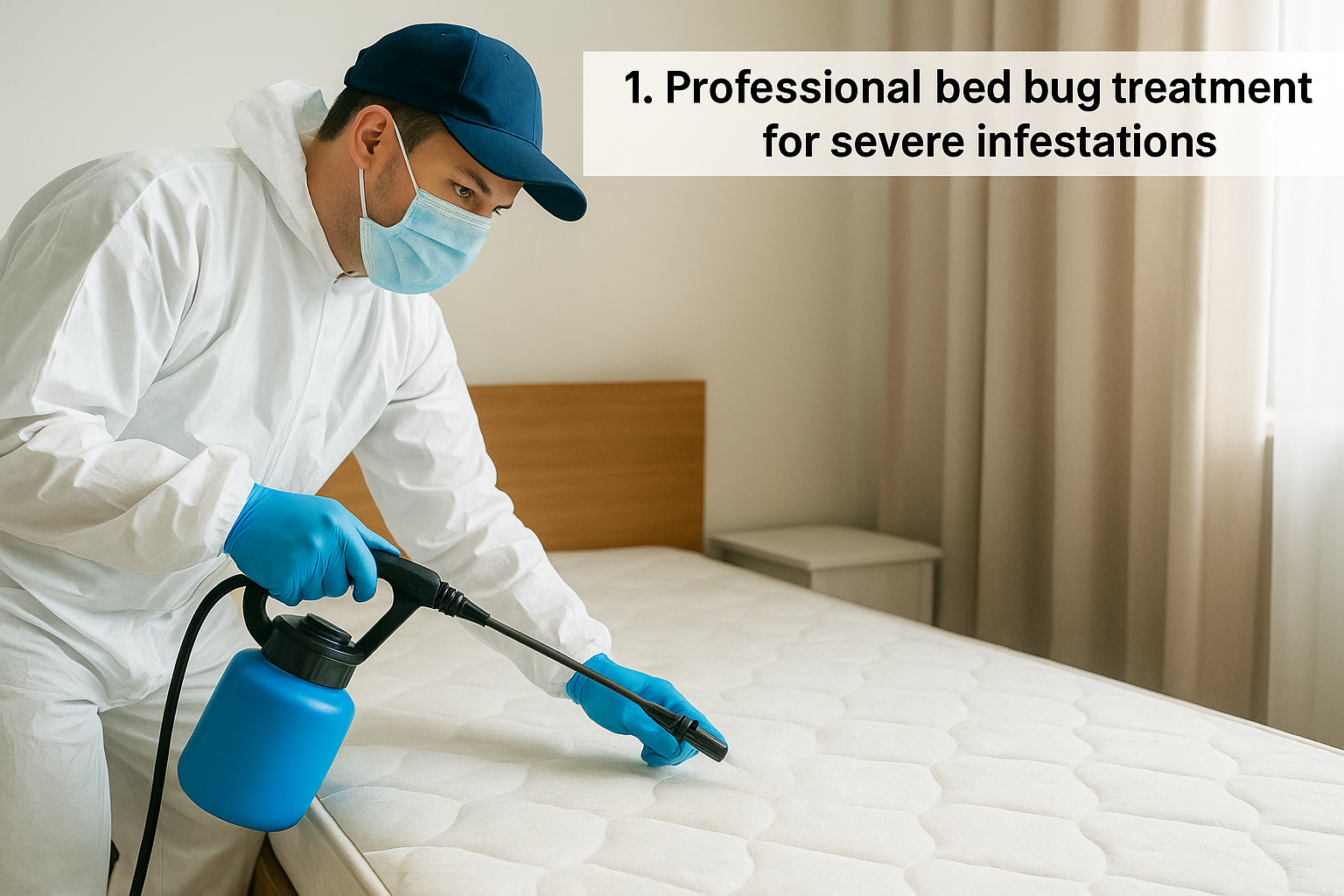
1. Professional bed bug treatment for severe infestations
When you’ve already tried three cans of bed bugs killing spray and the bites keep showing up, a can from the shelf isn’t going to save you. A professional bed bug treatment combines multiple application methods, chemical, heat, and steam, targeted at the exact spots bugs hide, not just the mattress seams you can see. This is the option most pest control experts recommend once an infestation has spread past a single room, especially in dense Bangalore apartments where bugs travel through shared walls and electrical conduits.
How it works
A trained technician starts with a full inspection using a flashlight, moisture meter, and sometimes a bed bug sniffer dog, then applies a layered bed bug pest control process of residual sprays, steam at 120°C plus, and crack-and-crevice dusting. This layered approach kills bugs hiding in places household sprays never reach, like behind switchboards, inside bed frame joints, and under skirting boards.
A can of spray treats what you can see. A professional treatment treats what you can’t.
Does it kill eggs
Yes, and this is the biggest advantage over store-bought sprays. Steam treatment physically destroys egg casings on contact, while the follow-up chemical application leaves a residual barrier that kills nymphs as they hatch over the next two to three weeks. Most services include a follow-up visit specifically to catch this second wave, something a single spray application simply cannot do.
Safety for children and pets
A reputable provider uses low-toxicity, odorless formulations approved for residential use, and clears the treated area of children, pets, and food items before application. Ask upfront which chemicals are used and how long you need to stay out of the room; a trustworthy technician will explain this without being asked twice.
Price and availability in India
Pricing in Bangalore typically runs by room size and infestation severity, in line with what bed bug pest control costs across India, and most companies offer a free inspection before quoting.
| Home size | Typical price range (INR) |
|---|---|
| 1BHK | 1,500 to 2,500 |
| 2BHK | 2,500 to 4,000 |
| 3BHK+ | 4,000 to 7,000+ |
If your DIY spraying hasn’t worked after two attempts, it’s time to book an inspection with bed bug specialists rather than buying a fourth can. Same-day appointments are available across Bangalore, Mumbai, Pune, and Delhi, backed by a 12-month warranty.
2. Harris bed bug killer spray
Harris is one of the most recognized names in bed bugs killing spray sold internationally, and it’s become a go-to for people who want a contact killer that also leaves behind protection. It uses a water-based formula built around lambda-cyhalothrin or a similar pyrethroid, packaged in a pump spray bottle rather than an aerosol can, which matters if you’re treating fabric or wooden furniture that reacts badly to solvents.
How it works
The spray works on direct contact, disrupting the nervous system of adult bugs and nymphs within minutes of exposure. Because it’s water-based, it dries to leave a residual film on mattress seams, baseboards, and furniture joints that continues killing bugs crossing the surface for up to two weeks after application, longer than most basic pyrethrin sprays sold locally.
Does it kill eggs
Harris doesn’t advertise itself as an egg-specific killer, and lab results are mixed on penetration through the egg casing. It performs better against eggs than a plain contact-only spray, but you shouldn’t treat it as a one-and-done solution.
If a spray only handles adults, you’re just buying time before the next hatch.
Plan on reapplying every seven to ten days for at least three weeks to catch newly hatched nymphs before they mature.
Safety for children and pets
Once dry, the residue is considered low-risk, but you still need to keep kids and pets off treated surfaces until the spray fully dries, usually two to four hours.
Price and availability in India
Harris isn’t widely stocked in Indian pharmacies or hardware stores; buyers typically import it through online marketplaces, which pushes the price to roughly ₹1,800 to ₹2,500 per bottle including shipping, making it a costlier option than local alternatives for the same coverage.
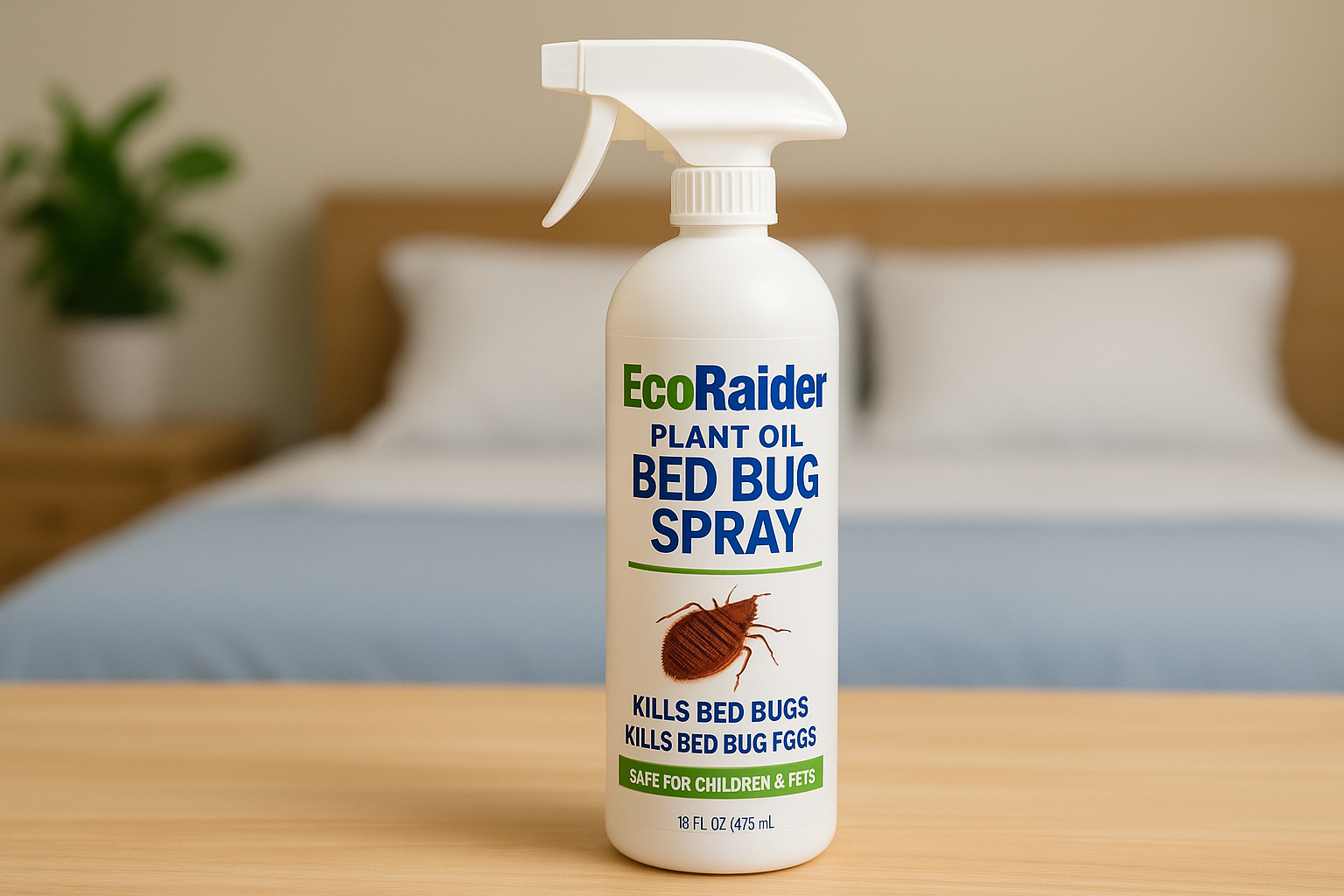
3. EcoRaider plant oil bed bug spray
EcoRaider has built a reputation as the plant-oil bed bugs killing spray of choice for households that want results without synthetic pesticides in the bedroom. Made from geraniol, cedar extract, and other essential oils, it’s registered with the US EPA as a minimum-risk pesticide, which is why pest control blogs outside India often rank it alongside professional-grade products despite its natural ingredient list.
How it works
Geraniol and the other plant oils in EcoRaider disrupt the waxy outer coating on a bed bug’s exoskeleton, causing rapid dehydration rather than a nerve-toxin kill. Spraying directly on bugs kills them within minutes, and independent lab tests commissioned by the manufacturer show it matching or beating synthetic pyrethroids in knockdown speed.
Does it kill eggs
This is where EcoRaider stands out from most sprays on this list. Testing shows it penetrates the egg casing well enough to kill embryos inside, not just adults crawling across a treated surface.
A spray that kills eggs, not just adults, is the only kind worth spraying twice.
Apply it directly to egg clusters in seams and crevices for the best results.
Safety for children and pets
Because it skips synthetic pesticides entirely, EcoRaider is safe to spray on mattresses and bedding even while a child sleeps there that night, once it’s dry.
Price and availability in India
EcoRaider isn’t sold in most Indian retail stores, so buyers order it through international shipping, which puts a 16-ounce bottle at roughly ₹2,200 to ₹2,800 landed, noticeably pricier than local pyrethrin sprays for the same coverage area.
4. Bedlam residual aerosol spray
Bedlam is a professional-grade aerosol that pest control technicians often carry alongside their steam equipment, and it’s gained a following among landlords managing multiple units who want a fast-acting bed bugs killing spray without hiring a full crew for every complaint. Its active ingredients, cyfluthrin and imidacloprid, combine a nerve toxin with a systemic insecticide, which is why it shows up in commercial pest control kits more often than on pharmacy shelves.
How it works
Cyfluthrin kills adult bugs on contact within minutes, while imidacloprid lingers as a residual layer that keeps working on bugs crossing the treated surface for up to two weeks. Spray it directly into cracks, bed frame joints, and baseboard gaps rather than open fabric surfaces, since the formula is built for hard, non-porous areas.
Does it kill eggs
Bedlam’s label doesn’t claim full egg penetration, and most technicians treat it as an adult-and-nymph killer rather than an ovicide.
No aerosol replaces a follow-up visit two weeks after the first spray.
You’ll still need a second application ten to fourteen days later to catch nymphs hatching from eggs the first round missed.
Safety for children and pets
Bedlam is restricted to professional and licensed applicator use in most markets, and the fumes require ventilating the room for several hours before children or pets go back in.
Price and availability in India
Bedlam isn’t sold directly to consumers in India; it’s typically part of a pest control technician’s toolkit, so you’ll encounter it as a line item in a professional treatment quote rather than a standalone retail purchase.
5. SteriFab alcohol based contact spray
SteriFab started life as a hospital disinfectant before pest control technicians discovered it doubles as a bed bugs killing spray for upholstery, carpets, and getting bed bugs out of a mattress when the surface can’t handle harsher chemicals. Built on isopropyl alcohol with a small amount of pyrethrin added, it’s marketed as much for sanitizing as for killing bugs, which explains why you’ll find it in medical supply catalogs alongside pest control ones.
How it works
The alcohol base kills on direct contact, dissolving the bug’s outer coating and causing it to dry out within seconds of a direct hit. It evaporates fast and leaves almost no residue, so you get a strong knockdown but zero lingering protection once the surface dries.
Does it kill eggs
This is SteriFab’s biggest weakness. Because the alcohol evaporates before it can fully penetrate the tough outer casing, eggs tucked into seams and folds often survive a single pass.
A spray that evaporates in seconds rarely has time to reach the eggs hiding underneath.
You need to spray egg clusters directly and repeat every few days rather than treating this bed bugs killing spray as a one-time fix.
Safety for children and pets
Once fully dried, usually within minutes, treated surfaces are safe for kids and pets to touch again, though the product is flammable while wet and needs good ventilation during application.
Price and availability in India
SteriFab isn’t stocked locally, so Indian buyers import a 32-ounce bottle for roughly ₹2,000 to ₹2,500, making it a mid-range option compared to other imported sprays on this list.
6. CimeXa silica dust spray for cracks and crevices
CimeXa is technically an amorphous silica gel packaged as a dust, but pest control suppliers also sell it in a pump-spray suspension for people who want dust-level results without a puffer. It works as a long-lasting bed bugs killing spray for gaps that steam and liquid sprays can’t reach, like the inside of a wall socket or a hairline crack in a wooden bed frame, and technicians often layer it in behind other treatments as a final barrier.
How it works
Unlike chemical sprays that poison the nervous system, CimeXa works mechanically. Its silica particles strip the waxy coating off a bug’s exoskeleton on contact, and the bug dies of dehydration over the following one to two days rather than instantly.
A spray that kills slowly but never wears out beats one that kills fast and disappears in a week.
Does it kill eggs
CimeXa doesn’t penetrate the egg casing directly, but newly hatched nymphs crawling through a treated crack pick up the dust and die before reaching adulthood, which breaks the cycle almost as effectively as an ovicide would.
Safety for children and pets
Once applied inside cracks and voids rather than open surfaces, CimeXa poses minimal exposure risk to kids and pets, since they rarely come into direct contact with the treated cavities.
Price and availability in India
CimeXa is rarely stocked locally; imported bottles run roughly ₹1,800 to ₹2,400, and most Indian buyers encounter it only through pest control professionals rather than retail shelves.
7. Diatomaceous earth spray for natural control
Diatomaceous earth, often called DE, is a fine powder made from crushed fossilized algae, and mixing it into a water-based spray gives you a natural bed bugs killing spray without a single synthetic pesticide in the bottle. It’s the cheapest option on this list and the easiest of the DIY bed bug remedies to make yourself, which is why so many Bangalore households ask about it before spending money on imported chemicals.
How it works
Food-grade DE works mechanically rather than chemically, scratching through a bug’s waxy exoskeleton so it loses moisture and dies over several days. Spraying it as a liquid suspension lets you coat mattress seams and skirting boards evenly, but once the water evaporates, only the dry powder residue stays behind, which is where the actual killing happens.
A slow kill from a natural spray still beats a fast kill that leaves the eggs untouched.
Does it kill eggs
DE doesn’t break down the egg casing itself, so freshly laid eggs generally survive a spray pass. Nymphs that hatch afterward, however, crawl straight through the dried residue and pick up enough dust to die within a day or two, which slows the infestation even without a direct ovicide effect.
Safety for children and pets
Food-grade DE is non-toxic if accidentally ingested, making it one of the safest sprays here for homes with toddlers or curious pets, though the fine dust can irritate lungs if inhaled in large amounts during application.
Price and availability in India
Food-grade diatomaceous earth is sold locally through agricultural and pest control suppliers for roughly ₹300 to ₹600 per kilogram, cheap enough to mix fresh batches whenever you need a top-up spray.
FAQ
Does bed bug spray really kill eggs?
It depends on the active ingredient. Contact killers like pyrethrin, alcohol-based sprays, or aerosols such as Bedlam mostly kill adults and nymphs but leave eggs intact. Sprays built around plant oils like EcoRaider, or mechanical dust like CimeXa and diatomaceous earth, do a better job breaking the egg or killing nymphs as they hatch, though none guarantee 100% of eggs die on contact.
How often should I reapply bed bug spray?
Most sprays need reapplication every seven to fourteen days for at least three weeks, so newly hatched nymphs get caught before they mature and lay more eggs. A single application, even with a strong spray, rarely ends an infestation on its own.
Are these sprays safe around children and pets?
Safety varies by product. Diatomaceous earth and EcoRaider are non-toxic once dry and considered among the safest for homes with kids or pets. Professional-grade aerosols like Bedlam require ventilation and staying out of the room for hours, and any spray should fully dry before children or pets touch the treated surface.
When should I stop spraying and call a professional?
If you’ve gone through two or three cans of spray and bites keep coming back, that’s the signal. Bugs hiding behind switchboards, inside bed frame joints, or under skirting boards are out of reach for any spray, and a professional treatment combining steam, heat, and chemicals reaches those spots directly.
How much does professional bed bug treatment cost in India?
Pricing typically runs by home size: roughly ₹1,500–2,500 for a 1BHK, ₹2,500–4,000 for a 2BHK, and ₹4,000–7,000+ for a 3BHK or larger, with most providers offering a free inspection before quoting.
Ending your bed bug problem for good
Every bed bugs killing spray on this list matters, but none of the seven options here replace a proper inspection when bugs have spread past one mattress. EcoRaider and CimeXa give you the best shot at hitting eggs and nymphs if you’re managing a small, early-stage problem yourself, while Bedlam and professional-grade steam belong to technicians for a reason. Whichever spray you pick, treat it as one layer of a bigger plan: wash and heat-dry linens, vacuum seams daily, and reapply on schedule instead of once and forgetting it.
If you’ve already burned through two or three cans and the bites keep coming, that’s your signal to stop shopping for sprays and start booking help. A trained technician finds what a spray bottle never will, the hidden clusters behind switchboards and inside frame joints. Book Bangalore bed bug treatment with a free inspection and let someone finish the job your spray started.