
You spot a small reddish bug on your mattress seam, or wake up with itchy red marks on your arm, and you need to know fast: is this actually a bed bug? Searching for pics bed bugs is usually the first step people take before panicking or calling an exterminator, and honestly, it’s the smartest move. Photos settle the argument quickly, whether you’re comparing a live insect to a picture or checking if those bites match the pattern bed bugs leave behind.
This guide answers that search directly. You’ll see clear pictures of bed bugs at every life stage, from pale, pinhead-sized nymphs to reddish-brown adults, plus what their eggs and shed skins look like on sheets and mattress corners. We also cover bed bug bites pics so you can compare the raised, itchy welts on your own skin against confirmed cases.
We’ve inspected thousands of homes across Bangalore, Mumbai, and Pune, and we know how easily bed bugs get mistaken for carpet beetles or fleas. By the end, you’ll know exactly what to look for, on your body and on your bed, and what to do next if the match is confirmed.
Why identifying bed bugs from pictures matters
Confusing a bed bug bite with a mosquito bite, or a carpet beetle with an actual bed bug, wastes precious time. Every week you spend guessing is a week the infestation spreads from one mattress seam to the box spring, the headboard, and eventually the next room. That’s why searching for pics bed bugs before you act is smarter than waiting to see if the bites go away on their own. A quick visual comparison against verified bed bug bites pics can tell you in minutes what a random guess never will.
Delayed action lets a small problem become a big one
Dealing with five bed bugs hiding in a mattress seam is a weekend fix. Dealing with two hundred bed bugs spread across a bedroom, behind baseboards, and inside a wooden bed frame is a multi-week treatment plan with a much bigger bill attached. Early visual confirmation using clear photos of bed bugs and their bites cuts straight through the denial phase most people go through, where they assume it’s just dry skin or a one-off mosquito. We’ve walked into Bangalore apartments where the resident waited three months after first noticing bites, convinced it was an allergy, and by then the infestation had spread into two adjoining rooms.
The faster you match what’s on your skin or your sheets to a real photo, the smaller the infestation stays.
Bed bugs get mistaken for other pests constantly
Carpet beetles, fleas, and even young cockroaches get reported as bed bugs all the time, because untrained eyes look for "small and brown" and stop there. Comparing photos of bed bugs against these lookalikes side by side is the fastest way to rule out the wrong pest before you spend money on the wrong treatment.
| Pest | Size | Color | Common location |
|---|---|---|---|
| Bed bug | 4-7mm (adult) | Reddish-brown, flat | Mattress seams, headboards |
| Carpet beetle | 2-4mm | Mottled brown/white/orange | Carpets, upholstery, closets |
| Flea | 1-3mm | Dark brown to black, jumps | Pet bedding, carpets |
| Cockroach nymph | 3-10mm | Tan to dark brown, fast-moving | Kitchens, drains, dark corners |
Photos help you get faster, more accurate help
Sharing images bed bug bites or a clear shot of the actual insect with a pest control technician speeds up diagnosis dramatically. Instead of describing "small red bumps" over the phone, you send a photo and the technician can often confirm bed bugs, or rule them out, before ever stepping into your home. This matters most when you’re trying to book a same-day inspection and want the visiting team to arrive already knowing what they’re dealing with.
How to spot bed bugs and their bites using visual clues
Spotting bed bugs starts with knowing exactly where to look, not just what to look for. Most people search for bed bugs on bed pictures expecting a single obvious clue, but real infestations show themselves through several small details scattered across the mattress, seams, and frame. Checking these specific spots takes five minutes and beats guessing based on a bite alone.
Check these spots first
Grab a flashlight and go through this checklist before you call anyone:
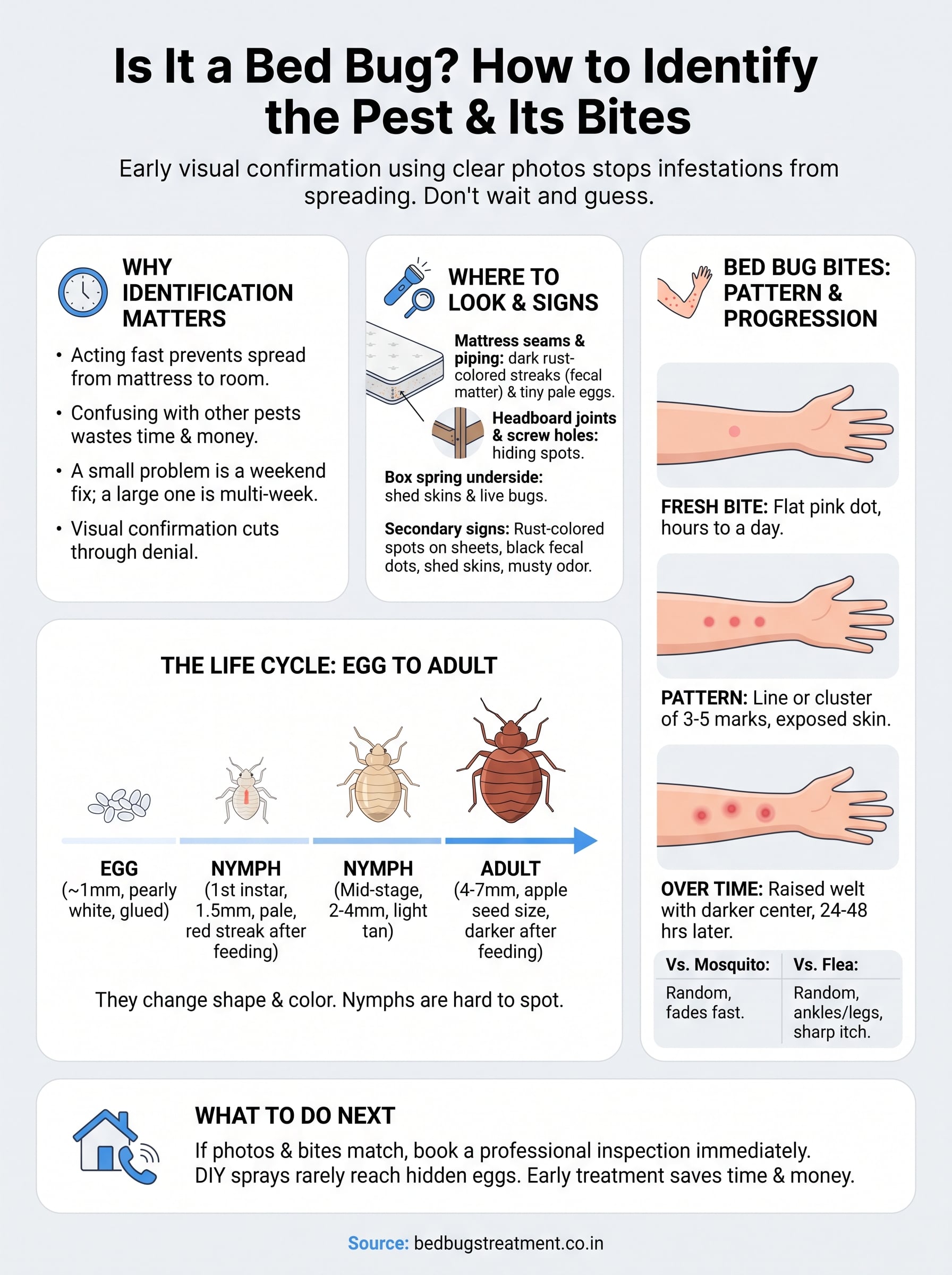
- Mattress seams and piping: look for dark, rust-colored streaks (dried fecal matter) and tiny pale eggs tucked into the stitching.
- Headboard joints and screw holes: adults and nymphs hide in these gaps during the day.
- Box spring underside: peel back the fabric and check for shed skins and live bugs.
- Wall-mounted picture frames and outlet covers near the bed: bugs travel further than most people expect.
If you can see it without moving the mattress, the infestation has already outgrown its hiding spot.
Matching bites to the pattern, not just the mark
A single red bump means very little on its own. What matters is the arrangement on your skin. Bed bug bites usually show up in a line or a small cluster of three or four, often on arms, shoulders, or legs exposed while sleeping. When you search for a pic of bed bug bites to compare against your own skin, focus on that clustered or linear pattern rather than the color or size of any single bump, since those vary a lot person to person.
Cross-checking with photos before you decide
Lining up what you found on the mattress against verified images for bed bug bites and confirmed insect photos removes most of the guesswork. If both the physical evidence on the bed and the bite pattern on your skin match what you see in reliable pics bed bugs results, you’re almost certainly dealing with bed bugs, and it’s time to move from identification to treatment.
What bed bugs look like at every life stage
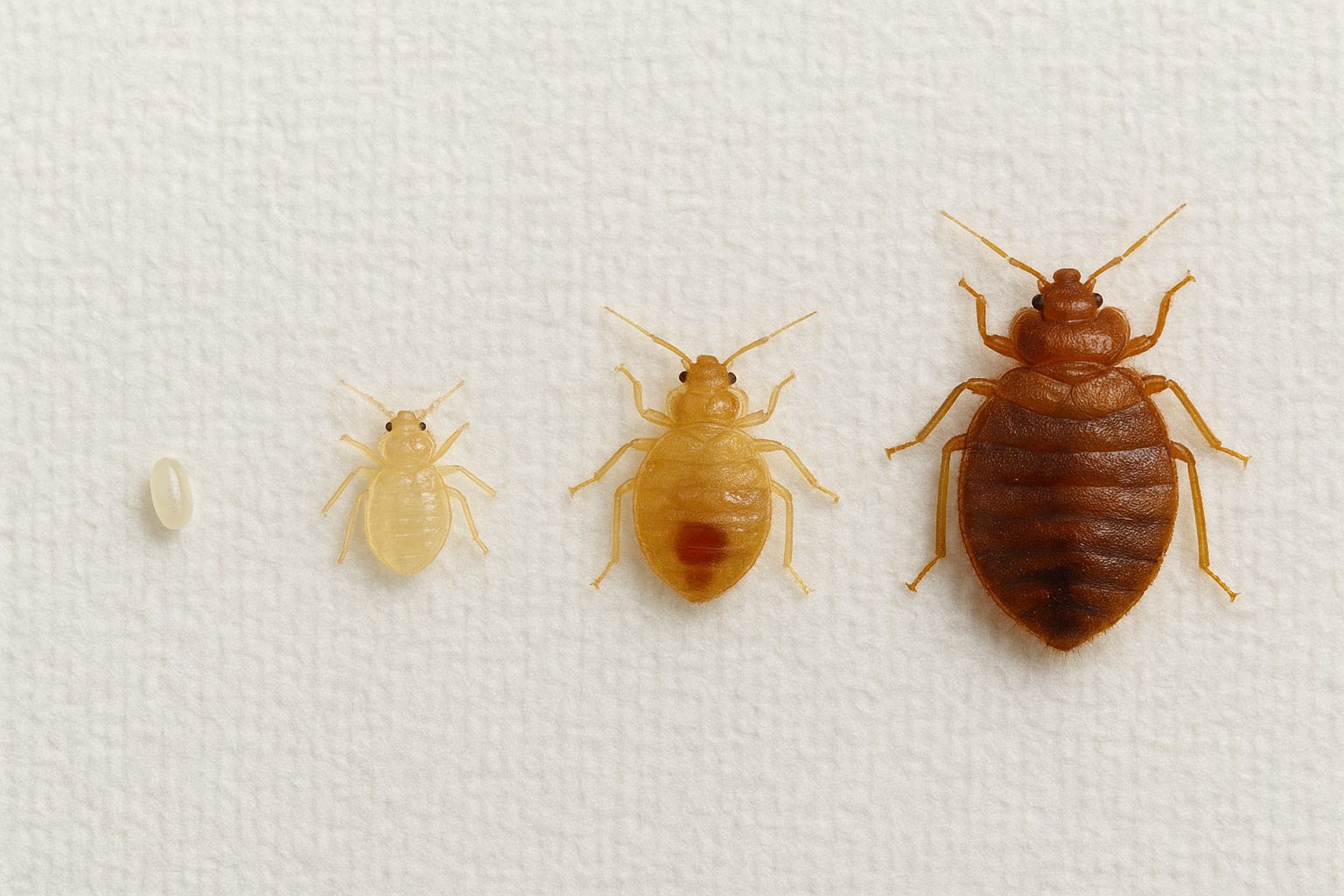
Bed bugs change shape and color dramatically as they grow, which is exactly why so many people miss an early infestation. Searching for pics bed bugs that show only the adult stage means you’ll walk right past the pale, almost translucent nymphs hiding in your mattress seams. A true life cycle comparison, from egg to adult, gives you a far better shot at catching the problem early.
Eggs and first-stage nymphs
Eggs are tiny, roughly the size of a pinhead, pearly white, and glued individually into fabric folds or wood grain, a detail most pics bed bugs searches skip entirely. They’re easy to mistake for dust or grit unless you’re looking closely with a flashlight. Once hatched, first-instar nymphs are pale yellow-white and almost see-through, making them the hardest stage to photograph or spot on light-colored sheets.
The bugs you can’t see are usually the ones doing the most damage.
Growing nymphs through five molts
Between hatching and adulthood, a bed bug molts five times, and each stage looks slightly darker and larger than the last. Pictures of bed bugs at the mid-nymph stage often show a light tan, oval body around 2-3mm long, still translucent enough that a recent blood meal shows as a visible red streak inside the abdomen. This is the stage most often confused with young cockroaches or lice.
Adult bed bugs
By adulthood, a bed bug reaches 4-7mm, roughly the size of an apple seed, with a flat, reddish-brown, oval body that swells and darkens after feeding. Any reliable pics bed bugs result used for identification almost always shows this stage, since it’s the easiest to photograph clearly.
| Life stage | Size | Color | Visible after feeding |
|---|---|---|---|
| Egg | ~1mm | Pearly white | No |
| Nymph (1st instar) | 1.5mm | Pale, translucent | Red streak visible |
| Nymph (mid-stage) | 2-4mm | Light tan | Red streak visible |
| Adult | 4-7mm | Reddish-brown | Swollen, darker |
What bed bug bites look like on skin
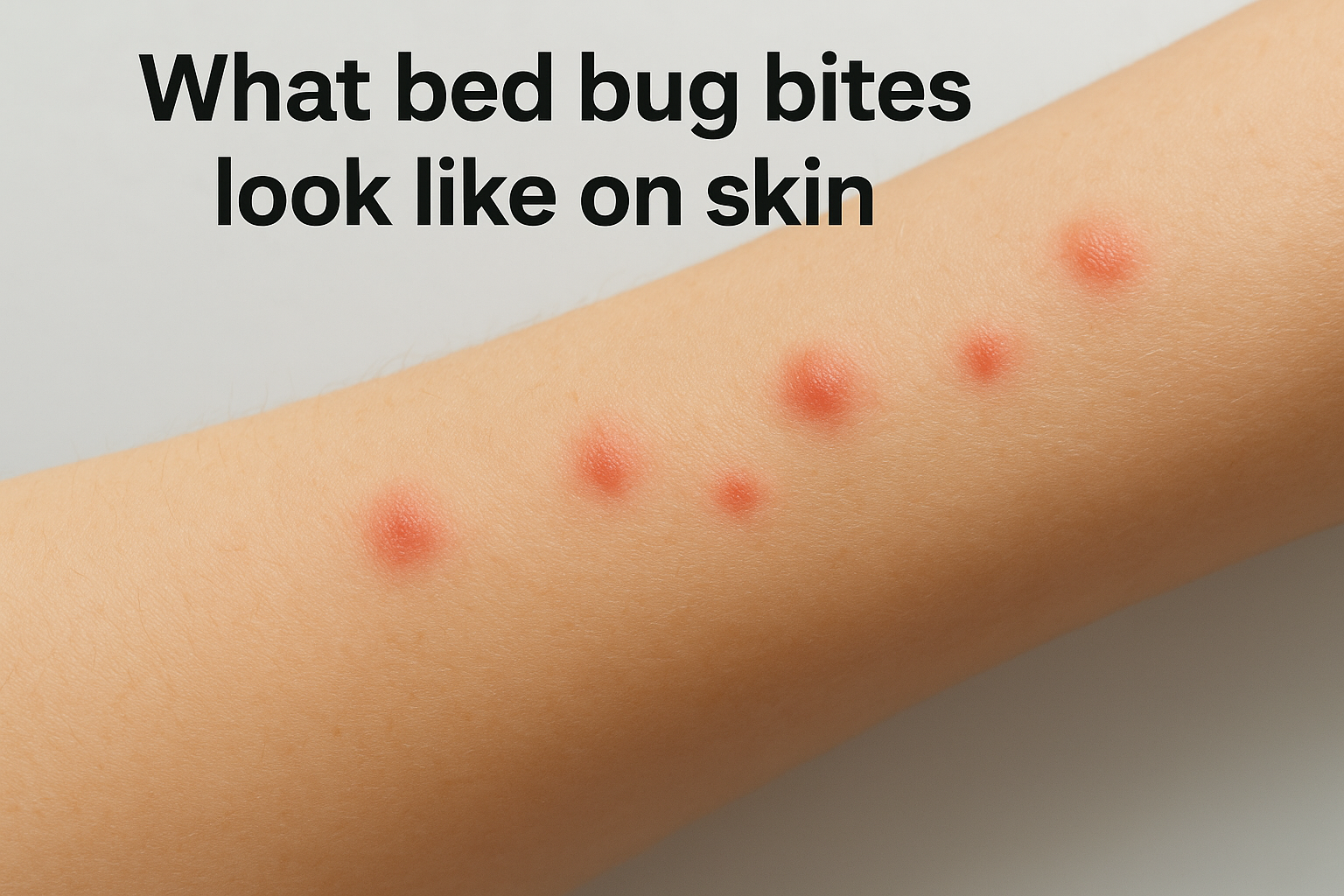
Bed bug bites start as small, flat red spots and swell into firm, itchy welts within a few hours. Anyone scrolling through pics of bed bug bites for the first time is usually surprised by how ordinary a single bite looks, almost like a mosquito bite. The real giveaway isn’t one bite, it’s the group of bites sitting close together on skin that was exposed while you slept.
The pattern that gives them away
Look for bites arranged in a line or a tight zigzag cluster, usually three to five marks spaced a few centimeters apart. This happens because a feeding bug gets interrupted, moves a short distance, and bites again. Most photos bed bug bites used for identification highlight this exact row pattern on forearms, calves, and shoulders, the parts of your body that stick out from under a sheet or blanket.
A single itchy bump could be anything, but a straight row of three or four almost always points to bed bugs.
How the bites change over time
A fresh bite looks like a flat pink dot. By the next day it usually raises into a firmer welt with a darker red center, sometimes with a faint halo around it. Comparing bed bug bites and images taken 24 to 48 hours apart shows this progression clearly, which is why a same-day photo is less useful than one taken a day or two later.
Bites vary more than people expect
Others barely react at all, showing no visible mark despite being bitten repeatedly, while some people develop swollen, blistered welts from just one or two bites.
| Bite type | Pattern | Timing | Itch level |
|---|---|---|---|
| Bed bug | Line or cluster | Hours to a day | Moderate to severe |
| Mosquito | Random, single | Minutes | Immediate, fades fast |
| Flea | Random, ankles/legs | Minutes | Sharp, persistent |
Signs of infestation beyond the bugs themselves
Sometimes you won’t find a live bug at all, even when the infestation is real. Bed bugs are nocturnal and excellent at hiding, so the strongest evidence often isn’t a bug you can photograph, it’s the trail they leave behind on your sheets, mattress, and walls. Learning these secondary signs matters just as much as knowing what the insect itself looks like.
Stains and streaks on your sheets
Rust-colored spots on your sheets or mattress are one of the clearest giveaways, and they come from two sources: crushed bugs after you roll over in your sleep, and dried fecal matter left behind after feeding, evidence that rarely shows up in staged pics bed bugs galleries. Fecal spots look like small dark ink dots, often clustered along seams, while blood smears appear as faint reddish-brown streaks. Neither washes out easily, which is exactly why they show up so consistently in real infestations.
If your sheets have rust-colored dots that won’t wash out, you’re looking at bed bug evidence, not stains from anything else.
Shed skins and a distinct odor
As nymphs grow, they molt five times, leaving behind pale, brittle, bug-shaped shells that collect in mattress seams and along the bed frame. A heavier infestation also produces a faint, musty, sweetish smell, often compared to damp cardboard or crushed almonds, coming from the bugs’ scent glands. This smell usually shows up before you’d expect it to, especially in enclosed bedrooms with poor airflow.
A quick checklist for secondary evidence
Run through this list alongside your bite pattern and bug photos:
- Rust-colored spots on sheets, mattress seams, or pillowcases
- Small black fecal dots clustered near seams and corners
- Pale, shed skins the size of a bug’s outline
- A musty, sweetish odor in the bedroom, especially near the bed
- Tiny pearly eggs wedged into fabric folds or wood grain
Finding two or more of these alongside a bite pattern that matches confirmed pics bed bugs is enough to move past guessing and into treatment mode.
Frequently asked questions
What do bed bugs look like to the naked eye?
Adult bed bugs are flat, oval, and reddish-brown, roughly the size of an apple seed (4-7mm). After feeding, their body swells and darkens, sometimes looking almost black. Younger nymphs are smaller and much paler, ranging from pearly white eggs to translucent, pale-tan juveniles.
How can I tell bed bug bites from mosquito bites?
Mosquito bites usually appear alone and itch immediately, then fade within a day. Bed bug bites show up in a line or a tight cluster of three to five marks, itch more moderately at first, and take 24-48 hours to fully develop into firm, red welts.
Can you have bed bugs without seeing any bugs?
Yes. Bed bugs hide during the day and are easy to miss even in a real infestation. Rust-colored stains, small black fecal dots, shed skins, and a musty odor near the bed are all signs of bed bugs even when you haven’t spotted a live one.
Do bed bug bites always cause a visible reaction?
No. Reactions vary a lot from person to person. Some people develop swollen, itchy welts from a single bite, while others show no visible mark at all despite being bitten repeatedly, so the absence of bites doesn’t rule out an infestation.
Where should I check first if I suspect bed bugs?
Start with mattress seams and piping, headboard joints and screw holes, the underside of the box spring, and outlet covers or picture frames near the bed. These are the spots bed bugs hide in most often during the day.
Confirmed bed bugs? Here’s what to do next
Once your pics bed bugs comparison and bite pattern match what you’ve seen in this guide, stop comparing and start acting. Every day you wait, the infestation spreads further into your mattress, headboard, and walls, turning a small problem into a room-wide one. Pictures are for identification, not treatment, and DIY sprays rarely reach eggs hidden deep in seams and wood joints.
Booking a professional inspection now costs you far less than waiting three more weeks and dealing with a spread infestation later. A trained technician can confirm what you found, check spots you’d never think to look, and start treatment before the bugs multiply again.
If you’re in Bangalore, Mumbai, or Pune and your photos match what’s described here, don’t wait for the itching to get worse. Book a free bed bug inspection in Bangalore and get a same-day assessment from a technician who’s seen this exact problem hundreds of times.