
You pull back the sheets and spot tiny rust-colored dots along the seams. That gut-drop feeling is real, and it usually means you’re dealing with a mattress with bed bugs. Before you drag it to the curb, know this: most infestations don’t require throwing away the mattress at all. What you need is a clear way to confirm the problem and a treatment plan that actually works.
This guide walks you through exactly how to check for bed bugs in mattress folds, piping, and tags, plus what the eggs, shells, and fecal spots look like versus other household bugs. We also cover foam mattress and bed bugs specifically, since foam traps them differently than spring mattresses and needs its own approach. If you’ve already tried vacuuming or a spray from the local store with no luck, you’re not alone.
We’ll go through the visual signs, DIY steps worth trying, and the point where a bed bug infestation on mattress cases stop responding to home fixes. For Bangalore households in Koramangala, Indiranagar, HSR Layout, and Whitefield, we’ll also point out when it’s time to bring in trained technicians for heat or steam treatment that kills adults, nymphs, and eggs without harming your family or pets.
Signs your mattress has bed bugs
Start with the seams and piping, since that’s where bed bugs on mattress surfaces show up first. Run your fingers along the edges and check the tag, and you’re looking for small reddish-brown insects about the size of an apple seed, flatter before they feed and rounder after. Rust-colored or dark spots that smudge when wiped with a damp cloth are digested blood, left behind as fecal marks, and they cluster in tight lines rather than random scatter.
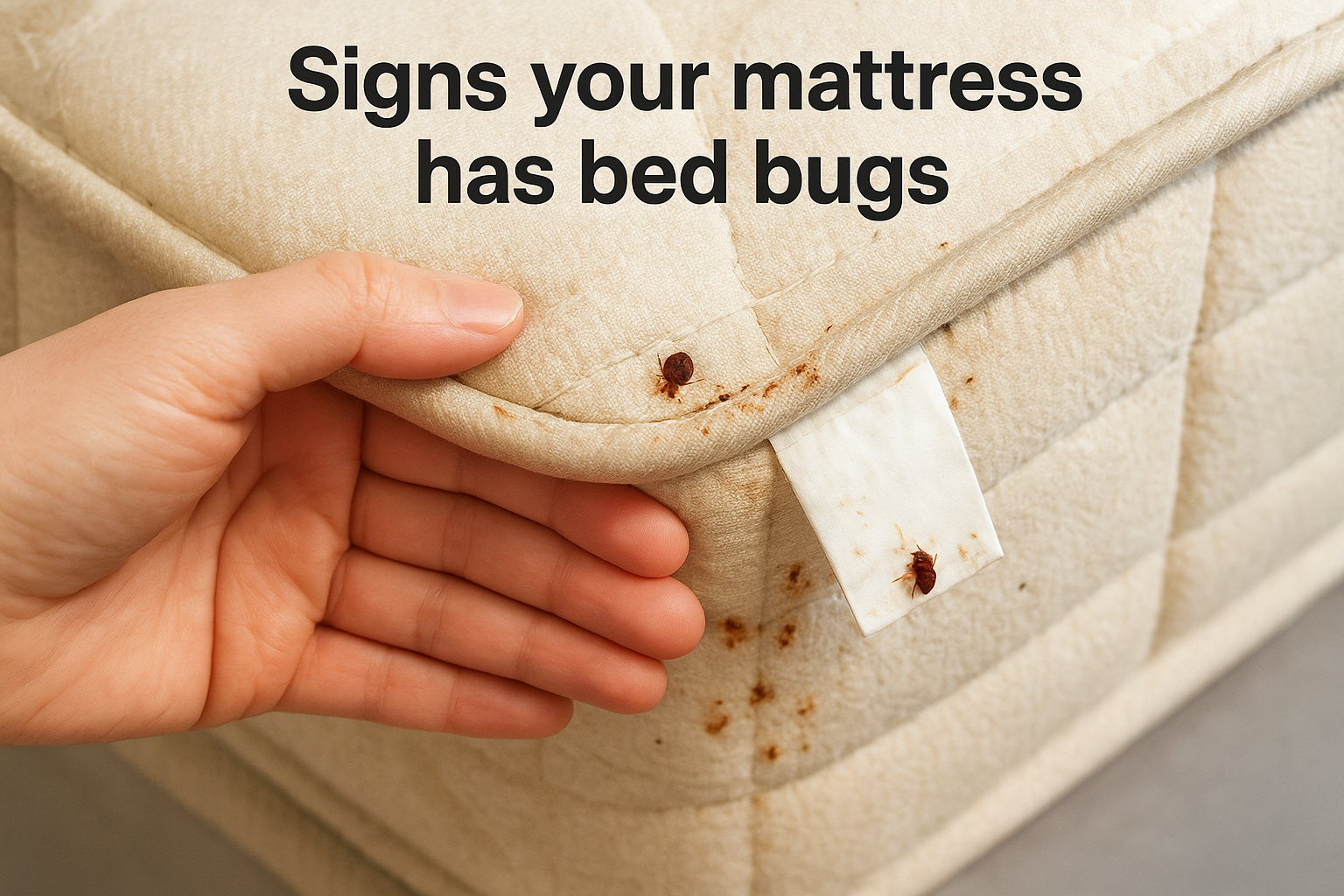
Next, look for the early-stage evidence that many homeowners miss. Pale, translucent shells are shed skins from nymphs molting as they grow, and you’ll often find these tucked into mattress seams alongside tiny white eggs, roughly a millimeter long and slightly curved, glued to the fabric. A mattress bed bugs case rarely announces itself with just one sign. It’s usually a combination of shells, spots, and a faint sweet, musty odor that gets stronger as the infestation grows, caused by pheromones the bugs release.
If you find rust spots, shed skins, and a musty smell together on the same mattress, you’re not imagining it, you have an active infestation.
Bites matter too, but treat them as a supporting clue rather than proof. Bed bug bites often appear in clustered lines or zigzag patterns on skin that was exposed while sleeping, typically arms, shoulders, and legs. Since reactions vary from person to person, and some people don’t react at all, don’t rely on bites alone to confirm a bed bug infestation on mattress situation.
Signs vs. lookalikes
Carpet beetles, dust mites, and even lint can be mistaken for bed bug evidence, so a quick comparison helps before you commit to a treatment plan.
| Sign | Bed bugs | Common lookalike |
|---|---|---|
| Live insect | Flat, reddish-brown, oval, moves fast when disturbed | Carpet beetle larvae are fuzzy and slow-moving |
| Spots on fabric | Dark, smudge when wet, clustered along seams | Mold spots don’t smudge and often have a fuzzy edge |
| Shells | Pale, hollow, nymph-shaped | Dead skin flakes or lint have no defined shape |
| Smell | Sweet, musty, stronger with larger infestations | Sweat or mildew smell is sourced from bedding, not the mattress core |
| Eggs | Tiny, white, curved, glued in place | Dust particles brush away easily |
Finally, check your foam mattress and bed bugs risk separately from spring mattresses. Foam doesn’t have coils for bugs to hide inside, so they tend to concentrate along the top seam, the piping, and any zippered cover instead, which actually makes early detection a bit easier if you inspect regularly.
Step 1. Isolate the bed and room
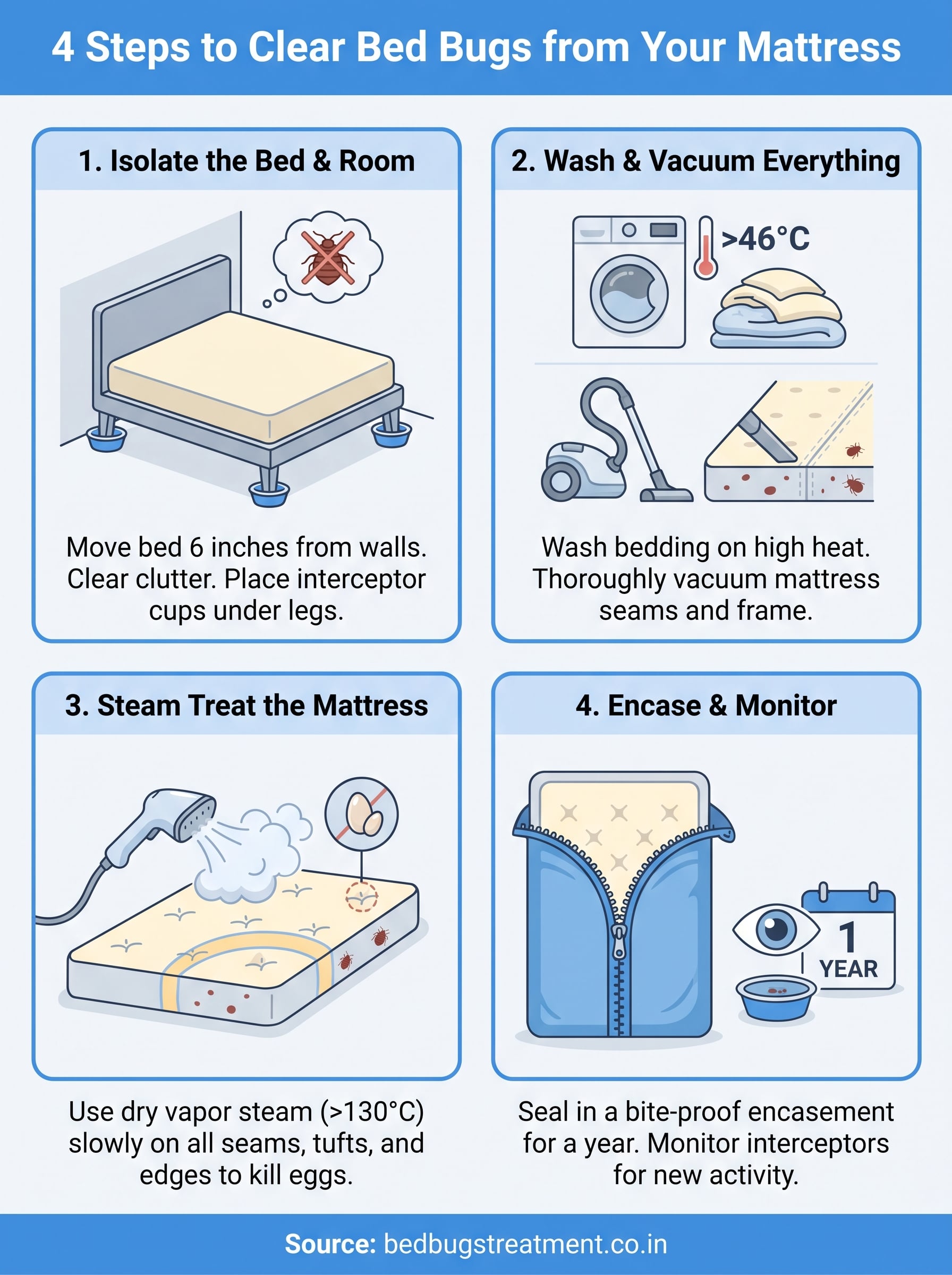
Once you’ve confirmed a mattress with bed bugs, your first job is containment, not cleaning. Bed bugs travel along walls, baseboards, and furniture legs to reach new hiding spots, so pull the bed frame at least six inches away from the wall and make sure no sheets, blankets, or curtains touch the floor. This single move cuts off their easiest highway into the rest of the room.
Do this before you touch a vacuum or wash a single sheet:
- Move the bed frame away from walls and other furniture
- Tuck in or remove bedding that drapes onto the floor
- Place double-sided tape or interceptor cups under each bed leg
- Clear clutter from under and around the bed
- Avoid moving infested items to other rooms until treated
Interceptor cups are the quiet workhorse here. They trap bugs trying to climb up or down the legs, giving you a visual read on how bad the bed bug infestation on mattress really is without needing a professional inspection first.
Isolating the bed stops the spread while you treat, which matters more than any spray or wash you do next.
Seal off the room as much as you reasonably can. Close doors when not in use, and if you share a bedroom or have kids moving between rooms, ask them to hold off sleeping elsewhere until the mattress is treated, since carrying a stray bug in a backpack or blanket is a common way infestations spread across a whole apartment. This is especially relevant in shared flats and PGs across Bangalore, where close quarters make containment step one, not step three.
Step 2. Wash and vacuum everything
Wash every fabric item you can strip from the bed, sheets, pillowcases, mattress protector, and any clothing stored nearby, in the hottest water the fabric allows, then run it through a dryer on high heat for at least 30 minutes. Heat above 46°C kills bed bugs, nymphs, and eggs, so the dryer cycle matters more than the detergent you use. Items that can’t be washed, like stuffed toys or delicate throws, go straight into a hot dryer cycle alone or get sealed in plastic bags for several weeks.
Bag everything as you strip it, right there in the bedroom, so you’re not carrying a live bug bag through the house. Seal bags tightly before moving them to the laundry area, since a torn bag defeats the whole point of isolating the mess.
Vacuum the mattress next, working slowly across every seam, tuft, and the piping around the edges where a bed bug infestation mattress case tends to concentrate. Use a crevice attachment to reach into folds and along the headboard, and go over the box spring, bed frame joints, and nearby carpet too, since bugs wander further than most people expect.
Vacuuming picks up live bugs and shells, but it does nothing to eggs glued into fabric, so treat it as cleanup, not a cure.
Empty the vacuum canister or bag immediately into a sealed plastic bag and dispose of it outside, not in an indoor bin. A vacuum left sitting with bugs inside can reinfest the very room you just cleaned. This step clears the surface-level population and sets up the mattress for the deeper treatment that steam or heat provides next.
Step 3. Steam treat the mattress
Steam is what actually finishes the job vacuuming starts, since it’s the only home method that reliably kills eggs glued deep into the fabric. A dry vapor steamer producing at least 130°C at the nozzle penetrates seams and tufting where a bed bug infestation mattress case hides its eggs, and unlike sprays, it leaves no chemical residue behind, which matters if kids or pets sleep on that bed.
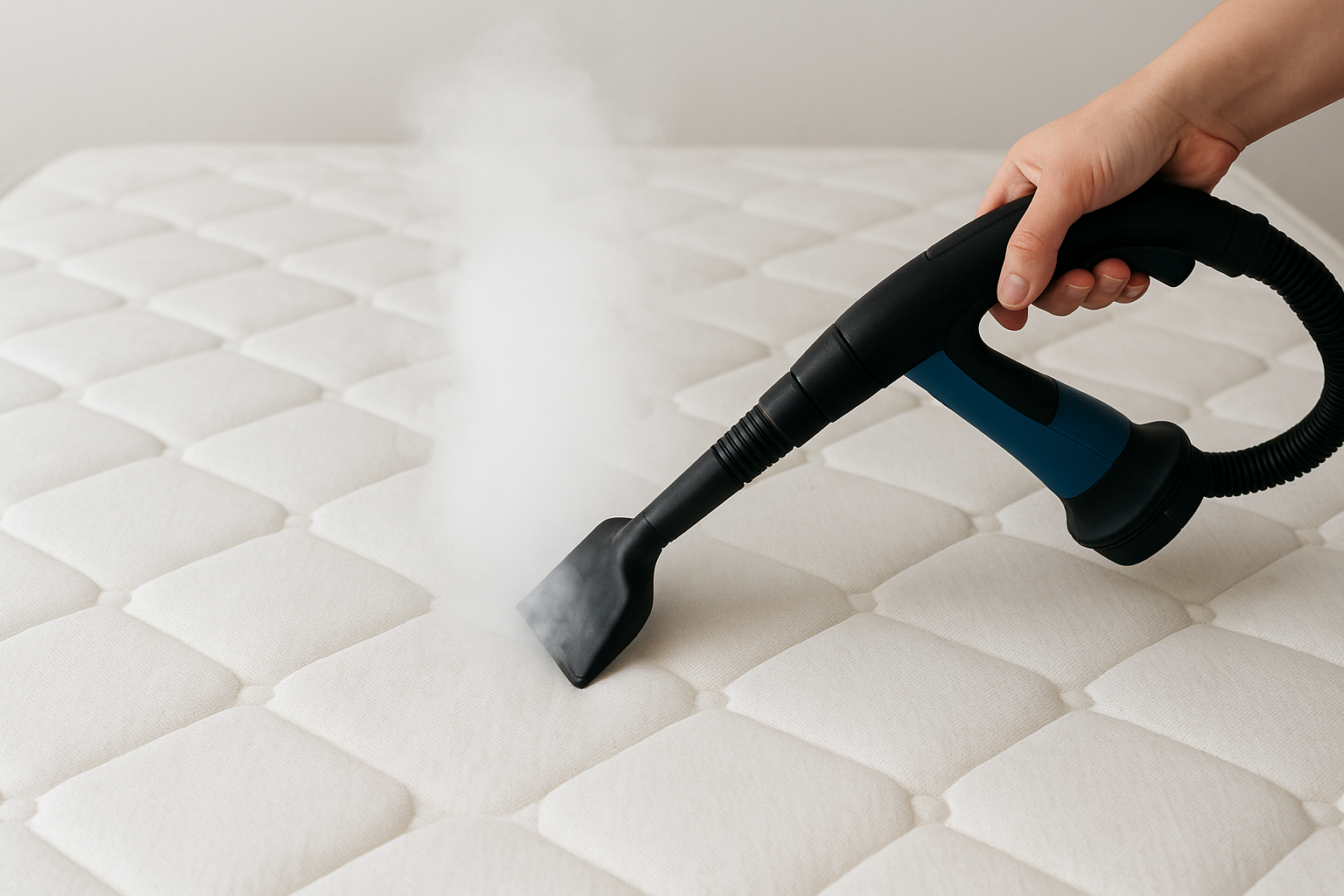
Work the steamer slowly and deliberately rather than rushing across the surface:
- Hold the nozzle 2 to 3 inches from the fabric
- Move at roughly one inch per second, no faster
- Pass twice over seams, piping, tufts, and the tag area
- Steam the box spring and headboard joints too
- Let the mattress air dry fully, ideally 4 to 6 hours, before adding sheets
Steam kills what vacuuming can’t reach, the eggs, so skipping this step leaves the infestation ready to bounce back within weeks.
Check your steamer’s output before you start. Weak handheld models sold for clothes often don’t hold heat long enough to penetrate a thick mattress, and that gap is exactly why so many DIY attempts on a mattress bed bugs problem fail even after hours of effort.
Go easier on foam mattress and bed bugs cases specifically, since foam absorbs moisture more than spring mattresses and takes longer to dry out. Trapped dampness inside foam breeds mold, which trades one problem for another. Keep passes shorter, spaced further apart, and give the mattress extra drying time with a fan pointed at it before you cover it back up.
Step 4. Encase and monitor the mattress
Encasing the mattress locks in any stragglers you missed and blocks new bugs from getting in, which matters most for a mattress with bed bugs case that’s been treated but not fully cleared. Choose a certified bite-proof, zippered encasement rated for bed bugs specifically, not a generic waterproof cover, since regular covers have gaps at the zipper that bugs squeeze through easily. Wrap the box spring too if you have one, because a bed bug infestation on mattress often extends underneath where you can’t see it.
A proper encasement turns your mattress into a sealed trap, starving anything left inside while keeping new bugs out.
Leave the encasement on for a full year without removing it, since bed bugs can survive many months without feeding and you don’t want to reopen the seal too soon. Check the zipper track weekly for the first month, since that’s the most common failure point, and repair any small tears immediately with waterproof tape rather than replacing the whole cover.
Monitor the room alongside the mattress itself:
- Check interceptor cups under bed legs every few days
- Inspect seams and piping through the encasement fabric for new dark spots
- Watch for fresh bites appearing after a week of no activity
- Keep the bed pulled away from walls throughout the monitoring period
- Re-wash bedding weekly for the first month as a precaution
Ongoing checks catch a rebound early, before a bed bug infestation mattress case has a chance to spread back into furniture or neighboring rooms.
When to call in professional help
Home treatment works for most cases, but know when to stop DIY and bring in a specialist. If you’ve isolated the bed, washed everything, steamed the seams, and encased the mattress, yet still find fresh spots or bites two weeks later, that’s your signal. A mattress with bed bugs that keeps rebounding after a full cycle usually means eggs survived somewhere your steamer couldn’t reach, often deep in a box spring or a wall crack near the headboard. Large apartments, shared PGs, or multi-bedroom homes across Bangalore also make DIY containment harder, since bugs migrate between rooms faster than one person can treat them.
Trained technicians carry equipment that hits higher, sustained heat than any home steamer, clearing eggs and adults in a single visit. Rather than repeating the same steps and losing sleep over it, get a free bed bug inspection in Bangalore and let someone confirm the job is actually done.