
Bed bugs are among the most frustrating household pests, and one of the first solutions many homeowners think of is spraying for bed bugs. Walk into any supermarket or browse online, and you’ll find dozens of bed bug sprays claiming to eliminate infestations instantly. But do these sprays really work, or are they only a temporary fix?
The answer depends on several factors, including the severity of the infestation, where the bed bugs are hiding, and whether you are using a DIY spray or professional bed bug treatment.
Across Bangalore, Pune, and Mumbai, bed bug infestations have become increasingly common in apartments, villas, paying guest (PG) accommodations, hostels, hotels, and office guest rooms. Frequent travel, second-hand furniture, shared living spaces, and high-density housing allow bed bugs to spread quickly from one room to another.
If you’re searching for spraying for bed bugs, this complete guide explains:
- How bed bug sprays work
- Whether spraying kills bed bugs permanently
- DIY sprays vs professional spraying
- Common mistakes homeowners make
- Why bed bugs return after spraying
- How to choose the right treatment
- Prevention tips to avoid future infestations
By the end of this guide, you’ll understand whether spraying for bed bugs is the right solution and what steps provide the best long-term protection for your home.
What Are Bed Bugs?
Bed bugs are tiny, reddish-brown insects that survive by feeding on human and animal blood, usually at night while people are sleeping.
Unlike mosquitoes or flies, bed bugs do not fly or jump. Instead, they crawl into small cracks and crevices where they remain hidden during the day.
Common hiding places include:
- Mattresses
- Bed frames
- Headboards
- Wooden furniture
- Sofas
- Recliners
- Wardrobes
- Curtains
- Electrical switchboards
- Wall cracks
- Luggage
- Upholstered furniture
- Carpets
Because they hide so well, many homeowners begin searching for spraying for bed bugs after noticing repeated bed bug bites without seeing the insects themselves.
Why Are Bed Bug Infestations Increasing?
Bed bugs are no longer limited to old buildings or poorly maintained properties. They can infest almost any home or business.
Several factors contribute to their spread.
Increased Travel
Hotels, trains, buses, and flights allow bed bugs to hitchhike in luggage and clothing before entering homes.
Shared Accommodation
PGs, hostels, rented apartments, and shared flats increase the likelihood of infestations spreading between rooms.
Second-Hand Furniture
Used mattresses, sofas, wooden beds, and wardrobes may already contain hidden bed bugs or eggs.
Apartment Living
In modern apartment complexes, bed bugs can sometimes move through wall voids, electrical conduits, and shared furniture.
This is one reason why spraying for bed bugs has become one of the most searched pest control services in cities like Bangalore, Pune, and Mumbai.
Signs You Have Bed Bugs
Early detection makes treatment much easier.
Watch for these warning signs.
Bed Bug Bites
Small, itchy red bites usually appear on:
- Arms
- Neck
- Face
- Shoulders
- Legs
Bed Bug Bites often occur in straight lines or small clusters.
Blood Spots
Tiny blood stains may appear on:
- Bedsheets
- Pillow covers
- Mattresses
These stains often occur when bed bugs are accidentally crushed during sleep.
Dark Fecal Spots
Small black or brown dots around mattress seams, furniture joints, and bed frames may indicate bed bug activity.
Shed Skins
As bed bugs grow, they shed their outer skin several times.
Finding these pale skins is a common sign of an active infestation.
Live Bed Bugs
Adult bed bugs are approximately the size of an apple seed.
Young bed bugs are much smaller and lighter in colour.
Musty Odour
Heavy infestations sometimes produce a sweet, musty smell caused by bed bug scent glands.
What Is Bed Bug Spraying?
Spraying for bed bugs involves applying specially formulated insecticides to areas where bed bugs hide.
Depending on the treatment method, technicians may spray:
- Mattress edges
- Bed frames
- Furniture joints
- Wooden cracks
- Headboards
- Wardrobes
- Sofa frames
- Skirting boards
- Wall cracks
- Curtain folds
The objective is to expose bed bugs as they emerge from their hiding places and interrupt the infestation cycle.
Professional pest control companies follow structured inspection and treatment procedures rather than spraying every visible surface indiscriminately.
Does Spraying Kill Bed Bugs?
This is probably the most common question homeowners ask.
The answer is:
Yes—but not always permanently.
Sprays can effectively kill bed bugs that come into direct contact with treated surfaces.
However, spraying alone may not eliminate:
- Hidden bed bugs deep inside furniture
- Eggs protected inside cracks
- Bed bugs hiding behind walls
- Newly hatched nymphs after treatment
For this reason, the success of spraying for bed bugs depends on proper inspection, application, and follow-up monitoring.
Why One Spray Is Usually Not Enough
Many homeowners expect a single spray to solve the problem overnight.
Unfortunately, bed bugs have a life cycle that makes complete elimination challenging.
Bed bug eggs are extremely small and well protected inside hidden cracks.
Even if adult bed bugs are eliminated, eggs may hatch later, creating a new generation.
Factors affecting treatment success include:
- Number of bed bugs
- Size of infestation
- Hidden harbourages
- Property layout
- Furniture design
- Clutter levels
- Follow-up inspections
Professional pest control companies often recommend monitoring the treated areas after service to ensure any remaining activity is detected promptly.
DIY Bed Bug Sprays
Many supermarkets and online stores sell DIY bed bug sprays.
These products are generally intended for small, localised infestations.
Common spray types include:
- Aerosol sprays
- Pump sprays
- Plant-based sprays
- Residual insecticide sprays
- Contact sprays
Although convenient, homeowners should always read and follow the product label carefully.
Improper application can reduce effectiveness and may create unnecessary exposure risks.
Advantages of DIY Sprays
DIY products offer some benefits.
Easy Availability
Most products can be purchased locally or online.
Quick Application
Homeowners can treat visible bed bugs immediately.
Lower Initial Cost
DIY sprays generally cost less upfront than professional treatment.
Useful for Minor Problems
Small infestations detected early may respond better than widespread infestations.
Limitations of DIY Bed Bug Sprays
Despite their popularity, DIY sprays have several limitations.
Hidden Bed Bugs Remain Untreated
Bed bugs often hide inside:
- Bed joints
- Furniture screws
- Electrical fittings
- Wall gaps
- Upholstery
- False ceilings
Spraying visible areas alone rarely reaches all hiding places.
Eggs May Survive
Many sprays are less effective against bed bug eggs.
Newly hatched bugs may appear days or weeks later.
Incorrect Application
Applying too much or too little spray reduces effectiveness.
Skipping hidden areas allows the infestation to continue.
Resistance
Some bed bug populations have developed reduced susceptibility to certain insecticides, making product choice and proper application increasingly important.
Why Professional Inspection Matters
Before any treatment begins, professional pest control companies inspect the property to determine:
- Level of infestation
- Main hiding places
- Spread to adjoining rooms
- Furniture affected
- Entry routes
- Areas requiring focused treatment
Without proper inspection, even the best spraying for bed bugs programme may fail because hidden harbourages remain untreated.
Bed Bug Problems in Bangalore, Pune & Mumbai
Although bed bugs are found throughout India, urban environments create ideal conditions for their spread.
Bangalore
Large apartment complexes, IT professionals relocating frequently, rental housing, and shared accommodation contribute to increased bed bug activity.
Pune
Rapid urban growth, student hostels, PG accommodation, and frequent tenant turnover make bed bugs a recurring concern.
Mumbai
High-density residential buildings, hotels, serviced apartments, and constant travel create opportunities for bed bugs to spread between properties.
Regardless of the city, early detection and prompt action remain the most effective way to prevent infestations from becoming severe.
Professional Bed Bug Spraying vs DIY Sprays
While DIY sprays may seem like a quick and affordable solution, they are often designed to treat only the bed bugs you can see. Professional spraying for bed bugs follows a systematic approach that targets hidden harbourages and helps reduce the chances of reinfestation.
A professional pest control service typically includes:
- Detailed inspection
- Identification of bed bug hiding places
- Targeted application in affected areas
- Monitoring after treatment
- Practical prevention advice
For medium to heavy infestations, professional treatment is generally more effective than relying on over-the-counter products alone.
How Professional Spraying for Bed Bugs Works
A successful bed bug treatment involves much more than simply spraying a mattress.
Experienced technicians first inspect the entire room to identify where bed bugs are hiding. They then apply treatment carefully to the areas where bed bugs are most likely to travel or shelter.
Common treatment areas include:
- Mattress seams and edges
- Bed frames
- Headboards
- Wooden furniture joints
- Wardrobes
- Sofa frames
- Upholstered furniture
- Skirting boards
- Curtain folds
- Wall cracks
- Electrical switch plates (where appropriate)
- Luggage storage areas
Targeting these locations helps improve the effectiveness of spraying for bed bugs.
Areas That Require Special Attention
Many infestations continue because homeowners spray only the mattress while bed bugs remain hidden elsewhere.
Professionals inspect areas such as:
Wooden Beds
Bed bugs often hide inside screw holes, joints, slats, and cracks.
Mattresses
They frequently shelter inside:
- Seams
- Labels
- Stitching
- Corners
Sofas
Fabric folds, cushions, wooden frames, and armrests can all provide hiding places.
Wardrobes
Bed bugs may hide in:
- Hinges
- Drawer joints
- Shelves
- Wooden cracks
Curtains
Pleats and folds can occasionally harbour bed bugs, particularly near sleeping areas.
Electrical Points
Bed bugs sometimes shelter behind electrical switch plates or sockets because they provide dark, narrow spaces.
Preparing Your Home Before Bed Bug Spraying
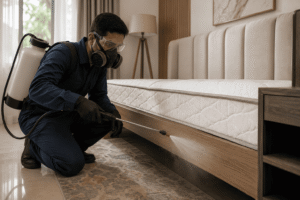
Proper preparation improves treatment effectiveness.
Before your scheduled treatment:
Wash Bedding
Wash bedsheets, pillow covers, blankets, and clothing in hot water where suitable according to the care label, then dry them thoroughly.
Reduce Clutter
Remove unnecessary items from:
- Floors
- Under beds
- Wardrobes
- Storage areas
Less clutter means fewer hiding places.
Vacuum Thoroughly
Vacuum:
- Mattresses
- Carpets
- Sofa cushions
- Bed frames
- Room corners
Dispose of the vacuum contents promptly according to the manufacturer’s guidance.
Move Furniture
If practical, move beds and furniture slightly away from walls so technicians can access skirting boards and hidden areas.
Follow Professional Instructions
Always follow the preparation checklist provided by your pest control company, as it may vary depending on the treatment plan.
What to Expect After Bed Bug Spraying
Many homeowners expect every bed bug to disappear immediately.
In reality, some activity may continue for a short period depending on:
- The treatment method used
- The life stage of the bed bugs
- The size of the infestation
- The number of hidden harbourages
It is important not to assume the treatment has failed if occasional activity is seen soon after application. Follow any post-treatment guidance provided by your pest control company.
Post-Treatment Care
Following the treatment correctly is just as important as the spraying itself.
Recommended practices include:
- Avoid cleaning treated areas until advised.
- Continue monitoring beds and furniture.
- Keep clutter to a minimum.
- Report any ongoing activity to your service provider.
- Attend any recommended follow-up inspection.
These steps help maximise the effectiveness of spraying for bed bugs.
Why Bed Bugs Return After Spraying
One of the biggest frustrations for homeowners is seeing bed bugs return after treatment.
This usually happens for one or more of the following reasons.
Incomplete Treatment
Missing hidden harbourages allows surviving bed bugs to continue breeding.
Eggs Hatch Later
Bed bug eggs may survive initial treatment depending on the product used and where the eggs are located.
Reinfestation
Bed bugs can be reintroduced through:
- Travel luggage
- Used furniture
- Guests’ belongings
- Shared accommodation
Ignoring Preparation Instructions
Skipping preparation steps reduces treatment effectiveness.
Untreated Adjacent Rooms
If bed bugs have already spread to nearby rooms, treating only one room may not resolve the infestation.
Common Mistakes Homeowners Make
Avoid these mistakes if you want long-term results.
Throwing Away the Mattress Immediately
Many people discard their mattress before confirming where the infestation is located.
If bed bugs remain elsewhere, they will simply infest the replacement mattress.
Spraying Too Frequently
Using multiple products repeatedly without a treatment plan can reduce effectiveness and may increase unnecessary exposure.
Always use products according to their label instructions.
Sleeping in Another Room
Moving to another bedroom may encourage bed bugs to spread as they follow their food source.
Ignoring Furniture
Bed bugs rarely stay only on the mattress.
Furniture often contains significant infestations.
Delaying Treatment
Small infestations are generally easier to manage than large, well-established colonies.
Early action usually results in better outcomes.
Bed Bug Prevention Tips
The best way to deal with bed bugs is to prevent them from entering your home in the first place.
Inspect Hotel Rooms
When travelling:
- Check mattress seams.
- Inspect headboards.
- Look behind bedside tables.
- Keep luggage off the bed.
Examine Second-Hand Furniture
Before bringing used furniture home:
- Inspect joints.
- Check upholstery.
- Look beneath cushions.
- Examine wooden cracks.
Wash Travel Clothes
After returning from travel, wash clothing where appropriate according to the care label and inspect luggage carefully before storing it.
Vacuum Regularly
Routine vacuuming helps remove dust, debris, and any visible bed bugs from accessible areas.
Reduce Clutter
Fewer hiding places make inspections easier and help detect infestations sooner.
Why Bed Bug Problems Are Common in Bangalore, Pune & Mumbai
Bangalore
Rapid residential growth, serviced apartments, student housing, and corporate travel contribute to the spread of bed bugs throughout the city.
Pune
Student hostels, rental apartments, and shared accommodation create favourable conditions for bed bug infestations.
Mumbai
Hotels, commercial travel, high-rise apartments, and densely populated neighbourhoods allow bed bugs to spread quickly if not identified early.
Although the reasons vary slightly between cities, the need for timely inspection and spraying for bed bugs remains the same.
Is Professional Bed Bug Spraying Worth It?
For small infestations, DIY sprays may provide temporary relief.
However, if:
- Bed bugs keep returning,
- Multiple rooms are affected,
- Bites continue despite treatment,
- Furniture is heavily infested,
- You cannot locate the source,
a professional inspection is usually the most reliable next step.
Professional pest control aims to identify the full extent of the infestation and develop an appropriate treatment strategy rather than simply treating the visible insects.
How Much Does Professional Bed Bug Spraying Cost?
One of the first questions homeowners ask is:
“How much does spraying for bed bugs cost?”
The cost depends on several factors rather than a fixed price.
These include:
- Size of the property
- Number of bedrooms
- Level of infestation
- Number of affected rooms
- Type of furniture
- Accessibility of hiding places
- Type of treatment required
- Number of follow-up visits
Instead of selecting the lowest-priced service, choose a pest control company based on:
- Experience
- Professional inspection
- Quality of treatment
- Customer reviews
- Service warranty (if offered)
- Transparent pricing
A professional inspection helps determine the most suitable treatment plan for your property.
Does Spraying Kill Bed Bug Eggs?
This is one of the biggest concerns for homeowners.
Bed bug eggs are extremely small and are usually hidden inside:
- Mattress stitching
- Wooden joints
- Furniture cracks
- Bed frames
- Headboards
- Upholstered furniture
Because eggs are protected in hidden locations, a single treatment may not eliminate every egg immediately.
This is one reason why professional monitoring and follow-up recommendations are important after spraying for bed bugs.
How Long Does Bed Bug Treatment Take?
Treatment time varies depending on:
- Property size
- Number of rooms
- Amount of furniture
- Severity of infestation
- Accessibility
A small apartment generally requires less time than a large villa or commercial property.
Your pest control company will advise how long the treatment is expected to take after inspecting the premises.
Can Bed Bugs Return After Treatment?
Unfortunately, yes.
Even after successful treatment, bed bugs can return if they are brought back into the home.
Common sources include:
- Hotel luggage
- Used mattresses
- Second-hand sofas
- Wooden furniture
- Guest belongings
- Shared accommodation
- Public transport during travel
This is why prevention is just as important as treatment.
Bed Bug Prevention Tips
Preventing bed bugs is easier and less stressful than dealing with a major infestation.
Follow these practical tips.
Inspect Hotel Rooms Before Staying
Check:
- Mattress seams
- Headboards
- Bed frames
- Bedside tables
- Upholstered chairs
Avoid placing luggage directly on the bed.
Keep Luggage Clean
After returning from travel:
- Inspect suitcases carefully.
- Wash clothes according to the care label.
- Clean luggage before storing it.
Be Careful with Second-Hand Furniture
Inspect used:
- Beds
- Mattresses
- Sofas
- Recliners
- Wardrobes
- Wooden furniture
before bringing them into your home.
Vacuum Frequently
Regular vacuuming helps remove visible insects and debris from:
- Mattresses
- Carpets
- Sofas
- Bed frames
- Corners
- Furniture joints
Reduce Clutter
A clutter-free room has fewer hiding places, making inspections and treatment easier.
Inspect Bedrooms Regularly
Check for:
- Blood spots
- Bed bug bites
- Dark faecal marks
- Shed skins
- Live bed bugs
Early detection greatly improves treatment success.
Common Myths About Bed Bug Sprays
Many myths lead homeowners to choose ineffective solutions.
Let’s separate fact from fiction.
Myth 1: One Spray Solves Every Infestation
Fact:
The success of spraying for bed bugs depends on:
- Size of infestation
- Hidden harbourages
- Proper application
- Follow-up inspections
Large infestations usually require a more comprehensive treatment plan.
Myth 2: Throwing Away the Mattress Solves the Problem
Fact:
Bed bugs often hide inside:
- Bed frames
- Sofas
- Furniture
- Curtains
- Wardrobes
Replacing only the mattress does not remove the infestation if bed bugs remain elsewhere.
Myth 3: Bed Bugs Only Live in Dirty Homes
Fact:
Bed bugs are attracted to people—not dirt.
They can infest:
- Luxury hotels
- Apartments
- Villas
- Offices
- Student hostels
- Paying guest accommodation
Even very clean homes can develop bed bug infestations.
Myth 4: Bed Bugs Spread Diseases
Fact:
Bed bugs are primarily a nuisance pest. Their bites can cause itching, irritation, and discomfort, but they are not known to be major transmitters of disease to humans according to current scientific evidence.
Myth 5: DIY Sprays Always Work
Fact:
DIY products may help with small infestations but often fail to eliminate hidden bed bugs and eggs in larger infestations.
Why Bed Bug Problems Continue in Bangalore, Pune & Mumbai
Although each city has unique characteristics, several factors increase bed bug activity.
Bangalore
- IT workforce
- Rental apartments
- Frequent relocation
- Shared accommodation
- Corporate travel
Pune
- Student hostels
- PG accommodation
- Colleges
- Rental housing
- Growing residential developments
Mumbai
- Hotels
- Dense apartment living
- High travel volume
- Serviced apartments
- Commercial accommodation
These conditions allow bed bugs to spread easily if early infestations are not detected.
When Should You Call a Bed Bug Professional ?
Consider arranging a professional inspection if:
- Bed bug bites continue.
- DIY sprays are not working.
- You find live bed bugs repeatedly.
- Several rooms are affected.
- You notice bed bugs in furniture.
- Guests report bed bug bites.
- The infestation keeps returning.
Early professional intervention usually prevents the infestation from becoming more widespread.
Frequently Asked Questions
1. Is spraying for bed bugs effective?
Yes. Professional spraying for bed bugs can be effective when combined with a detailed inspection, targeted application, and appropriate follow-up where required.
2. Can I spray my mattress?
Only use products that are specifically approved and labelled for that purpose, and always follow the manufacturer’s instructions. Professional advice is recommended before treating sleeping surfaces.
3. How long do bed bugs survive?
Bed bugs can survive for extended periods without feeding, depending on environmental conditions and their life stage. This is one reason infestations can persist if not treated properly.
4. How do bed bugs spread?
They commonly spread through:
- Luggage
- Clothing
- Used furniture
- Mattresses
- Shared accommodation
- Hotels
5. Can bed bugs infest sofas?
Yes.
Bed bugs frequently hide inside:
- Sofa cushions
- Fabric folds
- Wooden frames
- Armrests
6. Should I throw away my mattress?
Not necessarily.
A professional inspection should determine where the infestation is located before replacing furniture.
7. Are bed bugs only found in beds?
No.
They also hide in:
- Sofas
- Chairs
- Wardrobes
- Curtains
- Carpets
- Wooden furniture
- Wall cracks
8. How can I prevent bed bugs after treatment?
- Inspect luggage after travelling.
- Vacuum regularly.
- Reduce clutter.
- Check second-hand furniture.
- Monitor bedrooms for early signs.
9. Are professional treatments better than DIY sprays?
For widespread or persistent infestations, professional treatment is generally more effective because it targets hidden harbourages and is based on a detailed inspection.
10. Which cities have the highest bed bug complaints?
Bed bugs are reported across India, but they are particularly common in major urban centres such as Bangalore, Pune, Mumbai, Delhi, Hyderabad, Chennai, and other densely populated cities where travel and shared accommodation are common.
Final Thoughts
Spraying for bed bugs can be an effective solution when carried out correctly, but it is not simply a matter of spraying visible insects. Successful bed bug control depends on careful inspection, treating hidden harbourages, following preparation instructions, and adopting preventive measures to reduce the risk of reinfestation.
Whether you live in Bangalore, Pune, Mumbai, or another Indian city, acting quickly at the first sign of bed bugs can help minimise discomfort and prevent the infestation from spreading. If DIY methods do not resolve the problem or the infestation keeps returning, a professional inspection is often the most effective next step.
Why Choose Bed Bugs Professionals ?
If you’re looking for reliable bed bug treatment in Bangalore, Pune, or Mumbai, We Bed Bug Experts of India provides professional bed bug control for homes, apartments, hotels, hostels, PG accommodation, offices, and commercial properties.
Why Customers Choose Us
◉ Experienced bed bug control specialists
◉ Detailed property inspection
◉ Targeted treatment for hidden bed bug harbourages
◉ Safe and professional service
◉ Residential and commercial bed bug treatment
◉ Transparent pricing
◉ Prompt appointments
◉ Long-term bed bug management solutions
Book a professional bed bug inspection today and take the first step towards a bed bug-free home.