You have found bites on your arms, spotted tiny rust colored stains on your mattress seams, and now you are searching for pest control services for bed bugs because the DIY sprays from the local store did nothing. That is a common starting point for most people who contact us. Bed bugs hide deep in mattress seams, bed frames, and even electrical sockets, so a surface level spray rarely reaches the whole colony, eggs included.
When you hire a professional bed bug treatment, you are paying for a structured process, not a single spray visit. Expect a free inspection to confirm the infestation and map out hiding spots, followed by a targeted non-toxic chemical treatment plan depending on your property, then a follow-up visit to check for survivors and eggs that hatched later.
This article walks through exactly what happens at each stage, how technicians choose between treatment types, what safety precautions matter if you have kids or pets at home, and how warranties and follow-up support actually work once the technician leaves. By the end, you will know what a legitimate service should look like before you book one, and what separates reliable pest control services for bed bugs from a rushed, single-visit operation.
Why professional treatment beats DIY bed bug remedies
Most people try a supermarket spray or a bug bomb before calling a professional, and that’s understandable. It feels cheaper and faster. But bed bugs are one of the toughest household pests to kill on your own, and DIY treatments almost always leave enough survivors to rebuild the colony within weeks. You end up spending more money over three failed attempts than you would have on one proper professional visit.
Why store-bought sprays fail
Over-the-counter sprays kill bed bugs on contact, but they can’t reach the places bed bugs actually live. Bed bug eggs are glued into mattress seams, bed frame joints, skirting board gaps, and even inside power sockets, and a contact spray never touches them. Adults also develop resistance to common pyrethroid chemicals sold in general stores, which is well documented by pest researchers, including guidance published by the US EPA on bed bug pesticide resistance. So you spray, see fewer bugs for a few days, and then watch the population bounce back once the eggs hatch.
A spray that only kills what it touches will never finish a job that lives inside walls, seams, and sockets.
The hidden cost of repeated DIY attempts
Every failed DIY round buys the infestation more time to spread into neighboring rooms or, in apartment buildings, into your neighbor’s unit through shared walls and plumbing. That delay is expensive in ways people don’t calculate upfront:
- Replacing mattresses or furniture that got tossed out in panic, often unnecessarily
- Lost sleep and work productivity from ongoing bites
- Repeat purchases of sprays, powders, and traps that don’t solve the root problem
- A larger, harder-to-treat infestation by the time you finally call a specialist
What trained technicians bring that a spray can’t
Trained pest control technicians carry tools and training that consumer products simply don’t offer. Non-toxic chemical treatment reaches into seams, joints, and voids that a spray bottle physically cannot penetrate, without exposing your household to harsh residue. Technicians also know how to inspect systematically, checking headboards, outlet covers, curtain folds, and even electronics, so they find nests a homeowner would walk past.
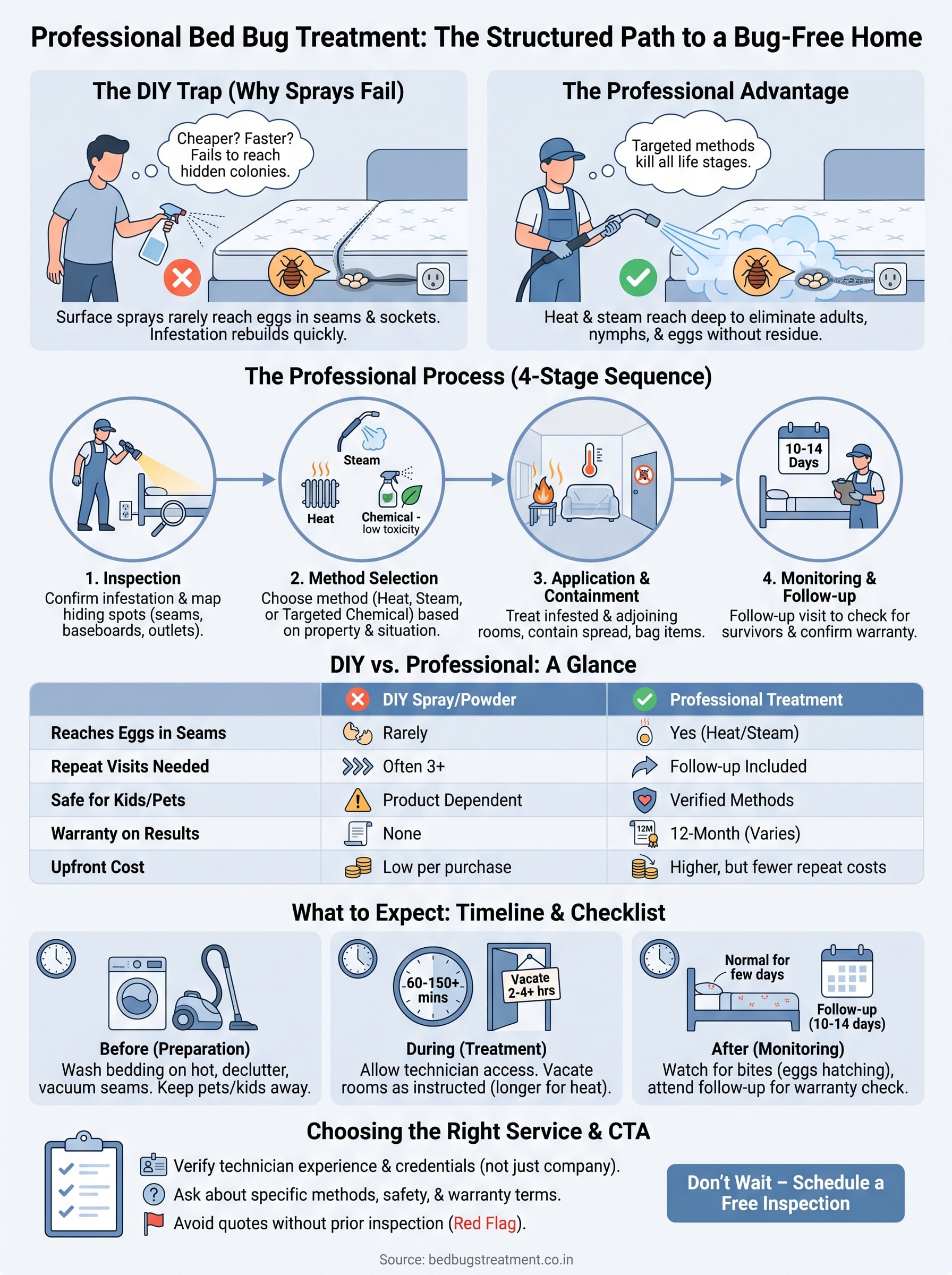
DIY vs professional treatment at a glance
| Factor | DIY Spray/Powder | Professional Treatment |
|---|---|---|
| Reaches eggs in seams and sockets | Rarely | Yes, with targeted chemical application |
| Repeat visits needed | Often 3+ rounds | Follow-up included |
| Safe for kids and pets | Depends on product label | Verified low-toxicity methods |
| Warranty on results | None | 12-month warranty (varies by provider) |
| Upfront cost | Low per purchase | Higher, but fewer repeat costs |
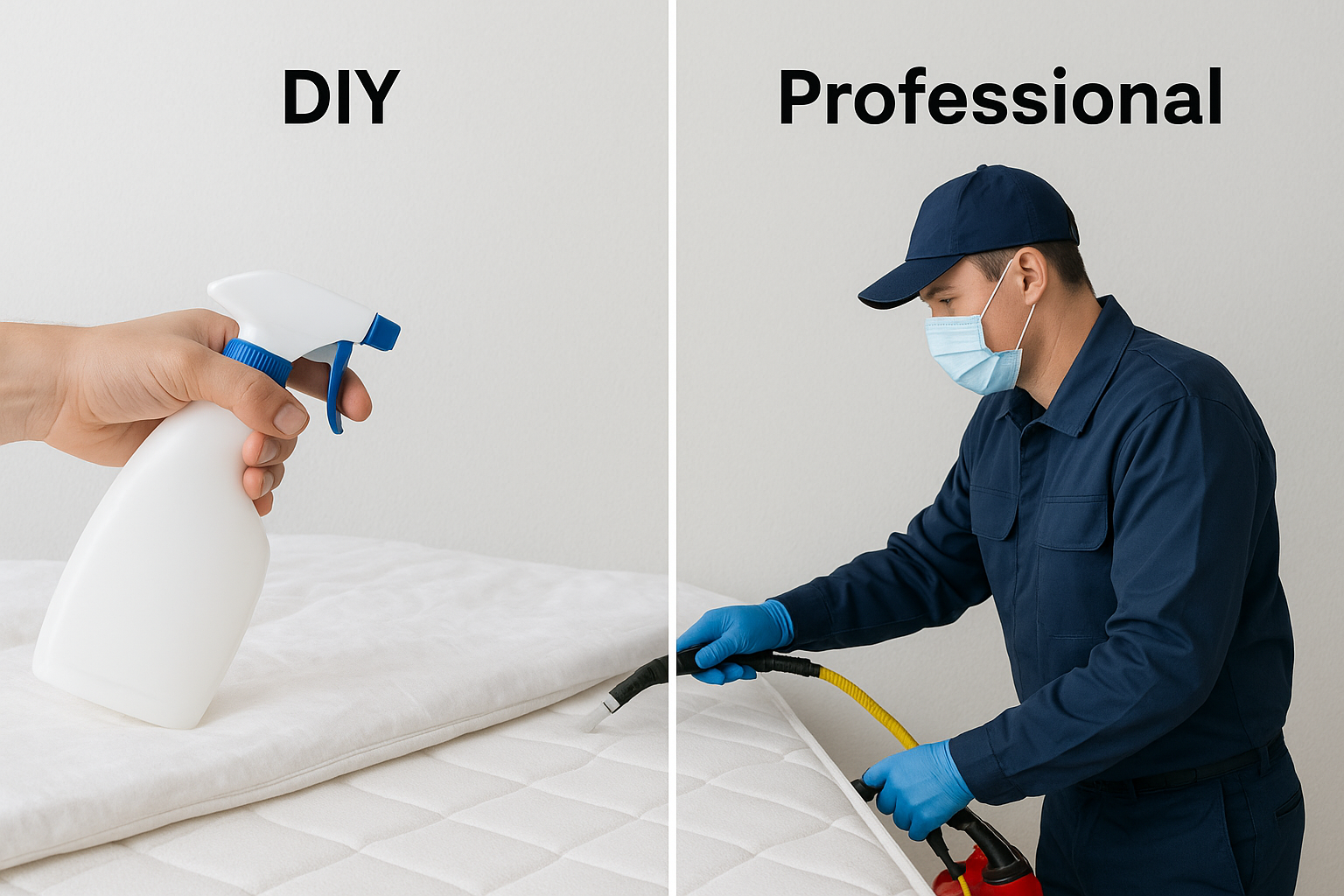
This is why most homeowners who search for professional pest control services for bed bugs have already tried the cheaper route once. Given how fast bed bugs multiply, and how quickly a small problem becomes an apartment-wide one, it usually makes more financial and practical sense to book a trained technician the moment you spot the first bite mark rather than after the third failed spray.
How professional bed bug pest control works
Professional pest control services for bed bugs follow a set process, not a one-off spray-and-hope routine. A technician moves through four clear phases: inspection, treatment selection, application, and monitoring. Knowing this sequence helps you spot a legitimate provider from a rushed one that skips steps to save time.
The inspection phase
Before any non-toxic chemical treatment starts, a trained technician inspects mattress seams, bed frames, skirting boards, and even power outlets to confirm the infestation and map every hiding spot. Visual inspection sometimes gets backed up with a flashlight check under furniture edges or a moisture meter to check wall voids in older buildings. This step also tells the technician how far the infestation has spread, which decides whether one room needs treatment or the whole flat does.
An inspection that skips outlet covers and skirting boards will miss half the colony before treatment even starts.
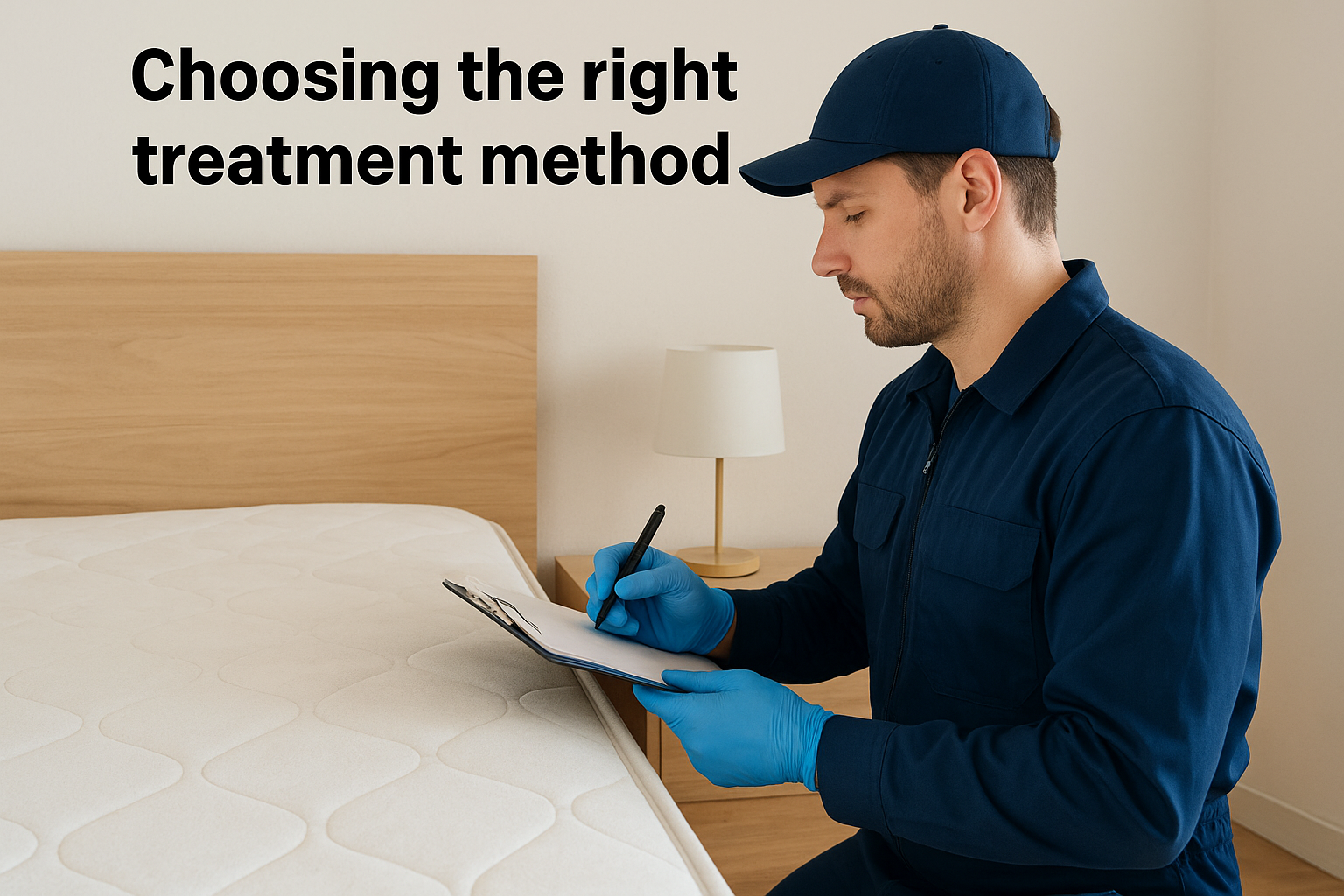
Choosing the right treatment method
Once the inspection is done, the technician tailors the non-toxic chemical treatment to your property type, family situation, and infestation severity, applying approved, low-toxicity pesticides to cracks, voids, seams, and hard surfaces wherever the bugs actually hide.
Homes with young children, pets, or elderly residents get a plan that keeps application confined to structural cracks and voids, minimizing any contact risk while still reaching every hiding spot.
Application and containment
During application, technicians treat the infested room plus adjoining rooms as a buffer, since bed bugs travel through wall cavities and along pipes. Furniture gets pulled apart, mattresses lifted, and baseboards treated directly. Containment matters here too, technicians will often bag treated items temporarily to stop bugs from escaping mid-treatment into untreated zones of the house.
What to expect before, during and after treatment
Knowing the timeline
of a bed bug treatment helps you prepare your home and avoid surprises on treatment day. Most providers, including ours, break the process into three clear stages, and each one asks something different from you as the homeowner.
Before the technician arrives
You will usually get a checklist a day or two before the visit. Preparation steps matter because a cluttered room slows down inspection and treatment, and skipping them can mean a longer visit or a missed hiding spot.
- Strip and bag bedding, then wash it on the hottest setting your fabric allows
- Clear items from under the bed and away from skirting boards
- Vacuum mattress seams and furniture joints to remove visible bugs and eggs
- Keep pets and children away from the treatment area until cleared
During the visit
Expect the technician to spend anywhere from 60 to 150 minutes on-site, depending on the number of rooms and the severity of the infestation. Room access is important, so clear pathways to beds, wardrobes, and outlets beforehand. Non-toxic chemical treatment usually needs a short evacuation window, often two to four hours, to let the application settle safely.
A treatment that lets you back into the room within minutes probably didn’t reach deep enough to work.
After the technician leaves
Bites can still appear for a few days after treatment, since some eggs hatch before the chemical residue takes full effect. This is normal and not a sign of failure. Follow-up monitoring typically happens 10 to 14 days later, when the technician checks for new activity and treats any stragglers. Legitimate providers back this with a written warranty, so ask what happens if bugs reappear within that window before you sign anything.
Quick before-and-after checklist
| Stage | Your job | Technician’s job |
|---|---|---|
| Before | Wash bedding, declutter, vacuum | Confirm appointment, prep equipment |
| During | Vacate treated rooms as instructed | Inspect, apply treatment, contain spread |
| After | Watch for new bites, keep follow-up date | Re-inspect, retreat if needed, confirm warranty |
How to choose the right bed bug pest control service
Booking the wrong provider costs you time, money, and another round of bites, so it pays to vet a company before you hand over a deposit. Not every pest control company that lists bed bugs on its website actually specializes in them, and that gap shows up fast once treatment starts failing. The best pest control services for bed bugs treat every job as its own case, since a studio apartment with a single mattress infestation calls for a very different plan than a shared hostel dorm with bugs spread across multiple beds.
Credentials and experience to verify
Ask how many bed bug jobs the technician has handled, not just the company as a whole, since specialization matters more than general pest control experience. Reliable pest control services for bed bugs also train technicians specifically on bed bug biology and hiding patterns, rather than treating the job as an extension of general cockroach or termite control. Verified technicians should carry ID, explain the treatment method they plan to use, and answer questions about the chemicals without hesitation. A provider affiliated with a larger pest control network, like Bed Bugs Professionals (call 92203 12345), usually has better-trained staff and more consistent equipment than a solo operator working out of a scooter.
Questions worth asking before you book
Run through this checklist on the phone before scheduling anything:
- Do you offer a free inspection before quoting a price?
- What treatment method fits my property, and why?
- Is the treatment safe for kids, pets, or elderly residents at home?
- What warranty backs the job if bugs return within a set period?
- How soon can you schedule the follow-up visit?
A provider who can’t answer a warranty question clearly probably doesn’t stand behind their own work.
Red flags that signal a rushed job
Watch for companies that quote a price over the phone without ever inspecting the property, since infestation severity changes the treatment plan entirely. Skip providers offering only a single spray visit with no follow-up, because that almost guarantees a second infestation within a month. Legitimate pest control services for bed bugs put the guarantee in writing, explain the process stage by stage, and never rush you off the phone before answering safety questions about children or pets.
Getting back to bug-free sleep, non-toxic style
Bed bugs don’t leave on their own, and every week you wait gives them more time to spread past your bedroom into the rest of the house or the flat next door. Choosing among the many pest control services for bed bugs available today comes down to the same fundamentals covered above: a real inspection, a treatment matched to your home, and a warranty that holds the provider accountable after they leave. The fix isn’t another can of spray from the store, it’s a structured treatment plan built around inspection, the right method for your home, and a follow-up visit that confirms the job actually held. That’s the difference between a company that sprays and leaves, and one that stands behind the result with a written warranty.
If you’re already spotting bites or rust colored stains on your mattress, don’t wait for the infestation to grow. Book a free inspection and let a trained technician tell you exactly what’s happening in your walls and seams before you spend another rupee on products that won’t work. Schedule your free bed bug inspection and get back to sleeping without checking your sheets first.